EU
Digital euro still a long way off as caution prevails


A digital currency, utilising the same technology as a crypto currency but backed by a central bank, has a particular appeal in the eurozone. It could overcome the delays and costs of cross-border transactions. But the Eurogroup of finance ministers foresees several years of tackling practical and political problems, with no guarantee of eventual approval, writes Political Editor Nick Powell.
After the most recent meeting of the now 20 finance ministers whose countries use the Euro (Croatia joined on 1 January), the Eurogroup President Paschal Donohoe said that following 18 months of very detailed discussions they had taken “some time to reflect” on the idea of a digital currency. The European Central Bank had narrowed down the possible technical designs and would decide by the autumn whether to take the process further.
This would be the ‘realization phase’, a term that is not meant to imply that the digital Euro would actually get the go-ahead. It would however take three years, suggesting that a digital currency will be technically feasible only by the end of 2026. In parallel, the European Commission is continuing preparatory work on legislation that would put a digital Euro on a proper legal basis.
The root of all this caution is concern amongst finance ministers and central banks about potential threats to financial stability and central bank sovereignty over monetary policy. Those factors seem to outweigh in their thinking the benefits of faster and less costly cross-border payments, which are estimated to cost $130 billion globally.
Of course, the international payments system could be improved, if only between countries that use the Euro, without introducing a digital currency. But agreement on an EU-wide standard might be easier to achieve when introducing something new. Meanwhile, volatility in crypto-currencies leaves the ministers and bankers feeling confident that they don’t risk a mass exodus from their regulated, if sometimes inefficient systems.
So what’s the next step for the Eurogroup? As Paschal Donoghue put it, “what the Eurogroup recognised today is that many decisions that await are inherently political”, so clearly asserting its continuing control of the process and of the eventual outcome. “I want to acknowledge the recognition by the Commission and the ECB of our mandate in this area”, he added.
In a separate statement, the Eurogroup stressed the need to preserve money issued by central banks as an anchor of the monetary system. It also outlined requirements that cash should be complemented, not replaced, by a digital currency; also that privacy rights be protected, while simultaneously upholding measures to tackle money laundering, illicit financing, tax evasion and sanctions busting.
There would need to be limits on the amount individuals and businesses could hold in digital form and other restrictions aimed at safeguarding the financial stability of the Euro area. Even if everything was in place to launch a digital currency, the time would still have to right; “implementation should take into account the prevailing economic and financial environment”, was how the Eurogroup’s statement put it.
It is hard to avoid the conclusion that the finance ministers rather wish that the concept of a digital currency still didn’t exist. But it does and later this year the Commission is expected to propose legislation to the Parliament and Council. An even longer and more labyrinthine process than usual is likely to follow.
Share this article:
EU Reporter publishes articles from a variety of outside sources which express a wide range of viewpoints. The positions taken in these articles are not necessarily those of EU Reporter. Please see EU Reporter’s full Terms and Conditions of publication for more information EU Reporter embraces artificial intelligence as a tool to enhance journalistic quality, efficiency, and accessibility, while maintaining strict human editorial oversight, ethical standards, and transparency in all AI-assisted content. Please see EU Reporter’s full A.I. Policy for more information.



EU and South Africa kick off intergovernmental dialogue on Clean Trade and Investment Partnership

Seveso - 50 years on: EU strengthens its commitment to industrial safety in a changing landscape of risk

Why young jobseekers struggle to find roles abroad that fit their expertise

Commission opens formal investigation into possible gun jumping in XXXLutz's acquisition of Porta

Shared commitment to advance EOSC through new EOSC Nodes and EOSC projects

Falling in love with the Maldives

Farmers, fair markets and consumers: new report highlights the role of EU competition rules in agriculture

ECR MEPs question the European Commission on cardiovascular health and diet promoting the Mediterranean diet as an alternative to ultra-processed foods as key to tackling obesity

STATEMENT by the Ministry of Foreign Affairs of the Republic of Kazakhstan

Kazakhstan seeks regional AI leadership as economic partnership with China enters new phase

Starmer’s problem? 'He is not a politician'

Why a Brussels–Nicosia–Eastern Mediterranean strategic affairs platform would benefit the European Union

Albania's Vlora airport standoff tests investor confidence as EU accession clock ticks
ECR MEPs question the European Commission on cardiovascular health and diet promoting the Mediterranean diet as an alternative to ultra-processed foods as key to tackling obesity

Kazakhstan's fixed capital investment tops 9.5 trillion tenge in H1 2026

Commission adopts simpler rules for EU agri-food promotion policy

Kazakhstan reforms under scrutiny at Brussels Press Club round table

Japan should face up to history and contribute more to regional peace

Ambassador calls for 'speeding up' of co-operation between EU and Kazakhstan

Timur Turlov at Smart Moves Summit 2025: How chess can transform global education

Shevtsova’s case: Out-of-court sanctions dismantling trust in Ukrainian cause

The future of European transport

Trump Vs Trueman

US 'no longer' an 'unconditional ally' for Europe - MEP
-
 South Africa5 days ago
EU and South Africa kick off intergovernmental dialogue on Clean Trade and Investment Partnership
-
 Disasters5 days ago
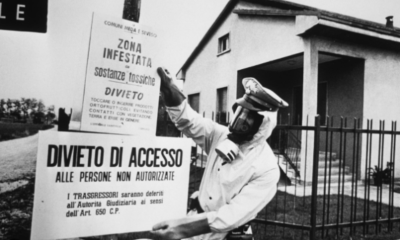
Seveso - 50 years on: EU strengthens its commitment to industrial safety in a changing landscape of risk
-
 Employment5 days ago
Why young jobseekers struggle to find roles abroad that fit their expertise
-
 European Commission5 days ago
Commission opens formal investigation into possible gun jumping in XXXLutz's acquisition of Porta