Belgium
Belgian police fire water cannon, tear gas during COVID curbs protest


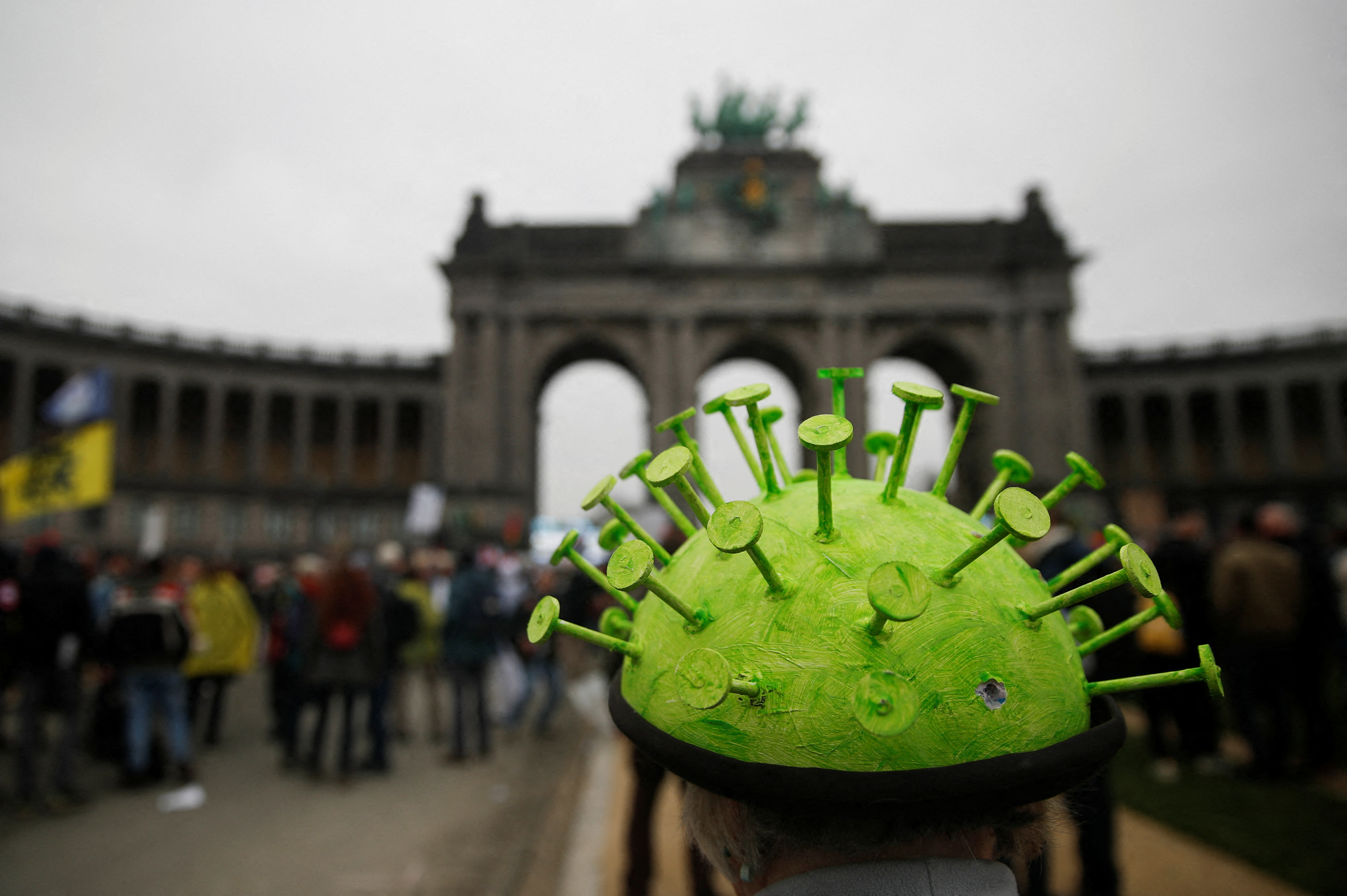
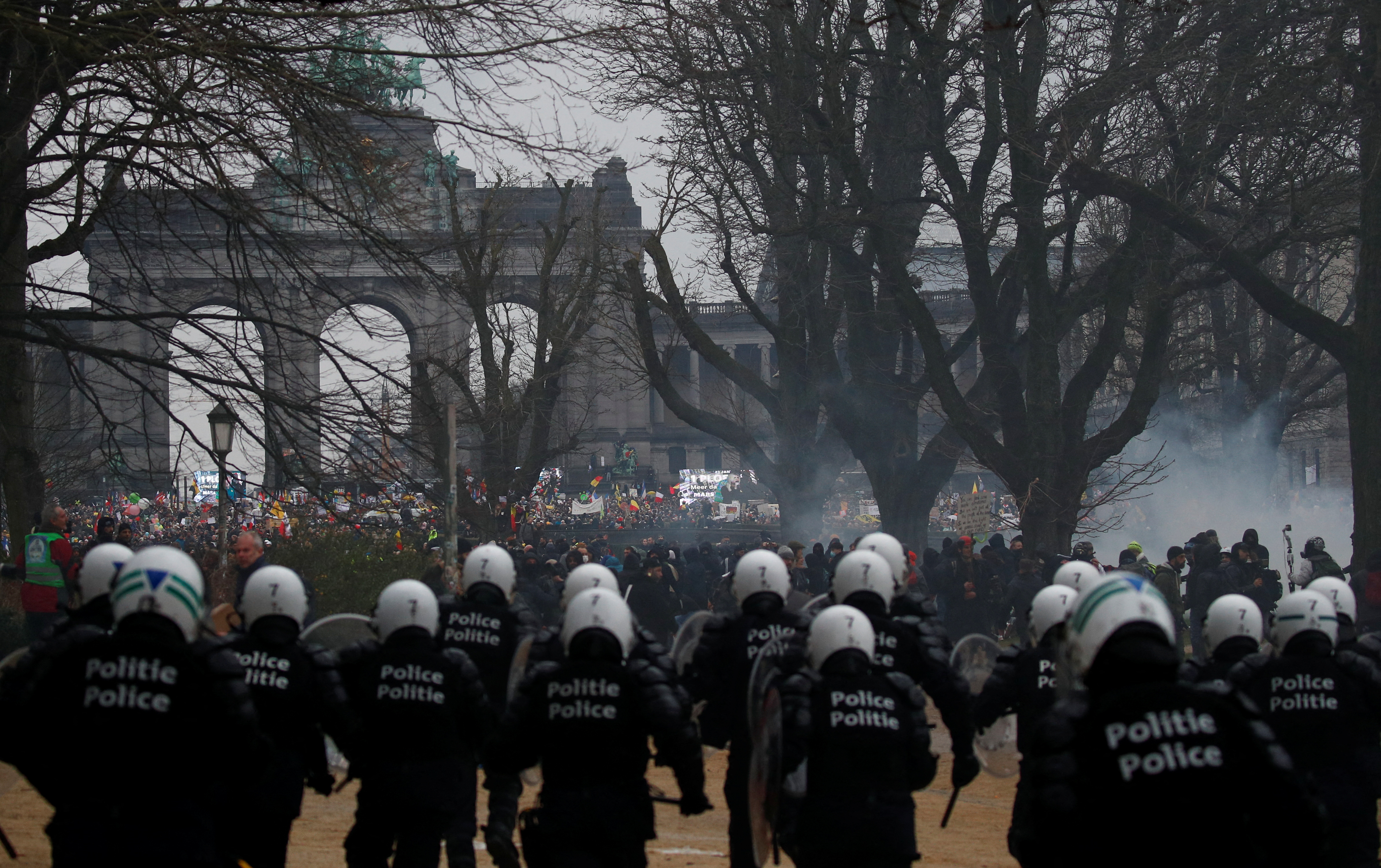
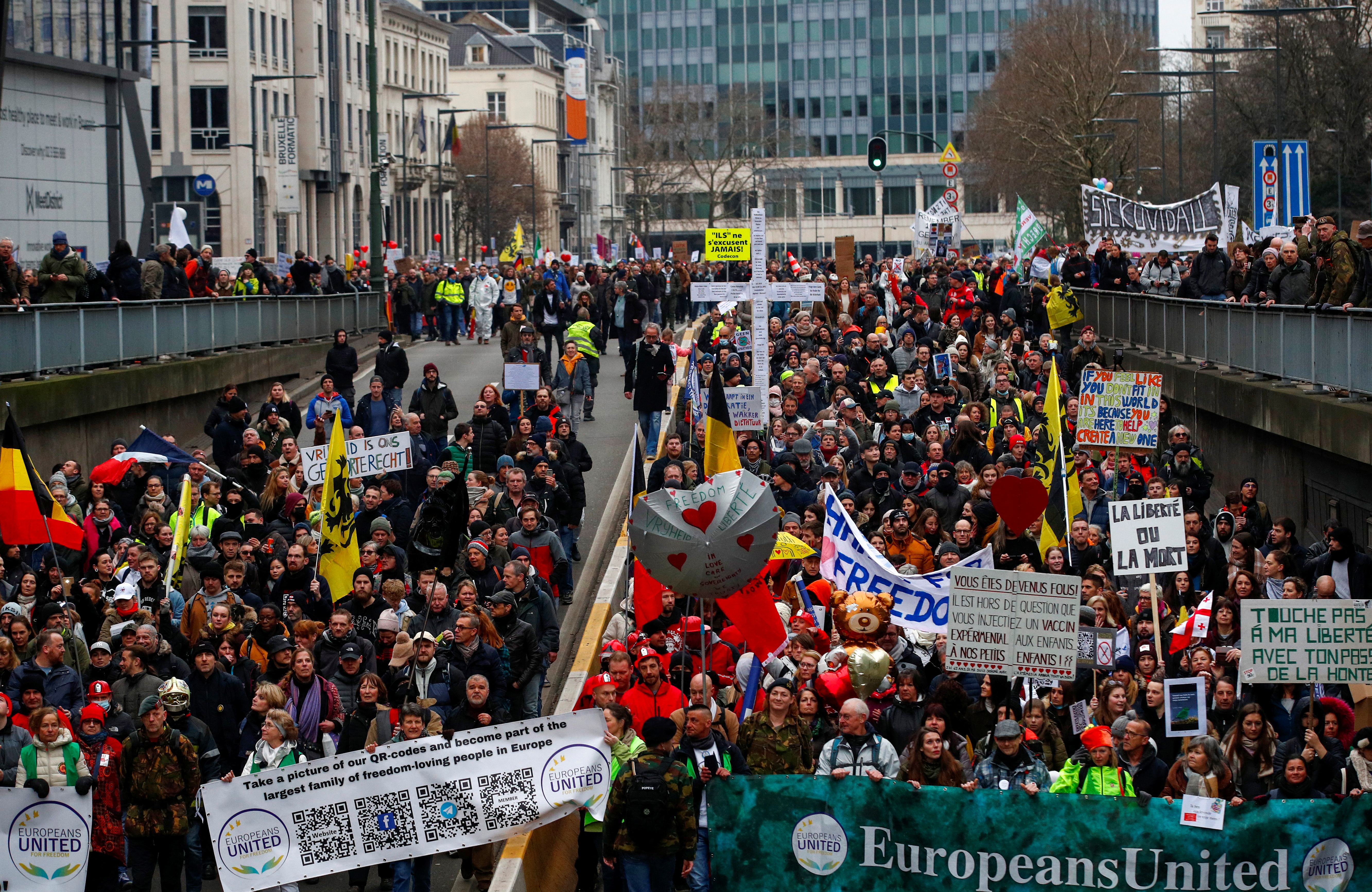
Tens of thousands of people protested in Brussels on Sunday (23 January) against COVID-19 restrictions, some clashing with police who fired water cannon and tear gas to disperse them near the European Commission's headquarters.
The rally drew about 50,000 people, Belgian police said.
It was peaceful at first as protesters chanted and filled streets, waving placards and balloons with slogans like: "We want to be free again" and "No COVID slave ticket", a reference to vaccine passes required for certain activities.
Trouble flared later, with a building housing the European diplomatic service and a sandwich shop broken into, a Reuters journalist said. Police said more than 60 people were arrested, with three officers and 12 demonstrators taken to hospital.
Belgium announced a slight easing of coronavirus restrictions on Friday despite record infections, but also said people must have booster shots after five months to keep passes for bars, cinemas and many other public spaces.
"I'm angry about the blackmail that the government is doing," said protester Caroline van Landuyt, who had herself been vaccinated. Her children did not want to be inoculated but had to so as to travel and play sport, she said.
Sunday's scenes in the Belgian capital were reminiscent of clashes last November, when around 35,000 protesters took to Brussels' streets and there was also violence.
EU foreign policy chief Josep Borrell thanked police and condemned "the senseless destruction and violence" in a tweet that showed him standing in front of a broken pane of glass.
Some protesters let off fireworks as police advanced into a park. Riot officers ringed the water cannon. "I'm not an anti-vaxxer, I'm anti-dictator," read another placard.
Belgium is facing a fifth wave of COVID-19 infections, with the peak not expected for at least a couple of weeks.
Some 89% of Belgian adults are fully vaccinated and 67% have now also received a booster shot.
Share this article:

EU Reporter publishes articles from a variety of outside sources which express a wide range of viewpoints. The positions taken in these articles are not necessarily those of EU Reporter. Please see EU Reporter’s full Terms and Conditions of publication for more information EU Reporter embraces artificial intelligence as a tool to enhance journalistic quality, efficiency, and accessibility, while maintaining strict human editorial oversight, ethical standards, and transparency in all AI-assisted content. Please see EU Reporter’s full A.I. Policy for more information.



Bangladeshis waking up to reality of Yunus government

What the latest data reveals about labour market imbalances across Europe

From imitation to leadership: The production-based rise of Japan and China

Copernicus: Europe’s air quality improves despite persistent pollution episodes

Commission approves €402 million Spanish state aid for road transport companies facing increased fuel prices

Ensuring fairness and safety: €3 customs duty for low-value parcels

EU delivers emergency aid and organises a humanitarian flight in response to earthquakes in Venezuela

European Inventor Award 2026 winners announced: Honouring the innovators shaping tomorrow

Kyrgyzstan launches Tamchy SFIT: a new international jurisdiction as a gateway to Eurasia

Kazakhstan’s dombyra: the two-stringed instrument that carries the soul of the steppe

Europe must double down on nuclear progress to achieve its long-term ambitions

Solana Company Partners with Kazakhstan on $6B Alatau Crypto Megacity

Astana's congress of world religions: A global platform for dialogue in an age of division

How Schuman lost Its way

Rating of American Express casino sites in the UK

PMI defends AI consultation tool as scrutiny grows over EU tobacco rules review

Kazakhstan reforms under scrutiny at Brussels Press Club round table

Japan should face up to history and contribute more to regional peace

Ambassador calls for 'speeding up' of co-operation between EU and Kazakhstan

Timur Turlov at Smart Moves Summit 2025: How chess can transform global education

Shevtsova’s case: Out-of-court sanctions dismantling trust in Ukrainian cause

The future of European transport

Trump Vs Trueman

US 'no longer' an 'unconditional ally' for Europe - MEP
-
 Bangladesh4 days ago
Bangladeshis waking up to reality of Yunus government
-
 Employment4 days ago
What the latest data reveals about labour market imbalances across Europe
-
 China5 days ago
From imitation to leadership: The production-based rise of Japan and China
-
 Air quality4 days ago
Copernicus: Europe’s air quality improves despite persistent pollution episodes