EU
#Brexit – House of Commons rejects Withdrawal Agreement for the third time


Today’s (29 March) British MPs rejected the EU Withdrawal Agreement for the third time, by 286 to 344 votes. The Commission issued its response, without delay, writes Catherine Feore.
“The Commission regrets the negative vote in the House of Commons today. As per the European Council (Article 50) decision on 22 March, the period provided for in Article 50(3) is extended to 12 April. It will be for the UK to indicate the way forward before that date, for consideration by the European Council.
A “no-deal” scenario on 12 April is now a likely scenario. The EU has been preparing for this since December 2017 and is now fully prepared for a “no-deal” scenario at midnight on 12 April. The EU will remain united. The benefits of the Withdrawal Agreement, including a transition period, will in no circumstances be replicated in a “no-deal” scenario. Sectoral mini-deals are not an option.
President of the European Council, Donald Tusk responded within 6 minutes of the vote announced that in view of the rejection of the Withdrawal Agreement by the House of Commons, he had decided to call a European Council on 10 April.
In view of the rejection of the Withdrawal Agreement by the House of Commons, I have decided to call a European Council on 10 April. #Brexit
— Donald Tusk (@eucopresident) March 29, 2019
In their closing comments, opposition MPs called for either a general election, or a ‘People’s Vote’, or both. The SNP was alone in calling for immediate revocation of Article 50; an option that is supported by a petition that has received almost six million signatures.
Some members of the European Research Group (ERG) reluctantly voted for the agreement including arch-Brexiteers Jacob Rees Mogg and Boris Johnson.
The Democratic Unionist Party’s (DUP) leader in the House of Commons said that he would put the union of Northern Ireland and Great Britain ahead of any considerations. Dodds said in an interview on the BBC following the vote that he would support remaining in the EU rather than risking Northern Ireland’s position in the UK. In a statement the DUP said that there main issue was the backstop arrangements in the agreement:

May secured the vote of many ERG members by her promise to stand down once the first phase of Brexit was completed, allowing a new leader of the Conservative Party to take the lead on the negotiations on the future relationship with the EU. It is difficult to see how May could remain in post, but there are no obvious contenders and the UK is now facing a new cliff edge of 12 April.
Share this article:
EU Reporter publishes articles from a variety of outside sources which express a wide range of viewpoints. The positions taken in these articles are not necessarily those of EU Reporter. Please see EU Reporter’s full Terms and Conditions of publication for more information EU Reporter embraces artificial intelligence as a tool to enhance journalistic quality, efficiency, and accessibility, while maintaining strict human editorial oversight, ethical standards, and transparency in all AI-assisted content. Please see EU Reporter’s full A.I. Policy for more information.






EU and South Africa kick off intergovernmental dialogue on Clean Trade and Investment Partnership

Seveso - 50 years on: EU strengthens its commitment to industrial safety in a changing landscape of risk

Why young jobseekers struggle to find roles abroad that fit their expertise

Commission opens formal investigation into possible gun jumping in XXXLutz's acquisition of Porta

Shared commitment to advance EOSC through new EOSC Nodes and EOSC projects

Farmers, fair markets and consumers: new report highlights the role of EU competition rules in agriculture

Falling in love with the Maldives

ECR MEPs question the European Commission on cardiovascular health and diet promoting the Mediterranean diet as an alternative to ultra-processed foods as key to tackling obesity

STATEMENT by the Ministry of Foreign Affairs of the Republic of Kazakhstan

Kazakhstan seeks regional AI leadership as economic partnership with China enters new phase

Starmer’s problem? 'He is not a politician'

Why a Brussels–Nicosia–Eastern Mediterranean strategic affairs platform would benefit the European Union

Albania's Vlora airport standoff tests investor confidence as EU accession clock ticks
ECR MEPs question the European Commission on cardiovascular health and diet promoting the Mediterranean diet as an alternative to ultra-processed foods as key to tackling obesity

Kazakhstan's fixed capital investment tops 9.5 trillion tenge in H1 2026

Commission adopts simpler rules for EU agri-food promotion policy

Kazakhstan reforms under scrutiny at Brussels Press Club round table

Japan should face up to history and contribute more to regional peace

Ambassador calls for 'speeding up' of co-operation between EU and Kazakhstan

Timur Turlov at Smart Moves Summit 2025: How chess can transform global education

Shevtsova’s case: Out-of-court sanctions dismantling trust in Ukrainian cause

The future of European transport

Trump Vs Trueman

US 'no longer' an 'unconditional ally' for Europe - MEP
-
 South Africa5 days ago
EU and South Africa kick off intergovernmental dialogue on Clean Trade and Investment Partnership
-
 Disasters5 days ago
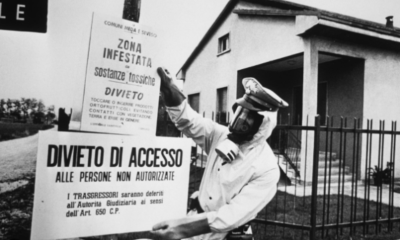
Seveso - 50 years on: EU strengthens its commitment to industrial safety in a changing landscape of risk
-
 Employment5 days ago
Why young jobseekers struggle to find roles abroad that fit their expertise
-
 European Commission5 days ago
Commission opens formal investigation into possible gun jumping in XXXLutz's acquisition of Porta