Culture
Speech - Creative Europe: Investing in the republic of ideas and will for renewal


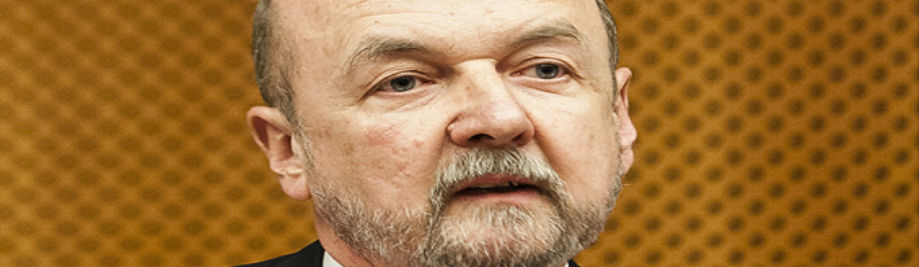
Education, Culture, Multilingualism and Youth Commissioner Androulla Vassiliou (pictured).
Mr. President,
Minister Birutis,
Ladies and gentlemen,
Dear friends,
I am happy to welcome you to the European Culture Forum. Our biennial rendezvous has grown and become a fixture of the Brussels cultural agenda.
Thank you for being here so numerous! It is an encouraging sign.
When I first addressed the European Culture Forum two years ago, I remember some were questioning how culture would find its place in our Europe 2020 agenda. Today, culture and the sectors it represents have their place on our agenda and their potential for growth and jobs is recognised.
In the last years, we have worked together to set out a strategic vision, to ensure adequate funding and to continue evolving a regulatory environment favouring creativity and innovation.
Our dialogue and co-operation has brought fruit. For the first time, we have a comprehensive strategy for the cultural and creative sectors, with the Communication we adopted last year.
Next year, we will have in place Creative Europe, the new programme for the cultural and creative sectors for the next seven years, which is strengthened with a new loan guarantee facility for cultural and creative operators and an overall increased budget.
I am not saying that we are where we should be. There is still a lot to be done and the challenges are many. But I am hopeful that we are moving into the right direction.
President Barroso captured very well the different levels on which culture is central to the European project, now more than ever. [Thank you for your heartening words and your presence today, Mr. President.]
In my turn, I will take a few minutes to highlight the current challenges and what I see as priorities for the future.
Let me start with the challenges. The financial crisis continues to exact a heavy price on Europe's economies and citizens. It has affected the cultural and creative sectors, too. We see a worrying trend among budgetary authorities who look at arts and culture as a luxury and a cost rather than as an investment. As President Barroso, I argue that culture is a necessity and I invite all to work jointly to reaffirm the contribution of culture and creativity to our economy and our society.
Now more than ever, support to the cultural and creative sectors needs to be strategic. If we wish to unlock the potential of cultural and creative sectors for growth and jobs, we need to make progress on different fronts, from skills adaptation to access to funding.
Our support should have a structuring effect.
The new Creative Europe Programme is built to achieve just that. Creative Europe will open up international opportunities and audiences for artists and professionals of the sector by establishing sustainable networks, supporting emerging talent and facilitating access to financing.
Support for culture must be part of integrated strategies for development at all levels: local, regional, national. The structural funds are there to support smart investments. It is of paramount importance that this opportunity is not missed for culture. On my part, I addressed last May a letter to EU Ministers responsible for the structural funds, where I stressed the potential of cultural and creative sectors for growth and expressed the hope that this potential will be given due consideration in the operational programmes for the period 2014-2020. I take this opportunity to invite you all to sensitise local, regional and national authorities about making smart and sound investments in culture. Now is the time to act!
"Not everything that can be counted counts, and not everything that counts can be counted", Einstein said. We know that well. However, it is true that, especially in times of financial austerity, policy proposals must be backed by sound evidence. Culture is no exception - and this in no way undermines its intrinsic value as a public good.
In order to make a persuasive case for culture we need to present systematic, comprehensive and compelling evidence about its contribution to the economy and society. You will have a chance to discuss about these issues in more depth later today. You will also hear from Mr. Ristori about a new initiative to set off a process involving policy makers, representatives of the cultural and creative sectors and scientists, in order to identify the scientific support required for fully exploiting the potential of these sectors for growth and jobs. I fully support this initiative and look forward to some concrete results that may develop overtime.
This is vital work and does not only concern data and statistics. It also concerns audiences and cultural participation. Cultural institutions must take properly research the needs of audiences and build a community of followers.
And it is a matter of urgency. The effects of the crisis reach deep and wide in our societies. We will publish today, a Eurobarometer Survey, whose results reveal a direct correlation between participation in culture and the national economic situation. Cultural participation is declining across Europe, and the effect is strongest in those countries hit the hardest by the crisis.
Everybody stands to lose if such an alarming trend continues, whereas everybody stands to gain from a flourishing creative ecosystem.
Culture makes us "citizens of the republic of ideas" – to borrow the words of the great Greek poet Konstantine Kavafis.
Culture is the vehicle of our shared values, our legacy of the past and our responsibility for the future. Culture can certainly nourish 'a new narrative for Europe'. I join President Barroso in calling upon the people of culture to develop a positive discourse and help counter phenomena of extremism and xenophobia emerging in different parts of Europe today.
Dear friends,
As it is essentially the last Forum I attend as the European Commissioner responsible for culture, allow me to close my statement with some thoughts about areas of special attention in the months ahead.
Cultural heritage is among the strongest assets for Europe. This reservoir of growth and social cohesion is not explored in an optimal way. We must take a careful look at this potential and address the challenges our cultural heritage is facing in terms of environmental risks, skills adaptation and the digital revolution.
Culture and external relations: we have made progress, but are we where we should be? EU institutions, Member States and civil society have repeatedly called for a more strategic approach to the role of culture in our relations with third countries. We must build on the growing awareness that culture is our best asset for promoting a positive and diverse image of the EU abroad.
From cultural cooperation to cultural diplomacy and soft diplomacy, we need to grasp the potential. Building synergies, pooling resources, devising joint strategies vis-à-vis strategic partners are some ways to explore.
Ensure an enabling environment for European artists and culture professionals in which they can rightfully create and work. Improving the regulatory framework requires, of course, horizontal action at EU level and cooperation with the member states. This is particularly true in the area of copyright. I hope that we will continue to lay the appropriate conditions to enable European cultural industries and creators to provide quality content and develop new services, especially in the digital context.
Dear friends,
As Eugene Ionesco once said: 'in the history of art and thought there has always been at every living moment of culture a "will to renewal'.
I hope this year's Culture Forum will prove another occasion to test this 'will to renewal', by taking stock of progress and of challenges ahead.
We have pursued the same goal over the last four years: reinforce the place of culture and creativity on the European agenda and ensure that all those who live in the European Union can enjoy and participate in culture. I thank you for your cooperation and dedication and wish you stimulating discussions over the next two days and a continuous 'will to renewal'.
Thank you.
Share this article:
EU Reporter publishes articles from a variety of outside sources which express a wide range of viewpoints. The positions taken in these articles are not necessarily those of EU Reporter. Please see EU Reporter’s full Terms and Conditions of publication for more information EU Reporter embraces artificial intelligence as a tool to enhance journalistic quality, efficiency, and accessibility, while maintaining strict human editorial oversight, ethical standards, and transparency in all AI-assisted content. Please see EU Reporter’s full A.I. Policy for more information.





Security realignment inevitable in Middle East after Netanyahu-Trump's war

Better enforcement of passenger rights: New EU agreement strengthens protection across all modes of transport

EU deploys emergency assistance to Venezuela following earthquakes

EU steps up support for Ukraine's defence, recovery and reconstruction at the Ukraine Recovery Conference 2026

Dismantling 'high walls' for a shared European-Asian future

Bangladeshis waking up to reality of Yunus government

Copernicus: Europe’s air quality improves despite persistent pollution episodes

What the latest data reveals about labour market imbalances across Europe

Europe must double down on nuclear progress to achieve its long-term ambitions

Solana Company Partners with Kazakhstan on $6B Alatau Crypto Megacity

Astana's congress of world religions: A global platform for dialogue in an age of division

How Schuman lost Its way

Rating of American Express casino sites in the UK

PMI defends AI consultation tool as scrutiny grows over EU tobacco rules review

Civil society from across the EU gathers in Cork to reinforce Europe’s sustainability agenda

The Iran war changed Pakistan's strategic value, not its political trajectory

Kazakhstan reforms under scrutiny at Brussels Press Club round table

Japan should face up to history and contribute more to regional peace

Ambassador calls for 'speeding up' of co-operation between EU and Kazakhstan

Timur Turlov at Smart Moves Summit 2025: How chess can transform global education

Shevtsova’s case: Out-of-court sanctions dismantling trust in Ukrainian cause

The future of European transport

Trump Vs Trueman

US 'no longer' an 'unconditional ally' for Europe - MEP
-
 Middle East5 days ago
Security realignment inevitable in Middle East after Netanyahu-Trump's war
-
 Transport5 days ago
Better enforcement of passenger rights: New EU agreement strengthens protection across all modes of transport
-
 Earthquake5 days ago
EU deploys emergency assistance to Venezuela following earthquakes
-
 Ukraine5 days ago
EU steps up support for Ukraine's defence, recovery and reconstruction at the Ukraine Recovery Conference 2026