EU
European Parliament to hear Snowden testimony


Whether you think Pope Francis or Edward Snowden was the man of last year, there is no denying that Snowden’s revelations on the extent of the National Security Agency's (NSA) mass surveillance, aided and abetted by the UK’s Government Communications Headquarters (GCHQ) was the biggest scoop of 2013. Today (9 January) 36 MEPs out of 39 on the European Parliament’s Civil Liberties, Justice and Home Affairs Committee (LIBE) voted to invite Snowden to testify as part of its inquiry into mass surveillance of EU citizens. The testimony will consist of responses to questions sent by MEPs and will not be live because of the risks that this might pose to his security - at present, a date has not been fixed for the showing of this evidence.
Congressman Mike Rogers, chairman of the US Permanent Select Committee on Intelligence, when asked at a European Parliament hearing in December if the NSA had spied on the Brazilian oil company Petrobas, replied that the US and NSA did not and would not be involved in commercially motivated espionage and swiftly went on to lambast China’s, admittedly poor, record in this area – but the question wasn’t about China. I would be loath to doubt the integrity of Congressman Rogers, a former employee of the FBI, but either he is lying or is being kept in the dark by the NSA – which is more than plausible, given that James Clapper Jr., the director of national intelligence has already been shown to have lied to Congress. While not wanting to go into the vexed question of US campaign funding, it is worth noting that Congressman Rogers’ top campaign contributor is ManTech International, an organization that specializes in technologies for national security.
Recent leaks that have emerged reveal that surveillance went well beyond the ‘war on terrorism’ and well into the field of trade and commerce. Whilst al-Queda is by its nature a rather murky organisation, it would be surprising to find that the Vice President of the European Commission and Commissioner for Competition Policy Joaquin Alumnia and Chancellor Angela Merkel were on the side of Holy Jihad. An even more embarrassing leak involved the revelation that an organization dedicated to improving the lot of cotton producers in some of the world’s poorest countries through WTO negotiations was being spied on by a country that provides huge subsidies to this sector. And ’poor’ includes countries such as Mali, where 50% of the population live below the international poverty line of US$1.25 a day.
Pressure is mounting in the US. A recent editorial in the New York Times called for an amnesty for Snowden, since he showed that government officials had routinely and deliberately broken the law, because he did express his misgivings but was ignored and because there is no proof that the information leaked has damaged national security – though it has somewhat tarnished the US’s reputation. Tech companies rounded on Obama at a recent discussion originally billed to consider Obamacare’s IT problems and some of the major tech players have called for surveillance reform. In addition, a US court has ruled against the government, finding that the indiscriminate and arbitrary collection and retention of phone records was unconstitutional and ‘almost-Orwellian’.
Parliament recommendations
Claude Moraes MEP has drafted a report making a number of recommendations, including the immediate suspension of the ‘Safe Harbor’ agreement, this will be discussed on 15 January at the European Parliament’s plenary in Strasbourg.
In addition to this recommendation, Claude Moraes has called for a European Digital Habeas Corpus. Habeas corpus was developed under the English legal system and is recognized as a fundamental legal instrument in safeguarding individual freedom against arbitrary state action. The principle of habeas corpus ensures that a prisoner can be released from unlawful detention when there is insufficient cause or evidence. Moraes is proposing that posted, processed, stored and tracked information for an individual constitutes their ‘body of personal data’ and that this should not be ‘imprisoned’ or stored and used in an arbitrary way that infringes an individual’s right to privacy.
To see all recommendations in Claude Moraes’ draft report click here. The deadline for amendments is 18h on 22 January.
Click here to see EU Reporter’s interview with Claude Moraes MEP.
Share this article:
EU Reporter publishes articles from a variety of outside sources which express a wide range of viewpoints. The positions taken in these articles are not necessarily those of EU Reporter. Please see EU Reporter’s full Terms and Conditions of publication for more information EU Reporter embraces artificial intelligence as a tool to enhance journalistic quality, efficiency, and accessibility, while maintaining strict human editorial oversight, ethical standards, and transparency in all AI-assisted content. Please see EU Reporter’s full A.I. Policy for more information.



EU and South Africa kick off intergovernmental dialogue on Clean Trade and Investment Partnership

Seveso - 50 years on: EU strengthens its commitment to industrial safety in a changing landscape of risk

Why young jobseekers struggle to find roles abroad that fit their expertise

Commission opens formal investigation into possible gun jumping in XXXLutz's acquisition of Porta

Shared commitment to advance EOSC through new EOSC Nodes and EOSC projects

Farmers, fair markets and consumers: new report highlights the role of EU competition rules in agriculture

Falling in love with the Maldives

ECR MEPs question the European Commission on cardiovascular health and diet promoting the Mediterranean diet as an alternative to ultra-processed foods as key to tackling obesity

STATEMENT by the Ministry of Foreign Affairs of the Republic of Kazakhstan

Kazakhstan seeks regional AI leadership as economic partnership with China enters new phase

Starmer’s problem? 'He is not a politician'

Why a Brussels–Nicosia–Eastern Mediterranean strategic affairs platform would benefit the European Union

Albania's Vlora airport standoff tests investor confidence as EU accession clock ticks
ECR MEPs question the European Commission on cardiovascular health and diet promoting the Mediterranean diet as an alternative to ultra-processed foods as key to tackling obesity

Kazakhstan's fixed capital investment tops 9.5 trillion tenge in H1 2026

Commission adopts simpler rules for EU agri-food promotion policy

Kazakhstan reforms under scrutiny at Brussels Press Club round table

Japan should face up to history and contribute more to regional peace

Ambassador calls for 'speeding up' of co-operation between EU and Kazakhstan

Timur Turlov at Smart Moves Summit 2025: How chess can transform global education

Shevtsova’s case: Out-of-court sanctions dismantling trust in Ukrainian cause

The future of European transport

Trump Vs Trueman

US 'no longer' an 'unconditional ally' for Europe - MEP
-
 South Africa5 days ago
EU and South Africa kick off intergovernmental dialogue on Clean Trade and Investment Partnership
-
 Disasters5 days ago
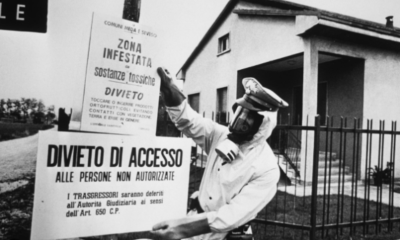
Seveso - 50 years on: EU strengthens its commitment to industrial safety in a changing landscape of risk
-
 Employment5 days ago
Why young jobseekers struggle to find roles abroad that fit their expertise
-
 European Commission5 days ago
Commission opens formal investigation into possible gun jumping in XXXLutz's acquisition of Porta