EU
United States and Netherlands lead call to action at OECD to fight economic discrimination of LGBT on global scale


The United States and the Netherlands launched on February 12 a call to action urging the Organization for Economic Cooperation and Development to include lesbian, gay, bisexual, and transgender (LGBT) issues in its ongoing and future work on economic inclusiveness. The call to action prevailed on the OECD to examine the economic case for LGBT-inclusivity and to develop recommendations for policy makers to remove barriers to equal LGBT treatment in the workplace.
The call to action immediately followed a high-level meeting in Paris, France, entitled 'LGBT: the Economic Case for Inclusive Policies', which was jointly organized by the Netherlands and United States. Fourteen Ambassadors and dozens of subject matter experts from the OECD, UNESCO and civil society met to discuss gaps in current knowledge and to outline a road map for action.
Participants identified six areas of critical collaboration, including data collection, analysis of knowledge gaps, identification of needed resources, and collaboration with civil society stake-holders.
Participants asked the OECD to provide data, comparative analyses, and recommendations to shape effective policies within developed and developing countries.
“The OECD has already conducted compelling and relevant research that provides perspectives on pieces of the inclusiveness puzzle – women, aging populations, the disabled,” said Chargé d’Affaires Guthrie-Corn. “OECD expertise is similarly expected to shed light on the economic costs of discrimination for LGBT persons on a global scale.”
For more information, photos and videos, click here.
Share this article:
EU Reporter publishes articles from a variety of outside sources which express a wide range of viewpoints. The positions taken in these articles are not necessarily those of EU Reporter. Please see EU Reporter’s full Terms and Conditions of publication for more information EU Reporter embraces artificial intelligence as a tool to enhance journalistic quality, efficiency, and accessibility, while maintaining strict human editorial oversight, ethical standards, and transparency in all AI-assisted content. Please see EU Reporter’s full A.I. Policy for more information.



Security realignment inevitable in Middle East after Netanyahu-Trump's war

Better enforcement of passenger rights: New EU agreement strengthens protection across all modes of transport

EU deploys emergency assistance to Venezuela following earthquakes

Shen Yun - The Abuses and Human Rights Violations

The Third International Maqom Art Forum and the New Uzbekistan

EU steps up support for Ukraine's defence, recovery and reconstruction at the Ukraine Recovery Conference 2026

Dismantling 'high walls' for a shared European-Asian future

Bangladeshis waking up to reality of Yunus government

Europe must double down on nuclear progress to achieve its long-term ambitions

Solana Company Partners with Kazakhstan on $6B Alatau Crypto Megacity

Astana's congress of world religions: A global platform for dialogue in an age of division

How Schuman lost Its way

Rating of American Express casino sites in the UK

PMI defends AI consultation tool as scrutiny grows over EU tobacco rules review

Civil society from across the EU gathers in Cork to reinforce Europe’s sustainability agenda

The Iran war changed Pakistan's strategic value, not its political trajectory

Kazakhstan reforms under scrutiny at Brussels Press Club round table

Japan should face up to history and contribute more to regional peace

Ambassador calls for 'speeding up' of co-operation between EU and Kazakhstan

Timur Turlov at Smart Moves Summit 2025: How chess can transform global education

Shevtsova’s case: Out-of-court sanctions dismantling trust in Ukrainian cause

The future of European transport

Trump Vs Trueman

US 'no longer' an 'unconditional ally' for Europe - MEP
-
 Middle East5 days ago
Security realignment inevitable in Middle East after Netanyahu-Trump's war
-
 Transport4 days ago
Better enforcement of passenger rights: New EU agreement strengthens protection across all modes of transport
-
 Earthquake5 days ago
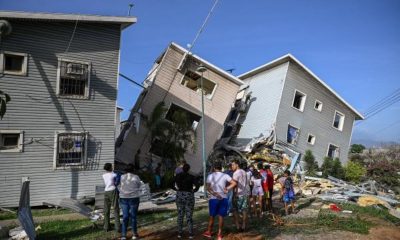
EU deploys emergency assistance to Venezuela following earthquakes
-
 Human Rights5 days ago
Shen Yun - The Abuses and Human Rights Violations