EU
Lessons learned: How troubled countries should be saved in future


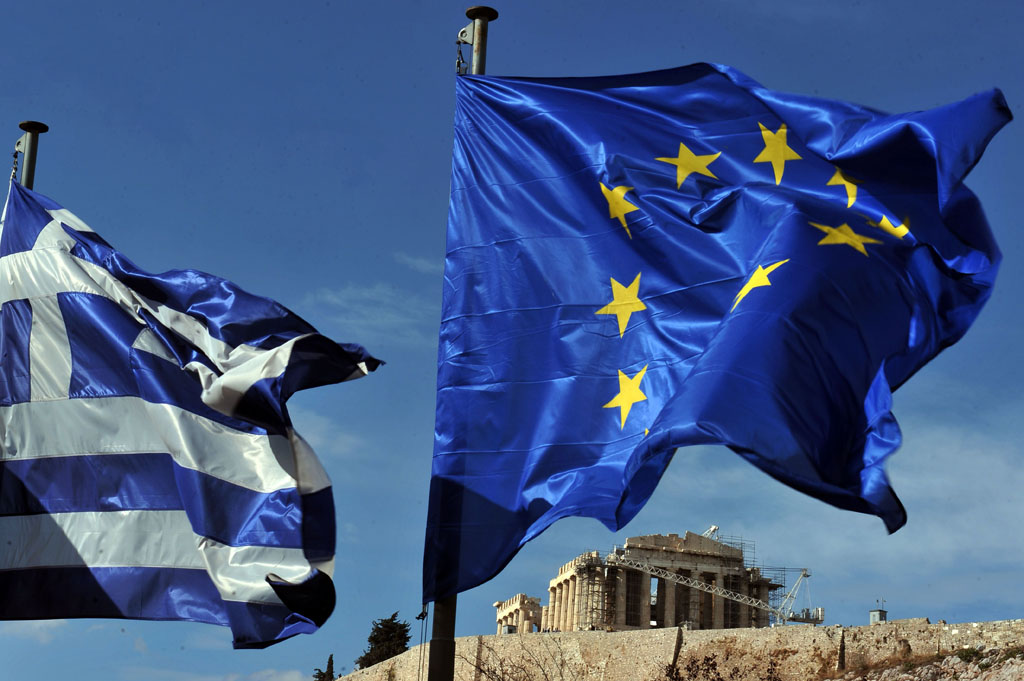
 The Troika's work has been investigated by the Parliament since December and it is now time to draw conclusions. On Thursday 13 March, MEPs vote on the two own-initiative reports, which they debated the day before. The European Parliament talked to the report authors - Othmar Karas (EPP, Austria), Liêm Hoang-Ngoc (S&D, France) and Alejandro Cercas (S&D, Spain) - about how EU countries in financial difficulties should be supported in the future.
The bail-outs in eurozone countries are managed by a group of international lenders called the Troika, made up of representatives of the European Commission, European Central Bank and the International Monetary Fund. A report by the economic committee, written by Karas and Liêm Hoang-Ngoc, looked at the Troika's working methods and results. Meanwhile a report by the employment committee, penned by Mr Cercas, focused on how these decisions affected employment and society.
Karas stressed it was important that the Troika finished the on-going programmes. "However, we need transparent and binding rules of procedure to enhance democratic oversight," he said. "As we work on a Community-based crisis management tool, I have called for the establishment of a European Monetary Fund, which should combine the money of the European Stability Mechanism with the expertise that the Commission has gained over the last years." He added that Europe needed instruments to deal with situations where member states are almost bankrupt. "But we also need instruments to prevent member states coming even close to bankruptcy. In the long run, I therefore call for a State Bankruptcy Prevention Law."
Hoang-Ngoc underlined that for the next rescue operation the mechanism that will replace the Troika has to respect the EU's laws and basic principles: "Policy options will have to be carefully debated and chosen by elected representatives in the member state concerned and at EU level. This is why we are calling for both the EP and national parliaments to be properly involved in the design, approval and monitoring of the programmes. The policy recommended must be economically efficient and socially fair." He added that the EU does not only have to tame the markets and reduce public debt, but also "invest for long lasting, job creating and environmentally sustainable growth".
Meanwhile, Cercas said: "The adjustment programmes can not undermine collective agreements signed by social partners, cut or freeze minimum wages and pensions systems putting them below the poverty threshold, or make access to basic medical and pharmaceutical products and to affordable housing harder." He concluded: "Economic policy needs to be at the service of employment."
Share this article:
EU Reporter publishes articles from a variety of outside sources which express a wide range of viewpoints. The positions taken in these articles are not necessarily those of EU Reporter. Please see EU Reporter’s full Terms and Conditions of publication for more information EU Reporter embraces artificial intelligence as a tool to enhance journalistic quality, efficiency, and accessibility, while maintaining strict human editorial oversight, ethical standards, and transparency in all AI-assisted content. Please see EU Reporter’s full A.I. Policy for more information.





Astana's congress of world religions: A global platform for dialogue in an age of division

Protect children from online sexual abuse: Call for urgent negotiations and permanent solution

Solana company partners with Kazakhstan on $6B Alatau Crypto Megacity

Will the Gulf monarchies rise above internecine disputes in the interest of collective security?

Kyrgyzstan launches Tamchy SFIT: A new international jurisdiction as a gateway to Eurasia

Kazakhstan’s dombyra: The two-stringed instrument that carries the soul of the steppe

Europe must double down on nuclear progress to achieve its long-term ambitions

International Plastic Bag Free Day – from single use to reuse

How hair extensions can transform your look naturally

Deposits to Swiss banks from Bangladeshi nationals nearly tops all time peak

EU agricultural markets remain robust despite uncertainties and rising input costs

Commission report highlights achievements of EU rules on animal health

EU deploys wildfire support to face multiple fires across Portugal and France

Europe’s job market is shifting, and EURES is ready to lead the way into 2030

From a remote island to shelves around the world: The story of Azorean canned fish

Can digital sovereignty survive an open trading system?

Kazakhstan reforms under scrutiny at Brussels Press Club round table

Japan should face up to history and contribute more to regional peace

Ambassador calls for 'speeding up' of co-operation between EU and Kazakhstan

Timur Turlov at Smart Moves Summit 2025: How chess can transform global education

Shevtsova’s case: Out-of-court sanctions dismantling trust in Ukrainian cause

The future of European transport

Trump Vs Trueman

US 'no longer' an 'unconditional ally' for Europe - MEP
-
 Kazakhstan2 days ago
Astana's congress of world religions: A global platform for dialogue in an age of division
-
 Child sexual abuse2 days ago
Protect children from online sexual abuse: Call for urgent negotiations and permanent solution
-
 Kazakhstan2 days ago
Solana company partners with Kazakhstan on $6B Alatau Crypto Megacity
-
 Iran2 days ago
Will the Gulf monarchies rise above internecine disputes in the interest of collective security?