EU
Greece: Troika success story or a warning against too much austerity?

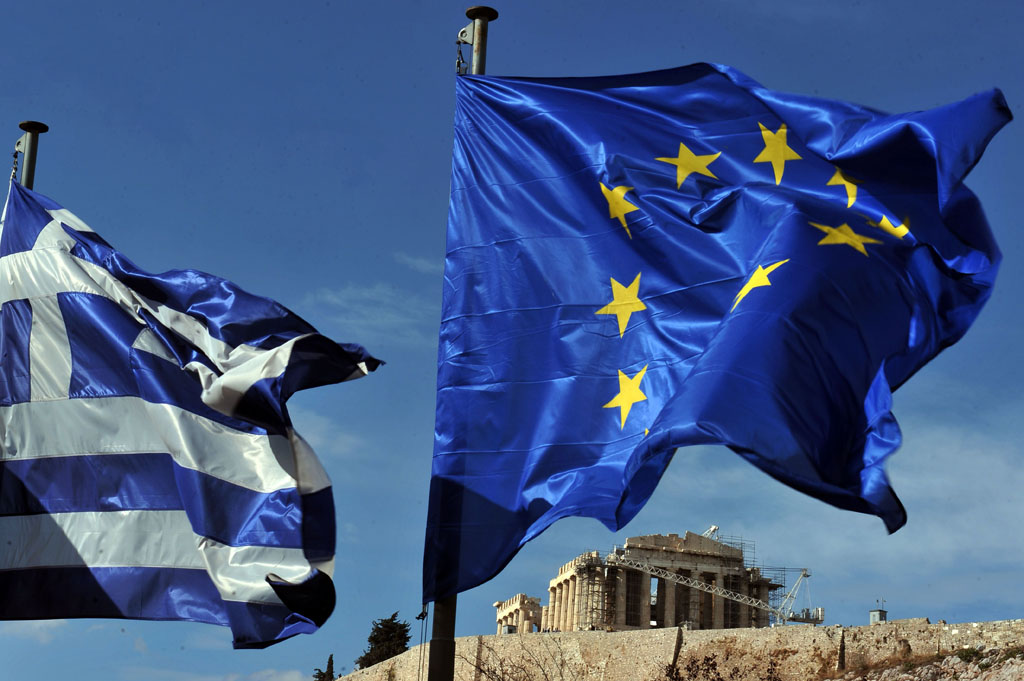
Much has happened since Greece approached its EU partners for help in dealing with the debt crisis engulfing the country in 2010. The needed loan came at the cost of having to cut social services, pensions and salaries in order to help lower its public debt. A Parliament delegation is visiting Greece on 29-30 January to find out how this cure prescribed by the Troika has affected the country.
The delegation visit is a part of the Parliament’s inquiry into how austerity policies have affected countries that have requested the EU's help in dealing with their financial problems. MEPs have already visited Ireland, Portugal and Cyprus. The inquiry is led by Othmar Karas, an Austrian member of the EPP group, and Liem Hoang Ngoc, a French member of the S&D group.
Increasing debt
Greek public debt averaged just under 104% of its gross domectic product (GDP) during 1994-2009 and reached 148.3% in 2010, the year when Greece asked the EU for help. However, austerity seems to have made the situation worse. The European Commission estimates Greek public debt to have reached 176.2% of GDP in 2013 and forecasts it to fall to 170.9% in 2015.
Drastic drop in GDP
According to Eurostat, the Greek economy has shrunk for six years in a row.The worst reduction was in 2011 when the GDP decreased by 7.1%. This year a 0.6% increase is expected, followed by 2.9% growth next year.
Widespread unemployment
Unemployment rate is expected to remain at around 25% for the next couple of years. When Greece asked for help in 2010, it was only 12.6%.
Protests
Since 2010 the Greek people have taken to the streets many times to protest cuts in pensions and salaries as well as the deterioration of health and other social services as a result of austerity measures.
Parliament concerns
Over the last few years MEPs have often questioned how efficient the Troika's policies have been. When European Parliament President Martin Schulz visited Greece in February 2012, he commented: "As representatives of the peoples of Europe, we are convinced that budgetary consolidation must not imperil social justice." He added that since the start of the crisis the EP has been consistent in advocating solidarity and a balanced mix of measures that includes debt reduction as well as growth initiatives. The Troika's work was also criticized by Sharon Bowles, a British member of the ALDE group. Bowles, who is the chair of the economic committee, said in November 2013: “Although there are positive signs in programme countries thanks to the concerted effort of governments and the people, the Troika's overall response to the crisis has lacked transparency and, at times, credibility.”
Share this article:
EU Reporter publishes articles from a variety of outside sources which express a wide range of viewpoints. The positions taken in these articles are not necessarily those of EU Reporter. Please see EU Reporter’s full Terms and Conditions of publication for more information EU Reporter embraces artificial intelligence as a tool to enhance journalistic quality, efficiency, and accessibility, while maintaining strict human editorial oversight, ethical standards, and transparency in all AI-assisted content. Please see EU Reporter’s full A.I. Policy for more information.



The South Caucasus at a historic turning point: Between lasting peace and renewed confrontation
The security environment of the South Caucasus amid changing geopolitical realities

Commission registers two European Citizens' Initiatives on education and housing

Commission sends Statements of Objections to several companies and trade associations in suspected construction chemicals cartel

Why the US is losing its legitimacy as a global superpower and the trust of the comity of nations

Commission endorses Latvia’s €617 million Social Climate Plan to support vulnerable households and transport users in the clean transition

Commission outlines measures to strengthen Europe's banking sector and support growth

As Ireland chairs the EU Presidency, what impact has over fifty years of EU membership had on Ireland

JoinCare explores scientific exchange during visit to Japan’s National Institute of Infectious Diseases

New episode – DGT podcast: Languages and Technology

Become a European Commission trainee – applications are now open

Commission outlines measures to strengthen Europe's banking sector and support growth

British political shifts and the future of UK-China ties
The South Caucasus at a historic turning point: Between lasting peace and renewed confrontation
As Ireland chairs the EU Presidency, what impact has over fifty years of EU membership had on Ireland

The Digital Markets Act Is Hurting Europeans. It’s Time to Put Progress, Free Markets, and Competition First

Kazakhstan reforms under scrutiny at Brussels Press Club round table

Japan should face up to history and contribute more to regional peace

Ambassador calls for 'speeding up' of co-operation between EU and Kazakhstan

Timur Turlov at Smart Moves Summit 2025: How chess can transform global education

Shevtsova’s case: Out-of-court sanctions dismantling trust in Ukrainian cause

The future of European transport

Trump Vs Trueman

US 'no longer' an 'unconditional ally' for Europe - MEP
-
 South Caucasus2 days ago
The South Caucasus at a historic turning point: Between lasting peace and renewed confrontation
-
South Caucasus3 days ago
The security environment of the South Caucasus amid changing geopolitical realities
-
 European Citizens' Initiative5 days ago
Commission registers two European Citizens' Initiatives on education and housing
-
 European Commission3 days ago
Commission sends Statements of Objections to several companies and trade associations in suspected construction chemicals cartel