Denis Macshane
Can Europe’s new leadership stop drift towards a '4th Republic EU'?


Opinion by Denis MacShane
The history of European construct-integration has three timelines. The first uni-pole Europe – what Jean Claude Piris calls 'Unity EU' lasted until 1994. It was based on a strong commission led not by ex-prime ministers who are generally drained after national leadership but strong men with political experience – Walter Hallstein, Roy Jenkin and Jacques Delors. The latter it should not be forgotten was never elected to any office.
The second or multi-pole Europe has developed over the past 20 years since the Maastricht-EMU-Enlargement movement took control of Europe. Unity Europe changed into a grouping of different countries doing different things at different speeds with opt-out and wider income gaps than exist between the poorest and the richest states of the USA. Above all there was the division between Eurozone and non-€ Europe.
The third or no-pole EU is what we have today after the European Parliament election and the fading away of the Barroso style of doing EU business. There is no centre of power, no core leadership, no agreement on who is in charge of the rattling train. The new president of the Commission wrangles with the European Parliament over a Commissioner from Slovenia. The French government openly defies the European Commission over its budget. Britain is obsessed with whether it stays in or leaves the EU.
In so many respect the new leadership in Europe remains the old leadership in Europe which continues to be led or not led by its national governments and their leaders. In the last five years Mario Draghi, head of the European Central Bank, has played a bigger role in Europe than José Manuel Barroso. Unlike all the other top leaders he has not been changed and watching and waiting for the ECB to move will remain important as we try to figure out what is going to happen.
The conventional wisdom is that Angela Merkel is the only EU leader who counts. Like other conventional wisdoms it requires rethinking. The new book, Die Deutschland Illusion by Michael Fratzcher, the head of the German Economic Institute for Economic Research based in Berlin makes the point that since the Euro was introduced Germany has had low growth compared to other major economies, that pay in Germany is lower than in 2000, and that Germany is almost American in its ageing and unrenewed infrastructure. German energy companies are in a mess and while the German dash for renewable energy via windmills –problematic in an unwindy country – wins plaudits from the Green community it has come at the cost of serious price-distorting subsidies that cost the German consumer dear and threaten the deinustrialisation of the last serious manufacturing economy in Europe.
Germany has seen negative growth in the last two quarters – normally the definition of a recession – and car production was down 25 per cent compared to the same period last year. The impact of Russian sanctions is biting German exporters hard. Global growth is slowing which again cuts the demand for German industrial exports.
So the idea that a new Wirtschaftswunder Germany is the only player is less and less tenable. The other undiscussed question is the leadership of Germany itself. Next year Mrs Merkel will celebrate 10 years as Chancellor. If there is one iron rule in EU political history it is that after ten years as a dominant national leader everything starts to stop going right and starts going wrong. Look at Margaret Thatcher – ten glorious years until 1989 and then it starts to collapse. Look at General de Gaulle, utterly dominant from April 1958 to April 1968 and then out less than a year later. Ditto Francois Mitterrand or Felipe Gonzalez. Above all look at Helmut Kohl, the most dominant European leader 20 years ago but then from nowhere problems, accusation, rebellions – not the least by a young Angel Merkel – arose as if from nowhere and his last years were a misery brought to an end by Gerhard Schroeder’s victory.
Mrs Merkel loves her Wagner and goes to Bayreuth every summer. She knows Goetterdaemmerung better than most and soon will have to decide if she wants to suffer a diminishing twilight or go out when she is still admired and desired as the leader of Germany.
So looking out over the next five year period it would be wise to discount Merkel and indeed German leadership because if there is another iron rule of European political leadership it is that after a very strong dominant leader there is usually a period of weaker, less steady leadership.
Elsewhere, the national leaders in Europe, have difficulty in making themselves heard. For the most part they preside over low or no growth economies and are unsure in handling the rise of populist identity political movements. They cannot find a united response to issues like the Russian annexation of Crimea and Putin’s destabilization of Ukraine and his neo-Findlandisation politics in the Baltic region. National leaders have little to say on the Islamist violence that destabilises the countries on the southern and eastern littorals of the Mediterranean. Indeed they have helped create it with the invasion of Iraq, or Libya or support for jihadis in Syria. They do not know how to handle the mass arrival of economic and political refugees crowding into unsafe boats or being trafficked overland to try and get to an EU member state like Greece, Spain, Italy or Malta.
There is no national leader in Europe who can be said to be in a strong position. Britain’s Prime Minister certainly presides over the best performing economy in the EU. Yet he is beset by national political difficulties with a party unsure about its future and looking nervously as UKIP sucks up Tory votes. The Conservatives have not won an election since 1992 and the opinion polls in the UK show a very steady lead for Labour despite the low rating of the Labour leader Ed Miliband.
The Labour offer can be summed up simply as W.A.N.C. – We Are Not Conservatives. Labour is not offering powerful new leadership but relying on the old principle that governments lose elections, oppositions don’t win them. It worked for Labour in 1974, an election the then leader, Harold Wilson, never expected to win and it may work for Labour in 2015.
There are strong leaders on offer from Matteo Renzi in Italy and Manuel Valls in France . He came to London and said creating wealth was his top priority. He announced that the flagship 75 per cent tax on incomes over €1 million would be abolished in January 2015. He added that Paris shops would open on Sunday, and public spending and taxes reduced. ‘J’aime l’enterprise’ he announced and even provided a translation – ‘I am pro-business’ in case the interpreters got it wrong. It was the most un-socialist speech heard from a left prime minister since the days of Tony Blair. Renzi has persuaded the Italian Senate to agree labour market reform and is very self-confident.
However Renzi and Valls have a major problem which is that they preside over weak economies with big debt and deficit difficulties. They remain demandeurs in Europe. They have genuine difficulties in carrying through any reforms. Valls had to put up with a 2 week strike by Air France pilots to block the creation of a low cost airline to rival Easyjet or Ryanair and a shut down of autoroutes next week over a modest eco-tax lorries should pay to offset the damage their fuel emissions do to the environment. Valls told his London audience that there would be soon Sunday opening of shops in Paris so that tourists don’t hop on the Eurostar to London because Paris on a Sunday is a dead city. But the Mayor of Paris, Annie Hildago, also a socialist from the Iberian peninsular like Valls, said it would be business as usual on Sundays in Paris, that is the shops would stay shut.
Renzi scored a big win in the European Parliament election but like Valls has yet to win a national election and thus have a full parliamentary mandate for his policies of reform. In many countries an unstable coalition and a multiplicity of parties means that strong national leadership is hard to distinguish.
In Sweden, for example, power has shifted from the centre-right to a social democratic led government under a former metalworker and trade union leader, Stefan Loefven. But his party scored a little over 30 per cent in the election last month and will find it a challenge to govern when 70 per cent of the people didn’t vote for him. Still, Mr Loefven, has named a 69 year old MEP, Kristina Persson, as Minister for the Future so perhaps social democracy can begin to stop living in the past.
There is something of 4th Republic France in the current state of national leaderships in today’s European Union. There is a plethora of parties, unhappy administrations, incessant regional and national elections which change the names on the ministerial doors but don’t really change much about how the country is run. Bulgaria has just voted down the socialists and voted up the centre-right Geerb party but no-one who watches Bulgaria expects much change in the unhappy and deeply corrupt and clientalist way the country is run.
There is no European de Gaulle ready to transform the 4th republic style of European politics into something more unified, authoritative, and strong.
So the first layer of leadership in the EU remains national leaders
What has also happened is that national leaders are morphing into EU leaders. In the past European Commissioners were powerful national ministers like Jacques Delors or Roy Jenkins. Now the Commissioner post is like a retirement job for ex national leaders who want to continue to receive a salary and enjoy the other perks of office.
There is even a scandal over Alenka Bratusek, who had a brief political career with a short period as prime minister of Slovenia and who nominated herself as a European Commissioner when it was clear she had no future in national politics.
The former prime minister of Finland whose economy has tanked in recnt years is now a Vice President of the European Commission for Growth and Jobs.
Other ex PMs from Estonia and Latvia and of course Jean-Claude Juncker himself are now senior European Commissioners. It remains to be seen whether their national experience will translate into better work by the Commission.
Mr Juncker seems to be down-scaling the ambitions of the Commission to make his 5 year term one of consolidation. There will be no enlargement to take in new member states which has been the driving forces that has given the EU one of its main raison d’etre in recent years. He is also asking that legislation on directives left in the pipeline from the Barroso Commission be now dropped on the basis that a new administration does not inherit the proposals on laws made by its predecessor. In this he is adopting the line of the new de facto Deputy president of the Commission, Frans Timmermans, who argues that the EU should do as much as is necessary and the member states should do as much as is possible. That may by music to the ears of English Euosceptics in London but in his confirmation hearing Timmermans said that fewer and better regulations in Europe should not begin with challenging social Europe.
Before long the 2014-2019 Commission will face a serious problem before too long on account of its imbalance clearly to the right. 20 of the 28 Commissioners are firmly on the centre-right or are economic liberals.
Of course the Christian democratic right of western Europe is different from the Anglo-Saxon or East European right. Marianne Thyssen, for example, is the Flemish Christian Democrat who has just been made Commissioner for Social policy and employment. In her confirmation hearing she expressed support for Social Europe and said social indicators should be included in all Commission economic policy thinking – a key demand of the ETUC. Employer federation representatives left her confirmation hearing disappointed that her language which certainly cannot have been welcomed in London where putting social Europe not so much on the back burner, or even deep freeze but in the trash can is a sine qua non for Conservative and business leaders to support continuing EU membership.
Mr Timmermans is one of the 8 new Commissioners who are on the centre-left. Just two are heavyweight important Commissioners – Timmermans and Pierre Moscovici on the left and both of them are reformists. The Italian Democratic Party’s Frederica Mogherini is also a Vice President of the Commission and nominally part of the cenre-left caucus.
In 2009, after the Lisbon Treaty, the Socialists opted to take the High Representative or foreign policy supremo slot rather than the Council presidency. The argument was that it was better to have a top Commissioner position who could help speak for Party of European Socialists centre-left positions on the Commission. A few months before her rise to be Italy’s Foreign Minister and then High Representative, Mogherini was the centre-left Italian Democratic Party’s international affairs officer and as such attended PES meetings. So she will be aware of the desire of the PES to have a presence in Commission policy discussion and decisions
Yet in 2009, the PES belief that holding the High Representative post would lead to a strong centre-left voice at the highest level of the Commission was a completely wrong judgement. Cathy Ashton who held the post had to do the work of two people – the EU External Relations Commissioner and the Council’s High Representative (Chris Patten and Xavier Solana were the best occupants of both posts). She had little time to even attend Commission meetings to discuss internal EU policy.
Signora Mogherini is moving her main office and cabinet team across the road from the European External Action Service building to the Berlaymont, the office block in Brussels which houses the European Commission. She has said she want to be more hands on in general commission work. Yet if she attends just the quasi obligatory bi-lateral and multi-lateral meetings to which the EU is committed in foreign policy affairs at foreign minister level it is hard to see how she is going to have time to be involved on behalf of the centre left in any debates or decisions about EU policy on growth, social justice and jobs.
She has made a point of talking to the foreign affairs specialists in the European Council secretariat. Yet the whole idea of creating the European External Action Service (EEAS) was to have a centre of European Union level foreign policy making, diplomatic representation and coordination. The symbolic move to the Berlaymont building may give the impression the High Representative is just another Commissioner, part of the Commission President’s team, and the EEAS is no longer a distinct separate EU institution seeking to shape a European foreign policy voice and presence.
Mogherini has two daughters under age ten and is moving her family to Brussels. The sheer travel load on any foreign minister, national or European, is difficult for family life. Discharging the High Representative role of global representation and negotiation in every corner of the world and simultaneously fully engaged in internal EU policy will require quality and quantities of work that are extremely onerous. If the EU wants to live up to its ambitions as a global player its High Representative for foreign affairs has to be present on the world stage not patrolling Brussels corridors. Brussels cannot send substitute officials to sit at conference tables with other foreign ministers. The French have an expression Les absents ont toujours torts. If Europe’s new High Representative is not present then the EU will be reduced in stature and influence.
Even if she can reduce her travel and representation work to form an alliance with fellow centre-left commissioners like Frans Timmermans and Pierre Moscovic the commission based overwhelmingly on EPP Commissioners does not reflect the balance of power in the Parliament . There the EPP has only 221 of the 750 MEPs but the right has 75 per cent of the Commissioners.
The Commission reflects neither the composition of the Parliament not the broader trends of voting in member states. The Liberals, Greens and the Conservative Party’s ECR group are seriously under-represented. This was seen in the confirmation hearing where the Belgian Green MEP, Phillippe Lamberts, previously unknown, emerged as a high profile figure as he was prepared to attack the Juncker Commissioners with vigour.
There are also important groups of populist, identity MEPs. Nigel Farage has managed to form a small group grouped around UKIP MEPs. But there are significant numbers of MEPs from populist parties of the right and left who opposed the core liberal market and open borders values of the EU who will be loose cannons in terms of EU leadership over the next 5 years.
The EPP has the Council President in Poland’s Donald Tusk and at the end of 2016, Antonio Tajani, the former press spokesman of Silvio Berlusconi and a senior EPP MEP is likely to succeed Martin Schulz as President of the European Parliament. So with three presidents – Commission, Council and Parliament (and possibly a fourth if a Spanish rightwing technocrat takes over as president of the Eurogroup) – the EPP will make the EU a one-party show.
If they fail to deliver then expect a further growth of populist anti-system politics whether from the left like Syriza in Greece or Podemos in Spain or Ukip in Britain and le Front National in France.
There has been lot of talk about a power grab by Parliament.This is exaggerated. The so-called Spitzenkandidat system has been discussed for some time. It was canvassedahead of the 2009 choice of Commission president but it failed after all the main left governments at the time – UK, Spain and Portugal decided to back Barroso for a second term. Jean Claude Juncker is Commission president because the alternative, France’s Michel Barnier from the UMP Party did not have the support of his own national government – under socialist control since 2012.
If anything there may be a case for arguing that the relative success of the EPP over the PES candidates was precisely because the PES made too much of a personality campaign tied to the able but not always loveable character of the German Social Democrat Martin Schultz as the future President of Europe. It was notable in Germany that all the centre-left posters carried a picture of Schultz and all the centre-right pictures were of Merkel whose EPP team won handsomely. It is not to comment on Mr Schultz’s qualities to make the point that there is not yet a European demos and European voters in the election were not yet ready to vote for a single EU leader.
The participation went down slightly compared to 2009 confirming the steady downward trends of voters’ enthusiasm for the EP since the first direct elections in 1979. Talk of a power grab by Parliament when 6 out of 10 voters did not even both to vote for MEPs does not make sense. MEPs got coverage as they grilled candidate commissioners and made life miserable for some of them. But Old Europe reasserted itself as the centre-right backed the French socialist, Pierre Moscovici, for the post of Economics Commissioner, despite many arguing that given the state of the French economy he was the last man for the job and in exchange the centre-left did not make life too difficult for the English conservative, Jonathan Hill, to oversee EU financial regulation even though the UK is not in the Eurozone.
The European Parliament is not going to vote down the entire Commission – the only power it has. It does not confirm or reject individual Commissioners and Mr Juncker has made clear he is not going to allow his Commission to be subordinate to the EP. The European Parliament could press the nuclear button and dismiss the entire Commission but at the price of plunging the EU into a crisis in which national government are unlikely to side with MEPs elected with such a narrow mandate.
To be sure Commissioners should be accountable, respectful and in dialogue with MEPs but the Commission retains key rights and powers that have not been altered by the election. Time will tell if the choice of the new Commission which is largely determined by who national political leaders nominate and the allocation of portfolios in ‘clusters’ will lead to a more dynamic coherent Commission. Under the EU Treaties each Commissioner is autonomous. Juncker has promoted Vice-Presidents from smaller states but they have no legal power or jurisdiction over the Commissioners from Germany, France or Britian and much will depend on inner-Commission harmony and a collective sense of team-work.
So to a large extent it will be business as usual. The Barroso years have come to an end. Yet despite the best efforts of Brusselologists to see a transfer of power to the European Parliament or a dramatic new Commission ready to strike out and restore growth and confidence to the EU there is no sense that in no-pole Europe were there is no single source of authority and leadership that a new EU is coming into being.
To a large extent it cannot be business as usual until the Brexit issue is resolved. If Prime Minister David Cameron wins a second term of power after the May 2015 elections in Britain then he will hold his In-Out referendum in 2017. Despite warm word from Juncker as well as repeated utterances from Berlin and Paris that everyone wants Britain to stay in the EU, no-one has outlined how even the minimal British Eurosceptic demands can be met. French Prime Minister Valls said in London that there was no question of a new Treaty being negotiated in time for Cameron’s 2017 Brexit plebiscite. 2017 is election year in France and Germany and politicians in both countries however keen they are on keeping the UK in the EU cannot make the kind of major concessions on free movement of people, social Europe, a repatriation of powers, and altering symbolic treaty language about ever-closer union that most Conservatives see as necessary to support a yes vote in the 2017 referendum.
The new-old EU leadership whether in the EU institutions or in national capitals has no answer to the Brexit question. Perhaps a Brexit will have the shock effect of promoting new energy and leadership in what would remain of the EU. Alternatively a Brexit would strengthen the centrifugal forces that can be felt everywhere in Europe. Mr Juncker has downgraded the status of the Commissioner for Enlargement. So the EU will not get bigger on his watch. Might is get smaller.
Denis MacShane is Britain’s former minister of Europe. His book on 'Brexit' will be published in January 2015.
Share this article:
EU Reporter publishes articles from a variety of outside sources which express a wide range of viewpoints. The positions taken in these articles are not necessarily those of EU Reporter. Please see EU Reporter’s full Terms and Conditions of publication for more information EU Reporter embraces artificial intelligence as a tool to enhance journalistic quality, efficiency, and accessibility, while maintaining strict human editorial oversight, ethical standards, and transparency in all AI-assisted content. Please see EU Reporter’s full A.I. Policy for more information.



EU and South Africa kick off intergovernmental dialogue on Clean Trade and Investment Partnership

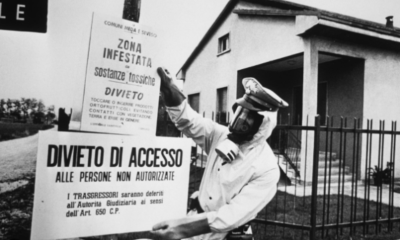
Seveso - 50 years on: EU strengthens its commitment to industrial safety in a changing landscape of risk

Why young jobseekers struggle to find roles abroad that fit their expertise

Commission opens formal investigation into possible gun jumping in XXXLutz's acquisition of Porta

Farmers, fair markets and consumers: new report highlights the role of EU competition rules in agriculture

Shared commitment to advance EOSC through new EOSC Nodes and EOSC projects

ECR MEPs question the European Commission on cardiovascular health and diet promoting the Mediterranean diet as an alternative to ultra-processed foods as key to tackling obesity

Falling in love with the Maldives

STATEMENT by the Ministry of Foreign Affairs of the Republic of Kazakhstan

Kazakhstan seeks regional AI leadership as economic partnership with China enters new phase

Starmer’s problem? 'He is not a politician'

Why a Brussels–Nicosia–Eastern Mediterranean strategic affairs platform would benefit the European Union

Albania's Vlora airport standoff tests investor confidence as EU accession clock ticks
ECR MEPs question the European Commission on cardiovascular health and diet promoting the Mediterranean diet as an alternative to ultra-processed foods as key to tackling obesity

Kazakhstan's fixed capital investment tops 9.5 trillion tenge in H1 2026

Commission adopts simpler rules for EU agri-food promotion policy

Kazakhstan reforms under scrutiny at Brussels Press Club round table

Japan should face up to history and contribute more to regional peace

Ambassador calls for 'speeding up' of co-operation between EU and Kazakhstan

Timur Turlov at Smart Moves Summit 2025: How chess can transform global education

Shevtsova’s case: Out-of-court sanctions dismantling trust in Ukrainian cause

The future of European transport

Trump Vs Trueman

US 'no longer' an 'unconditional ally' for Europe - MEP
-
 South Africa4 days ago
EU and South Africa kick off intergovernmental dialogue on Clean Trade and Investment Partnership
-
 Disasters5 days ago
Seveso - 50 years on: EU strengthens its commitment to industrial safety in a changing landscape of risk
-
 Employment4 days ago
Why young jobseekers struggle to find roles abroad that fit their expertise
-
 European Commission5 days ago
Commission opens formal investigation into possible gun jumping in XXXLutz's acquisition of Porta