Brexit
Ireland warns Cameron: No change on free movement as Sir John Major urges Berlin to move


Opinion by Denis MacShane
The Irish Foreign Minister Charles Flanagan came to London to express his hope that Britain would not leave the EU. He politely made the point that the UK exports more to Ireland than to China, India and Brazil. His main message was the now voluble worry to be heard across European capitals that Brexit – Britain exiting the EU – is a distinct possibility. The latest European leader to go public over Brexit is Italy’s Matteo Renzi who said it would be a ‘disaster’ if the UK quit Europe.
But voters are not listening. They are expected on Thursday (20 November) to give a massive majority to UKIP, as Nigel Farage’s anti-EU party wins its second seat in the House of Commons at a by-election in Kent.
Flanagan’s London talk at a European Council on Foreign Affairs breakfast followed directly after an evening speech by the former British prime minister Sir John Major in Berlin. Speaking to Angela Merkel's CDU Major said that Brexit was now a 50-50 possibility. This is a distinct change of tone from Sir John’s enthusiastic support for David Cameron’s Brexit referendum when it was announced in January 2013. Then he welcomed it. ‘This referendum could heal many old scores and have a cleansing effect on politics,’ Sir John told the Royal Institute of International Affairs.
The concept of a referendum as a giant Brillo pad that scrubs clean British politics is a curious metaphor. Sir John did not have a happy time with Europe in his seven years as Prime Minister. Beginning with the expulsion from the ERM and ending with the weird beef war when the Major government tried to stop all EU business in protest at European health concerns following the eruption of mad cow disease, Sir John’s refusal to take on the Eurosceptic fronde in his party made him appear weak.
But he never wavered from his view that Britain should stay in the EU. His frank admission in Germany that Prime Minister Cameron’s referendum could lead to Brexit shows how far his Conservative Party has travelled. On BBC TV's main weekend political programme Sir John Major talked about a temporary year-long ban on EU citizens arriving to work in Britain - which like his efforts to force mad cow beef down the throats of Europeans in the 1990s seems to have little purchase on reality.
The former prime minister was contradicted by the British Foreign Secretary, Philip Hammond, who told the Sunday Telegraph that "Britain has to be prepared to walk away from the EU" if London cannot win the concessions the Tories want.
Ahead of Thursday's by-election Major told the BBC that Ukip was 'un-British'. Insulting all the voters ready to vote UKIP is a curious strategy of winning them back to the fold but shows the extent of internal panic in Britain's ruling party.
There is now a curious inversion in press coverage of Ukip. The liberal Independent gives a weekly column to the Ukip leader, Nigel Farage, and the leftish weekly, New Statesman, devoted its front cover and several pages inside to a long fawning interview with Mr Farage and his claim to represent l’anglais moyen and his insistence he was neither left nor right but a simple patriot who wants to win back democratic control over law-making and control of frontiers from Brussels.
Ireland’s Foreign Minister is far too experienced a politician to be drawn on whether or not Britain would actually vote to leave. However speaking for the Irish government Flanagan said Dublin views "with dismay the prospect of a UK marginalized within the EU, or, still worse, outside it together".
And he added that while no-one objected to tackling so-called social benefit tourism there could be no question of accepting David Cameron’s on-the-record assertion that “the right to go and work in other countries should not be an unqualified right”.
On the contrary, Flanagan insisted that “to try and place and general limitations on the free movement of EU within the Union would be to strike at a basic principle on which the union is founded”. He added: “I cannot conceive of any way in which such limitations would find the necessary political support around the table.”
The Irish foreign minister was adding his country’s voice to the now long list of EU leaders who have made clear they will not allow the UK unilaterally to place limits on the free movement of people within the EU.
All of Europe’s better-off nations have seen in the past and see today a high degree of people movement, notably from poorer nations. Britain has had its share given the strength of the UK economy and the deregulated UK labour market which permit employers to hire and fire low-pay EU workers at will.
But Britain has always depended on foreign labour. Around 2 million Irish came to Britain over the years as shovel-equipped building-site labourers, nurses and domestic servants. There are 1 million Romanians in Italy and 2 million Poles in Germany.
To be sure this people movement can cause social and political difficulties. Yet in 1958 John F Kennedy wrote a book : America. A Nation of Immigrants, asserting the value immigrant energy and hard work being to a welcoming nation. He became US president two years later. Today, no European leader is ready to challenge with wit, style and conviction the rise of anti-immigrant xenophobia and the populist passions channeled into anti-EU parties.
Ireland today has a higher proportion of EU citizens living and working there compared to Britain but no Irish political leader is making the same demands as Cameron that there should be limits on free movement.
Talking to me after his talk at the European Council of Foreign Relations in London, Flanagan warned about the dangers of referendums. “We have too much experience in Ireland. You end up with people voting on every issue and passion other than the question on the ballot paper. Referendums are not a sensible way of doing politics.”
An Irish lesson on politics now being ignored by the ruling elites in London.
Denis MacShane is the UK’s former Minister for Europe. His book Brexit: How Britain Will Leave Europe will be published by IB Tauris in early 2015.
Share this article:
EU Reporter publishes articles from a variety of outside sources which express a wide range of viewpoints. The positions taken in these articles are not necessarily those of EU Reporter. Please see EU Reporter’s full Terms and Conditions of publication for more information EU Reporter embraces artificial intelligence as a tool to enhance journalistic quality, efficiency, and accessibility, while maintaining strict human editorial oversight, ethical standards, and transparency in all AI-assisted content. Please see EU Reporter’s full A.I. Policy for more information.



EU and South Africa kick off intergovernmental dialogue on Clean Trade and Investment Partnership

Seveso - 50 years on: EU strengthens its commitment to industrial safety in a changing landscape of risk

Why young jobseekers struggle to find roles abroad that fit their expertise

Commission opens formal investigation into possible gun jumping in XXXLutz's acquisition of Porta

Shared commitment to advance EOSC through new EOSC Nodes and EOSC projects

Falling in love with the Maldives

Farmers, fair markets and consumers: new report highlights the role of EU competition rules in agriculture

ECR MEPs question the European Commission on cardiovascular health and diet promoting the Mediterranean diet as an alternative to ultra-processed foods as key to tackling obesity

STATEMENT by the Ministry of Foreign Affairs of the Republic of Kazakhstan

Kazakhstan seeks regional AI leadership as economic partnership with China enters new phase

Starmer’s problem? 'He is not a politician'

Why a Brussels–Nicosia–Eastern Mediterranean strategic affairs platform would benefit the European Union

Albania's Vlora airport standoff tests investor confidence as EU accession clock ticks
ECR MEPs question the European Commission on cardiovascular health and diet promoting the Mediterranean diet as an alternative to ultra-processed foods as key to tackling obesity

Kazakhstan's fixed capital investment tops 9.5 trillion tenge in H1 2026

Commission adopts simpler rules for EU agri-food promotion policy

Kazakhstan reforms under scrutiny at Brussels Press Club round table

Japan should face up to history and contribute more to regional peace

Ambassador calls for 'speeding up' of co-operation between EU and Kazakhstan

Timur Turlov at Smart Moves Summit 2025: How chess can transform global education

Shevtsova’s case: Out-of-court sanctions dismantling trust in Ukrainian cause

The future of European transport

Trump Vs Trueman

US 'no longer' an 'unconditional ally' for Europe - MEP
-
 South Africa5 days ago
EU and South Africa kick off intergovernmental dialogue on Clean Trade and Investment Partnership
-
 Disasters5 days ago
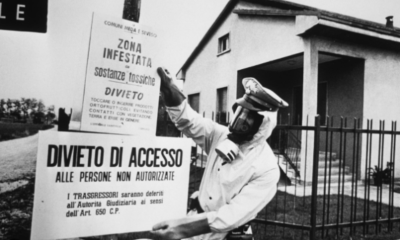
Seveso - 50 years on: EU strengthens its commitment to industrial safety in a changing landscape of risk
-
 Employment5 days ago
Why young jobseekers struggle to find roles abroad that fit their expertise
-
 European Commission5 days ago
Commission opens formal investigation into possible gun jumping in XXXLutz's acquisition of Porta