Awards
Charlemagne Youth Prize: Deadline extended to 23 February
SHARE:

 Are you a 16-30 year old running a project with a European dimension? If so, you have until 23 February to register for the 2015 edition of the Charlemagne Youth Prize. The aim of the Prize is to encourage the development of European consciousness among young people, as well as their participation in European integration projects. Read on to be in with a chance of winning a cash prize as well as trips to Aachen and the European Parliament.
The Charlemagne Youth Prize is organized by the European Parliament and the International Charlemagne Prize Foundation in Aachen, and is awarded each year for projects run by people aged between 16 and 30. The Prize is awarded to projects undertaken by young people which foster understanding, promote the development of a shared sense of European identity, and offer practical examples of Europeans living together as one community. The three winning projects are awarded €5,000, €3,000, and €2,000 respectively. Their representatives will be invited to visit the European Parliament in Brussels or Strasbourg in the autumn. Representatives of the 28 national winning projects will be invited to the Charlemagne Youth Prize award ceremony and the International Charlemagne Prize of the City of Aachen award ceremony two days later during a four-day trip to Aachen next May.
2014 winners
In 2014 the first prize went to Our Europe, a Danish travel project. They travelled around Europe for 12 months, lived with young people and interviewed them, later publishing the interviews on their website. The second prize went to the JouwDelft & Co youth congress from the Netherlands. Fifty-five young people from all over Europe gathered for a week to brainstorm on youth and unemployment. Third prize in 2014 went to Employment4U, a training project by the Youth Dynamics organisation from Cyprus. It consisted of workshops and seminars on how to search for work and develop certain skills.
Share this article:
EU Reporter publishes articles from a variety of outside sources which express a wide range of viewpoints. The positions taken in these articles are not necessarily those of EU Reporter. Please see EU Reporter’s full Terms and Conditions of publication for more information EU Reporter embraces artificial intelligence as a tool to enhance journalistic quality, efficiency, and accessibility, while maintaining strict human editorial oversight, ethical standards, and transparency in all AI-assisted content. Please see EU Reporter’s full A.I. Policy for more information.



South Africa5 days ago
EU and South Africa kick off intergovernmental dialogue on Clean Trade and Investment Partnership

Disasters5 days ago
Seveso - 50 years on: EU strengthens its commitment to industrial safety in a changing landscape of risk

Employment5 days ago
Why young jobseekers struggle to find roles abroad that fit their expertise

European Commission5 days ago
Commission opens formal investigation into possible gun jumping in XXXLutz's acquisition of Porta

Agriculture5 days ago
Farmers, fair markets and consumers: new report highlights the role of EU competition rules in agriculture

Horizon Europe5 days ago
Shared commitment to advance EOSC through new EOSC Nodes and EOSC projects

Tourism4 days ago
Falling in love with the Maldives

Italy3 days ago
ECR MEPs question the European Commission on cardiovascular health and diet promoting the Mediterranean diet as an alternative to ultra-processed foods as key to tackling obesity

Kazakhstan5 hours ago
STATEMENT by the Ministry of Foreign Affairs of the Republic of Kazakhstan

China1 day ago
Kazakhstan seeks regional AI leadership as economic partnership with China enters new phase

UK2 days ago
Starmer’s problem? 'He is not a politician'

Euro-Mediterranean relations2 days ago
Why a Brussels–Nicosia–Eastern Mediterranean strategic affairs platform would benefit the European Union

Albania2 days ago
Albania's Vlora airport standoff tests investor confidence as EU accession clock ticks
Italy3 days ago
ECR MEPs question the European Commission on cardiovascular health and diet promoting the Mediterranean diet as an alternative to ultra-processed foods as key to tackling obesity

Kazakhstan3 days ago
Kazakhstan's fixed capital investment tops 9.5 trillion tenge in H1 2026

Agriculture3 days ago
Commission adopts simpler rules for EU agri-food promotion policy

Kazakhstan3 months ago
Kazakhstan reforms under scrutiny at Brussels Press Club round table

Japan7 months ago
Japan should face up to history and contribute more to regional peace

Kazakhstan8 months ago
Ambassador calls for 'speeding up' of co-operation between EU and Kazakhstan

World12 months ago
Timur Turlov at Smart Moves Summit 2025: How chess can transform global education

Ukraine1 year ago
Shevtsova’s case: Out-of-court sanctions dismantling trust in Ukrainian cause

Transport1 year ago
The future of European transport

Politics1 year ago
Trump Vs Trueman

US1 year ago
US 'no longer' an 'unconditional ally' for Europe - MEP
-
 South Africa5 days ago
EU and South Africa kick off intergovernmental dialogue on Clean Trade and Investment Partnership
-
 Disasters5 days ago
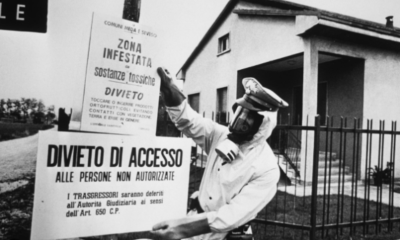
Seveso - 50 years on: EU strengthens its commitment to industrial safety in a changing landscape of risk
-
 Employment5 days ago
Why young jobseekers struggle to find roles abroad that fit their expertise
-
 European Commission5 days ago
Commission opens formal investigation into possible gun jumping in XXXLutz's acquisition of Porta