EU
Greece debt crisis: Tsipras in new bailout 'concessions'

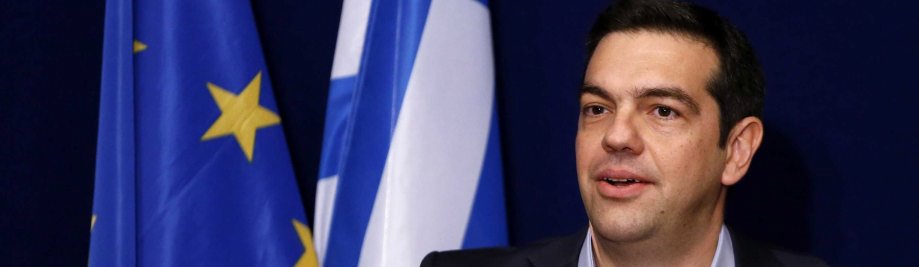
Greece's Prime Minister Alexis Tsipras has offered new concessions to the country's creditors. A letter to creditors obtained by the Financial Times says Tsipras is prepared to accept most conditions that were on the table before talks collapsed and he called a referendum.
On Tuesday, eurozone finance ministers refused to extend the previous bailout.
But Germany says a new agreement on a bailout would not be possible until after the referendum this weekend.
The Financial Times says that Mr Tsipras was prepared to accept a deal made by creditors last weekend, if a few changes were agreed.
Greece's national broadcaster ERT says Mr Tsipras would accept a deal with only minor requests for changes.
European markets surged on the news Greece might be willing to accept a deal.
But the German chancellor, Angela Merkel, said no new bailout talks would be possible before Greece holds a referendum on Sunday, that will ask Greeks if they want to accept their creditors' proposals.
Lenders' proposals - key sticking points
- VAT (sales tax): Alexis Tsipras accepts a new three-tier system, but wants to keep 30% discount on the Greek islands' VAT rates. Lenders want the islands' discounts scrapped
- Pensions: Ekas top-up grant for some 200,000 poorer pensioners will be phased out by 2020 - as demanded by lenders. But Mr Tsipras says no to immediate Ekas cut for the wealthiest 20% of Ekas recipients
- Defence: Mr Tsipras says reduce ceiling for military spending by €200m in 2016 and €400m in 2017. Lenders call for €400m reduction - no mention of €200m
Source: European Commission document, 26 Jun 15 (pdf)
Two key meetings are to take place to discuss aid for Greece, after Athens missed the deadline for a €1.5bn (£1.1bn, $1.7bn) payment to the IMF on Tuesday.
In one, officials with the European Central Bank (ECB) will decide whether to grant an emergency loan to Greece.
In the second, eurozone finance ministers will discuss Greece's latest proposal for a third bailout. It would last two years and amount to €29.1bn.
Ministers will discuss the proposal in a conference call at 15h30 GMT.
With the eurozone bailout expired, Greece no longer has access to billions of euro in funds.
Only three other countries are still in arrears to the IMF - Sudan, Somalia and Zimbabwe. Between them, they owe €1.6bn, only marginally more than Greece.
The ECB has also frozen its liquidity lifeline to Greek banks, that did not open this week.
Withdrawals from cash machines are capped at just €60 a day and long queues have been forming outside banks.
However, up to 1,000 branches re-opened on Wednesday (1 July) to allow pensioners - many of whom do not use bank cards - a one-off weekly withdrawal of up to €120.
The Associated Press news agency said many pensioners had waited outside banks from before dawn, only to be told to return on Thursday or Friday.
Some pensioners were told their pensions had not yet been deposited, AP said.
"It's very bad,'' said Popi Stavrakaki, 68. "I'm afraid it will be worse soon. I have no idea why this is happening."
Close to 300 pensioners marched on the Bank of Greece in Athens after being given only a small sum from banks in the morning instead of the entire €120.
The economy is frozen and we're in a liquidity trap, where everyone wants to hold euros.
Investment is non-existent and consumption has collapsed.
People have stopped submitting tax income statements and with the banks closed the government cannot receive anything. Supermarkets don't know what to do with the cash they receive.
We are not in the eurozone bailout programme so the European Central Bank cannot increase funding to the banking system.
Credit agencies have reduced the ratings on Greek banks so they're almost junk and even if they have collateral to give they may not be able to get new funding. Plus, we are essentially in default of the IMF.
Even if there is a deal, capital controls will be here for some time because there would be a rush on the banks if they re-opened.
An interim solution would only calm the symptoms of the crisis. Under a more permanent deal difficulties would remain for some weeks.
1 July - Eurogroup - the finance ministers of the eurozone - holds a telephone conference to discuss new proposal from Greek Prime Minister Alexis Tsipras
5 July - Referendum on creditors' proposals takes place, which many say is effectively a vote on Greek membership of the eurozone
20 July - Greece must redeem €3.46 billion of bonds held by the European Central Bank. If it fails to do so, the ECB can cut off Greece's access to emergency loans
Share this article:
EU Reporter publishes articles from a variety of outside sources which express a wide range of viewpoints. The positions taken in these articles are not necessarily those of EU Reporter. Please see EU Reporter’s full Terms and Conditions of publication for more information EU Reporter embraces artificial intelligence as a tool to enhance journalistic quality, efficiency, and accessibility, while maintaining strict human editorial oversight, ethical standards, and transparency in all AI-assisted content. Please see EU Reporter’s full A.I. Policy for more information.



EU and South Africa kick off intergovernmental dialogue on Clean Trade and Investment Partnership

Seveso - 50 years on: EU strengthens its commitment to industrial safety in a changing landscape of risk

Why young jobseekers struggle to find roles abroad that fit their expertise

Commission opens formal investigation into possible gun jumping in XXXLutz's acquisition of Porta

Farmers, fair markets and consumers: new report highlights the role of EU competition rules in agriculture

Shared commitment to advance EOSC through new EOSC Nodes and EOSC projects

ECR MEPs question the European Commission on cardiovascular health and diet promoting the Mediterranean diet as an alternative to ultra-processed foods as key to tackling obesity

Falling in love with the Maldives

STATEMENT by the Ministry of Foreign Affairs of the Republic of Kazakhstan

Kazakhstan seeks regional AI leadership as economic partnership with China enters new phase

Starmer’s problem? 'He is not a politician'

Why a Brussels–Nicosia–Eastern Mediterranean strategic affairs platform would benefit the European Union

Albania's Vlora airport standoff tests investor confidence as EU accession clock ticks
ECR MEPs question the European Commission on cardiovascular health and diet promoting the Mediterranean diet as an alternative to ultra-processed foods as key to tackling obesity

Kazakhstan's fixed capital investment tops 9.5 trillion tenge in H1 2026

Commission adopts simpler rules for EU agri-food promotion policy

Kazakhstan reforms under scrutiny at Brussels Press Club round table

Japan should face up to history and contribute more to regional peace

Ambassador calls for 'speeding up' of co-operation between EU and Kazakhstan

Timur Turlov at Smart Moves Summit 2025: How chess can transform global education

Shevtsova’s case: Out-of-court sanctions dismantling trust in Ukrainian cause

The future of European transport

Trump Vs Trueman

US 'no longer' an 'unconditional ally' for Europe - MEP
-
 South Africa4 days ago
EU and South Africa kick off intergovernmental dialogue on Clean Trade and Investment Partnership
-
 Disasters4 days ago
Seveso - 50 years on: EU strengthens its commitment to industrial safety in a changing landscape of risk
-
 Employment4 days ago
Why young jobseekers struggle to find roles abroad that fit their expertise
-
 European Commission5 days ago
Commission opens formal investigation into possible gun jumping in XXXLutz's acquisition of Porta