In the wake of the 2016 International Day Against Homophobia, Transphobia and Biphobia (17 May) (#IDAHOT2016), the United States and the European Union are protesting against a UN decision to bar at least 20 non-governmental groups from taking part in a major AIDS conference next month.
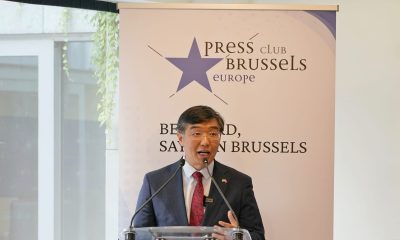
US Ambassador Samantha Power (pictured) said the NGOs taken off the list of participants “appear to have been chosen for their involvement in LGBTI, transgender or youth advocacy.”
In a letter to UN General Assembly president Mogens Lykketoft, Power requested that these groups, including the US-based Global Action for Trans Equality, be allowed to take part in the 8-10 June high-level meeting on HIV/AIDS.
European Union Ambassador Joao Vale de Almeida said the NGOs had been struck from the list following objections from member states and requested information on which countries opposed their presence.
One of the European NGOs that has been barred from taking part is the Eurasian Coalition on Male Health, based in Estonia, which has been vocal on gay rights in Russia and other former Soviet republics.
Egypt requested that 11 groups be barred from attending the AIDS conference, in a request sent on behalf of 51 countries of the Organisation of Islamic Cooperation (OIC), according to a letter seen by AFP on Tuesday.
Aside from the Estonian and US gay activist groups, Egypt objected to the participation of Ishtar Men Who Have Sex With Men group from Kenya and the Asia Pacific Transgender Network from Thailand.
The list cited groups from Egypt, Guyana, Jamaica, Peru, Ukraine as well as African Men for Sexual Health and Rights, a coalition of 18 LGBT groups across Africa.
The EU ambassador wrote in his letter sent last week that changes to an initial list of delegations were made without consulting member states.
"Given that transgender people are 49 times more likely to be living with HIV than the general population, their exclusion from the high-level meeting will only impede global progress in combatting the HIV/AIDS pandemic and achieving the goal of an AIDS-free generation," Power wrote in her letter.
The high-level meeting is aimed at fast-tracking measures to end the HIV epidemic by 2030.
Speaking on the International Day Against Homophobia, Transphobia And Biphobia, EU High Representative Federica Mogherini said: "On the occasion of the International Day against Homophobia, Transphobia and Biphobia, the EU reiterates its strong commitment to the equality and dignity of all human beings irrespective of their sexual orientation and gender identity.
"Despite recent progress around the world, almost 80 jurisdictions still criminalize same-sex relations. In many places discrimination and violence against lesbian, gay, bisexual, transgender and intersex persons is a daily occurrence.
"The EU repeats its call to all governments around the world to abide by their international human rights commitments, to repudiate intolerance and to promote equality as enshrined in the Universal Declaration on Human Rights and other instruments. On this day, the EU also wishes to pay homage to the courageous advocacy efforts carried out by human rights defenders, activists, media journalists, and civil society organizations to address the violations faced by LGBTI persons.
"Their work has been crucial every step of the way in putting these issues on the table, documenting abuses and advocating for the effective protection of fundamental human rights.
"In line with the EU Guidelines on the rights of LGBTI persons and the EU Action Plan on Human Rights and Democracy, we will continue to work with all partners to advance the human rights of all around the world."
The rights of LGBTI people in the European Union
The prohibition of discrimination and the protection of human rights are important elements of the EU legal order. Nevertheless, discrimination against lesbian, gay, bisexual, transgender and intersex (LGBTI) persons persists throughout the EU, taking various forms including verbal abuse and physical violence. Sexual orientation is now recognized in EU law as a ground of discrimination. However, the scope of these provisions is limited and does not cover social protection, healthcare, education and access to goods and services, leaving LGBTI people particularly vulnerable in these areas.
Moreover, EU competence does not extend to recognition of marital or family status. In this area, national regulations vary, with some Member States offering same-sex couples the right to marry, others allowing alternative forms of registration, and yet others not providing any legal status for same-sex couples. Same-sex couples may or may not have the right to adopt children and to access assisted reproduction. These divergent legal statuses have implications, for instance, for partners from two Member States with different standards who want to formalise/legalise their relationship or for same-sex couples and their families wishing to move to another member state.
Combating discrimination has become part of EU internal and external policies and the subject of numerous resolutions of the European Parliament. However, action in this area remains problematic when it touches on issues pertaining to areas traditionally reserved to member states, such as marital status and family law.