EU
#Maritime: 22,000 EU vessels fishing outside EU waters highlights need for greater transparency

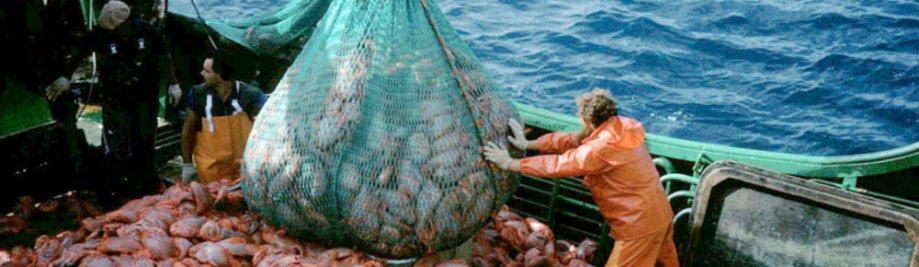
As WhoFishesFar.org discloses vessels authorized to fish in non-EU waters since 2008, a lack of official data on those operating in Africa under private agreements raises alarm bells.
The recently updated WhoFishesFar.org website has today revealed that 22,085 EU vessels have operated in non-EU waters since 2008. The list, however, falls short on European vessels operating under private agreements with African countries which remain completely under the radar. Oceana is therefore calling on EU Ministers in the upcoming Council of Ministers in June to back new regulation that would ensure these vessels adhere to EU controls and standards.
“These vessels operate in a total lack of transparency and control and should not have the same access to the European market as operators that adhere to EU environmental and labour standards. This is a loophole that makes the EU fleet vulnerable to illegal activities. It must be addressed or the Council of Ministers will fail to implement a fundamental objective of the Common Fisheries Policy, which requires transparency and sustainability in all fishing operations. The benefits of cleaning up the EU fleet far outweigh any argument of unnecessary red tape,” said Oceana in Europe Fisheries Director María José Cornax.
The regulation governing the activities of Europe’s external fishing fleet is under review. In December last year, the European Commission released a proposal that is now being negotiated with member states and the EU Parliament. Oceana and its allies are calling for it to include an important measure against illegal fishing: the creation of a public register with data on private and chartering agreements, that includes unique vessel identifiers (IMO numbers) in order to track all vessels’ compliance history.
WhoFishesFar.org was launched back in July 2015 and for the first time-ever made public data about the EU long-distance fleet. The new set of data released today includes all official authorisations granted by the EU between 2008 and 2015.
However, when it comes to the activities of the EU fleet in non-EU waters neither the European Commission nor national governments have a full understanding of who mans the vessels and what they are doing in the waters. This lack of transparency makes it impossible to effectively monitor the fleet and exposes the EU to illegal, unreported and unregulated (IUU) fishing, which ultimately deprives coastal communities from their livelihoods, endangers threatened species, damages marine habitats and overexploits fish stocks.
New data on the European Union external fishing fleet: more transparency in world fisheries
Share this article:
EU Reporter publishes articles from a variety of outside sources which express a wide range of viewpoints. The positions taken in these articles are not necessarily those of EU Reporter. Please see EU Reporter’s full Terms and Conditions of publication for more information EU Reporter embraces artificial intelligence as a tool to enhance journalistic quality, efficiency, and accessibility, while maintaining strict human editorial oversight, ethical standards, and transparency in all AI-assisted content. Please see EU Reporter’s full A.I. Policy for more information.





Setting a new benchmark in premium travel

Survey on an EU Blueprint for intellectual property licensing and spinoff creation

Burnham as PM? 'Wait and see'

Rule of law report strengthens EU democracy and fundamental rights

Statement by the Ministry of Foreign Affairs of the Republic of Kazakhstan

Kazakhstan: Central Election Committee reviews the results of the nomination of candidates for the deputies of Kurultai

Ban on destruction of unsold clothes and shoes enters into application

Rome–Washington Axis: Italian Diplomat Zanardi Landi to Help Save Bosnia

The Digital Markets Act Is Hurting Europeans. It’s Time to Put Progress, Free Markets, and Competition First

From Ukraine to Suez: Why the Mediterranean has become the strategic centre of gravity

Commission sends Statements of Objections to several companies and trade associations in suspected construction chemicals cartel

Commission endorses Latvia’s €617 million Social Climate Plan to support vulnerable households and transport users in the clean transition

Commission fines AliExpress €550 million for breaching the Digital Services Act

Astana Hub unveils infrastructure to support AI innovation in health care

The security environment of the South Caucasus amid changing geopolitical realities

Why the US is losing its legitimacy as a global superpower and the trust of the comity of nations

Kazakhstan reforms under scrutiny at Brussels Press Club round table

Japan should face up to history and contribute more to regional peace

Ambassador calls for 'speeding up' of co-operation between EU and Kazakhstan

Timur Turlov at Smart Moves Summit 2025: How chess can transform global education

Shevtsova’s case: Out-of-court sanctions dismantling trust in Ukrainian cause

The future of European transport

Trump Vs Trueman

US 'no longer' an 'unconditional ally' for Europe - MEP
-
 Aviation/airlines4 days ago
Setting a new benchmark in premium travel
-
 Intellectual Property Rights4 days ago
Survey on an EU Blueprint for intellectual property licensing and spinoff creation
-
 Labour4 days ago
Burnham as PM? 'Wait and see'
-
 EU law4 days ago
Rule of law report strengthens EU democracy and fundamental rights