EU
End of #RoamingCharges in June 2017: Commission will redefine fair use policy


A few days ago, the Commission's services started a consultation on the draft measures related to the end of roaming charges foreseen in June 2017. In light of the initial feed-back received, President Juncker has instructed the services to withdraw that text and to work on a new proposal. For more than a decade, the Commission has been working hard to reduce roaming charges imposed on European travellers.
Indeed, since 2007 roaming prices have decreased by more than 90% for calls, text messages and data. When the European Parliament and the Council agreed to the Commission's proposal to abolish roaming charges, they asked the Commission to define measures to prevent roaming services from being used for other reasons than periodic travelling (so-called "fair use policy"). A new proposal will be presented soon.
Background on implementing acts
Delegated and implementing acts are used by the EU institutions to update elements of adopted legislation or specify the conditions by which EU laws should be implemented.
Since 30 June, in line with its commitments under the Better Regulation Agenda and the broad effort to increase transparency in the EU Institutions, draft delegated and implementing acts are put online and open for public feedback for a period of four weeks.
Upcoming initiatives under the Digital Single Market strategy
- Presentation of proposals to update EU telecoms rules
- Presentation of proposals to modernize the EU copyright framework (see action plan presented in December 2015)
Detailed timing should be communicated on Monday (12 September).
Full agenda Vice-President Ansip. Follow his Twitter account for regular updates and feedback on meetings @Ansip_EU.
Full agenda Commission Oettinger. Follow his Twitter account for regular updates and feedback on meetings @GOettingerEU.
Share this article:
EU Reporter publishes articles from a variety of outside sources which express a wide range of viewpoints. The positions taken in these articles are not necessarily those of EU Reporter. Please see EU Reporter’s full Terms and Conditions of publication for more information EU Reporter embraces artificial intelligence as a tool to enhance journalistic quality, efficiency, and accessibility, while maintaining strict human editorial oversight, ethical standards, and transparency in all AI-assisted content. Please see EU Reporter’s full A.I. Policy for more information.



EU and South Africa kick off intergovernmental dialogue on Clean Trade and Investment Partnership

Seveso - 50 years on: EU strengthens its commitment to industrial safety in a changing landscape of risk

Why young jobseekers struggle to find roles abroad that fit their expertise

Commission opens formal investigation into possible gun jumping in XXXLutz's acquisition of Porta

Farmers, fair markets and consumers: new report highlights the role of EU competition rules in agriculture

Shared commitment to advance EOSC through new EOSC Nodes and EOSC projects

ECR MEPs question the European Commission on cardiovascular health and diet promoting the Mediterranean diet as an alternative to ultra-processed foods as key to tackling obesity

Falling in love with the Maldives

STATEMENT by the Ministry of Foreign Affairs of the Republic of Kazakhstan

Kazakhstan seeks regional AI leadership as economic partnership with China enters new phase

Starmer’s problem? 'He is not a politician'

Why a Brussels–Nicosia–Eastern Mediterranean strategic affairs platform would benefit the European Union

Albania's Vlora airport standoff tests investor confidence as EU accession clock ticks
ECR MEPs question the European Commission on cardiovascular health and diet promoting the Mediterranean diet as an alternative to ultra-processed foods as key to tackling obesity

Kazakhstan's fixed capital investment tops 9.5 trillion tenge in H1 2026

Commission adopts simpler rules for EU agri-food promotion policy

Kazakhstan reforms under scrutiny at Brussels Press Club round table

Japan should face up to history and contribute more to regional peace

Ambassador calls for 'speeding up' of co-operation between EU and Kazakhstan

Timur Turlov at Smart Moves Summit 2025: How chess can transform global education

Shevtsova’s case: Out-of-court sanctions dismantling trust in Ukrainian cause

The future of European transport

Trump Vs Trueman

US 'no longer' an 'unconditional ally' for Europe - MEP
-
 South Africa5 days ago
EU and South Africa kick off intergovernmental dialogue on Clean Trade and Investment Partnership
-
 Disasters5 days ago
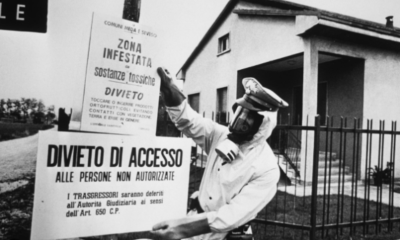
Seveso - 50 years on: EU strengthens its commitment to industrial safety in a changing landscape of risk
-
 Employment5 days ago
Why young jobseekers struggle to find roles abroad that fit their expertise
-
 European Commission5 days ago
Commission opens formal investigation into possible gun jumping in XXXLutz's acquisition of Porta