Brexit
#Brexit vote may be reversed, says Nigel Farage


Brexit campaigner Nigel Farage said on Sunday (14 January) he was increasingly concerned that a vote for Britain to leave the European Union could be overturned by a powerful group of the bloc’s supporters, writes Elizabeth Piper.
In an interview with Britain’s Observer newspaper, Farage, former head of the eurosceptic UK Independence Party, said a well-organized and funded group of campaigners that wants to remain in the EU was drowning out those who want to leave.
“The Remain side are making all the running,” said Farage. “They have a majority in parliament, and unless we get ourselves organized we could lose the historic victory that was Brexit.”
Last week, Farage said he was warming to the idea of holding a second vote on Britain’s membership of the EU to settle the argument - an idea written off by other Brexit campaigners who urged the government to press on with exit talks with the bloc.
In 2016, Britons voted 52% to 48% in favour of ending its membership of the EU. Prime Minister Theresa May has ruled out a second referendum, saying her government was seeking an amicable divorce with the EU which will safeguard the economy and enable Britain to secure trade deals with other countries.
But some Brexit campaigners fear her approach has led to the watering down of several of their demands, including the ability to reduce immigration and to reclaim sovereignty by leaving the jurisdiction of the European Court of Justice.
Several pro-EU campaigners say the need for a second referendum has become more pressing because public opinion is showing some signs of turning against Brexit as the difficulty of negotiations to leave the bloc becomes increasingly clear.
On Thursday (11 January), a ComRes poll for the Daily Mirror newspaper of 1,049 adults showed that although more people think there should not be a second referendum (51% to 43%), if there were to be a re-run, voters say they would opt to stay in the EU by 55% to 45%.
Share this article:

EU Reporter publishes articles from a variety of outside sources which express a wide range of viewpoints. The positions taken in these articles are not necessarily those of EU Reporter. Please see EU Reporter’s full Terms and Conditions of publication for more information EU Reporter embraces artificial intelligence as a tool to enhance journalistic quality, efficiency, and accessibility, while maintaining strict human editorial oversight, ethical standards, and transparency in all AI-assisted content. Please see EU Reporter’s full A.I. Policy for more information.




ECR MEPs question the European Commission on cardiovascular health and diet promoting the Mediterranean diet as an alternative to ultra-processed foods as key to tackling obesity

Albania's Vlora airport standoff tests investor confidence as EU accession clock ticks

Iran’s regime in crisis: Negotiations, internal divisions and growing resistance

Commission approves €659 million German state aid for four new semiconductor facilities

Why a Brussels–Nicosia–Eastern Mediterranean strategic affairs platform would benefit the European Union

Kazakhstan seeks regional AI leadership as economic partnership with China enters new phase

EU law on nitrates pollution remains effective, with scope for smarter implementation

Starmer’s problem? 'He is not a politician'

European Statistical Monitor: July edition

Commission publishes state aid guidance on carbon contracts for difference

Commission greenlights Estonia's fourth payment request for €135.5 million under NextGenerationEU

Drones, dominance, and the Iranian impasse: The West's strategic blind spot

Kazakhstan's fixed capital investment tops 9.5 trillion tenge in H1 2026

Commission registers two European Citizens' Initiatives on education and housing

Kazakhstan and Belgium: Building a Partnership for the Future

New court ruling questions 'proportionality' of Mayor Erion Veliaj’s detention

Kazakhstan reforms under scrutiny at Brussels Press Club round table

Japan should face up to history and contribute more to regional peace

Ambassador calls for 'speeding up' of co-operation between EU and Kazakhstan

Timur Turlov at Smart Moves Summit 2025: How chess can transform global education

Shevtsova’s case: Out-of-court sanctions dismantling trust in Ukrainian cause

The future of European transport

Trump Vs Trueman

US 'no longer' an 'unconditional ally' for Europe - MEP
-
 Italy4 days ago
ECR MEPs question the European Commission on cardiovascular health and diet promoting the Mediterranean diet as an alternative to ultra-processed foods as key to tackling obesity
-
 Albania4 days ago
Albania's Vlora airport standoff tests investor confidence as EU accession clock ticks
-
 Iran4 days ago
Iran’s regime in crisis: Negotiations, internal divisions and growing resistance
-
 Germany4 days ago
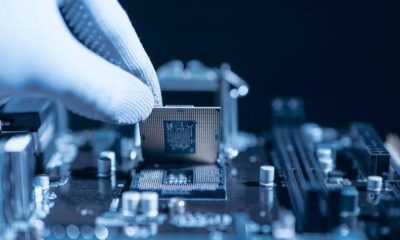
Commission approves €659 million German state aid for four new semiconductor facilities