Brexit
Britain's parliament should have free vote to reject #Brexit - former PM John Major


Former British Prime Minister John Major called on Wednesday (28 February) for a free vote in parliament on whether to reject any deal negotiated with the European Union, warning the current plans are “bad politics” that will damage the economy, writes Andrew MacAskill.
Major, who campaigned to stay in the EU, said it must be parliament, not the government, that makes the final decision on any new deal with the EU, and that there is an argument for a second referendum on any such deal.
Any vote on the final Brexit deal is of such national importance that politicians should be allowed to vote according to their consciences, he said.
“This must be a decisive vote, in which parliament can accept or reject the final outcome or send the negotiators back to seek improvements, or order a referendum,” Major, 74, said in a speech in central London.
Opponents of Brexit are trying to garner enough support in the lower house of parliament, the House of Commons, to block any possible withdrawal deal Prime Minister Theresa May brings back from Brussels in October.
Blocking any deal the government manages to clinch with the EU could plunge British politics into crisis with uncertain consequences for Brexit, for the world’s sixth largest economy, and for the fate of London, the only global financial hub to rival New York.
Major’s own 1990-1997 premiership was plagued by disputes within his party over Europe, including Britain’s ignominious withdrawal from the European Exchange Rate Mechanism, the predecessor to the single currency, in 1992.
At the same time as calling for parliament to have a final say on Brexit, Major savaged his party’s own handling of the negotiations.
Major accused the ruling Conservatives of putting party interests above the national interest by imposing red lines on the negotiations and said this means the party risks losing the support of business leaders over its approach.
Major, who as prime minister helped begin the peace process in Northern Ireland in the 1990s, also hit out at recent calls to ignore the dangers of imposing a hard border on the island of Ireland.
“We need a policy to protect the Good Friday Agreement – and we need one urgently,” he said. “And it is our responsibility to find one – not the European Union.”
Share this article:

EU Reporter publishes articles from a variety of outside sources which express a wide range of viewpoints. The positions taken in these articles are not necessarily those of EU Reporter. Please see EU Reporter’s full Terms and Conditions of publication for more information EU Reporter embraces artificial intelligence as a tool to enhance journalistic quality, efficiency, and accessibility, while maintaining strict human editorial oversight, ethical standards, and transparency in all AI-assisted content. Please see EU Reporter’s full A.I. Policy for more information.



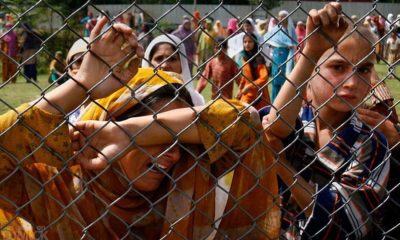
Kashmir's 9,765 missing women and girls demand international attention

EU foreign ministers to discuss options for restricting trade with Israeli communities in Judea and Samaria

New EU strategy must help farmers move toward a more humane food system

EU-Mexico: While others build walls, Europe builds bridges

Srebrenica's lesson is prevention. Why isn't the world applying It to Kashmir?

Europe's Cloud moment: The DMA must now deliver

European operation dismantles €10 million illicit cigarette network in Spain

Survey of city economic experts: Cities are driving Draghi’s competitiveness agenda, but need EU recognition to scale action

EU weighs age-13 limit for 'social media plus'

ALROSA Re-elects Supervisory Board with Minimal Changes

Public consultation on Joint Undertakings, Art. 185 initiatives, and thematic priorities for European Partnerships under Horizon Europe 28-34

Poland sees new research and changes to policies on migrant integration

EU launches a Team Gaza Initiative to support early recovery in Gaza with an initial amount of nearly €900 million

NESBp: Strengthening maritime spatial planning across the North Sea and Baltic Sea

Energy Union Task Force takes stock of oil and gas security of supply in the EU

AIFC to host Astana Finance Days 2026 in September

Kazakhstan reforms under scrutiny at Brussels Press Club round table

Japan should face up to history and contribute more to regional peace

Ambassador calls for 'speeding up' of co-operation between EU and Kazakhstan

Timur Turlov at Smart Moves Summit 2025: How chess can transform global education

Shevtsova’s case: Out-of-court sanctions dismantling trust in Ukrainian cause

The future of European transport

Trump Vs Trueman

US 'no longer' an 'unconditional ally' for Europe - MEP
-
 Kashmir4 days ago
Kashmir's 9,765 missing women and girls demand international attention
-
 Israel2 days ago
EU foreign ministers to discuss options for restricting trade with Israeli communities in Judea and Samaria
-
 Animal welfare4 days ago
New EU strategy must help farmers move toward a more humane food system
-
 Mexico4 days ago
EU-Mexico: While others build walls, Europe builds bridges