EU
#Greece loosens capital controls, raises cash withdrawal limit


Greece has moved to ease capital restrictions imposed since the summer of 2015, raising the monthly limit of cash that can be withdrawn from bank accounts by 28%, writes George Georgiopoulos.
Athens first imposed capital controls in July 2015 to stem a flight of cash from its banks at the height of a debt crisis that led to its third financial bailout since 2010.
The leftist-led government was then clashing with official lenders in a push against austerity and nearly crashed Greece out of the euro zone.
Capital controls have since been gradually loosened.
Based on a finance ministry decree published in the government’s gazette, individuals will be allowed to withdraw lump sums of up to €2,300 in cash per month from bank accounts from €1,800 currently, effective from March 1.
The decree also increased the amount of euros or other currency banknotes that individuals can take abroad per trip to €2,300 from €2,000.
It allows banks to accept client orders to transfer money abroad of up to €2,000 every two months.
“The decision is one more step in the framework of the roadmap for the gradual lifting of restrictions on cash withdrawals and the transfer of money,” the finance ministry said.
Greece’s current bailout expires in August.
In May last year Greek authorities outlined a road map for the gradual lifting of capital controls, with their plan contingent on several factors, including restored access to money markets.
Access to financial markets for both the government and the country’s banks would have to be restored as well.
Share this article:

EU Reporter publishes articles from a variety of outside sources which express a wide range of viewpoints. The positions taken in these articles are not necessarily those of EU Reporter. Please see EU Reporter’s full Terms and Conditions of publication for more information EU Reporter embraces artificial intelligence as a tool to enhance journalistic quality, efficiency, and accessibility, while maintaining strict human editorial oversight, ethical standards, and transparency in all AI-assisted content. Please see EU Reporter’s full A.I. Policy for more information.



ECR MEPs question the European Commission on cardiovascular health and diet promoting the Mediterranean diet as an alternative to ultra-processed foods as key to tackling obesity

Albania's Vlora airport standoff tests investor confidence as EU accession clock ticks

Iran’s regime in crisis: Negotiations, internal divisions and growing resistance

Shusha Global Media Forum: Azerbaijan’s Answer to Disinformation

Commission approves French state aid to support offshore wind energy

Why a Brussels–Nicosia–Eastern Mediterranean strategic affairs platform would benefit the European Union

Kazakhstan seeks regional AI leadership as economic partnership with China enters new phase

Commission approves €659 million German state aid for four new semiconductor facilities

Commission publishes state aid guidance on carbon contracts for difference

Commission greenlights Estonia's fourth payment request for €135.5 million under NextGenerationEU

Drones, dominance, and the Iranian impasse: The West's strategic blind spot

Kazakhstan's fixed capital investment tops 9.5 trillion tenge in H1 2026

Commission registers two European Citizens' Initiatives on education and housing

Kazakhstan and Belgium: Building a Partnership for the Future

New court ruling questions 'proportionality' of Mayor Erion Veliaj’s detention

Rome–Washington Axis: Italian Diplomat Zanardi Landi to Help Save Bosnia

Kazakhstan reforms under scrutiny at Brussels Press Club round table

Japan should face up to history and contribute more to regional peace

Ambassador calls for 'speeding up' of co-operation between EU and Kazakhstan

Timur Turlov at Smart Moves Summit 2025: How chess can transform global education

Shevtsova’s case: Out-of-court sanctions dismantling trust in Ukrainian cause

The future of European transport

Trump Vs Trueman

US 'no longer' an 'unconditional ally' for Europe - MEP
-
 Italy4 days ago
ECR MEPs question the European Commission on cardiovascular health and diet promoting the Mediterranean diet as an alternative to ultra-processed foods as key to tackling obesity
-
 Albania4 days ago
Albania's Vlora airport standoff tests investor confidence as EU accession clock ticks
-
 Iran4 days ago
Iran’s regime in crisis: Negotiations, internal divisions and growing resistance
-
 Azerbaijan5 days ago
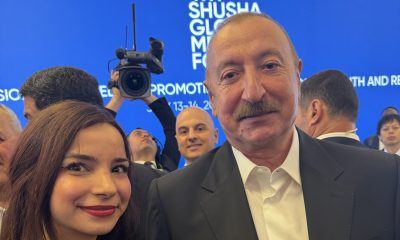
Shusha Global Media Forum: Azerbaijan’s Answer to Disinformation