EU
New rules for safer and cleaner #cars

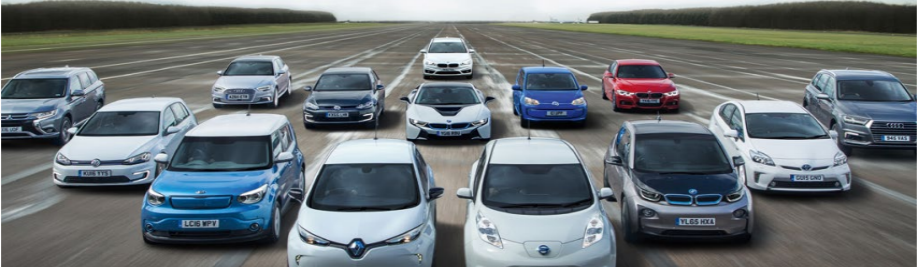 A new EU regulation aims to create more rigorous checks on the automotive sectors with stricter requirements for emission tests and heavy fines for cheating companies (watch video here).
MEPs voted in favour of rules reinforcing the procedures for the type-approval of motor vehicles and enabling the European Commission to check the work of EU countries regarding this and impose sanctions on manufacturers breaking the rules. It is an update of the existing directive from 2007, making the testing and approval of new cars more transparent.
How cars are tested
Every new vehicle must have a certificate of conformity to an approved type before it can be sold in the EU. This is why new types of vehicles are tested by national authorities on about 70 different criteria, ranging from safety to emissions.
What the new rules will change
The new rules will improve the transparency of the procedures, making it easier to monitor them and impose penalties if they are not being followed correctly. For example, to ensure testing centres are independent, EU countries will collect testing fees from manufacturers so that they are not in touch with the centres.
National market authorities will also have to conduct spot checks on cars already in circulation to ensure vehicles do indeed meet the standards that have been declared and tested. In addition the European Commission will have the power to impose fines of up to €30,000 per vehicle on manufacturers breaking the rules.
UK ECR member Daniel Dalton, the MEP responsible for steering the plans through Parliament, said: “This proposal should give consumers the confidence that the cars they buy are exactly what they say they are."
Parliament's role
In negotiations with the Council, which will also need to approve the new rules, Parliament was able to secure strict controls on emissions. One fifth of all checks on newly-registered cars must be related to vehicle emissions.
Parliament negotiations were also able to successfully argue for thorough market checks: one out of 40,000 vehicles registered the previous year must be checked. They were also able to make sure the Commission has the ability to assess the measures adopted and implemented by EU countries.
Emissions scandal
The new regulation is in response to the emission scandals in 2015 when car manufacturers such as Volkswagen were discovered tampering with emissions test. The scandal led the Parliament to set up a special enquiry committee to investigate what had happened and how it can prevented happening again in future. Check out the committee's final report with recommendations.
Read more about the emissions scandal and how the Parliament responded.
Automotive industry in the EU
The automotive industry is a key sector of the European economy, producing 2.5 million jobs and accounting for 6.4% of the EU's gross domestic product.
Share this article:
EU Reporter publishes articles from a variety of outside sources which express a wide range of viewpoints. The positions taken in these articles are not necessarily those of EU Reporter. Please see EU Reporter’s full Terms and Conditions of publication for more information EU Reporter embraces artificial intelligence as a tool to enhance journalistic quality, efficiency, and accessibility, while maintaining strict human editorial oversight, ethical standards, and transparency in all AI-assisted content. Please see EU Reporter’s full A.I. Policy for more information.



ECR MEPs question the European Commission on cardiovascular health and diet promoting the Mediterranean diet as an alternative to ultra-processed foods as key to tackling obesity

Falling in love with the Maldives

Kurmuk gold project highlights Africa’s changing investment landscape

Albania's Vlora airport standoff tests investor confidence as EU accession clock ticks

Commission adds exemptions to rules on removability of portable batteries

Iran’s regime in crisis: Negotiations, internal divisions and growing resistance

EU steps up international support for Palestinians with major initiative for Gaza's early recovery and stronger international coordination

Natura 2000 Network offers opportunities for sustainable tourism across Europe

Kazakhstan and Belgium: Building a Partnership for the Future

New court ruling questions 'proportionality' of Mayor Erion Veliaj’s detention

Rome–Washington Axis: Italian Diplomat Zanardi Landi to Help Save Bosnia

Burnham as PM? 'Wait and see'

Ban on destruction of unsold clothes and shoes enters into application

Survey on an EU Blueprint for intellectual property licensing and spinoff creation

Rule of law report strengthens EU democracy and fundamental rights

EU launches Ukraine defence industrial partnership, Drone Deal and disburses €1 billion for drones *

Kazakhstan reforms under scrutiny at Brussels Press Club round table

Japan should face up to history and contribute more to regional peace

Ambassador calls for 'speeding up' of co-operation between EU and Kazakhstan

Timur Turlov at Smart Moves Summit 2025: How chess can transform global education

Shevtsova’s case: Out-of-court sanctions dismantling trust in Ukrainian cause

The future of European transport

Trump Vs Trueman

US 'no longer' an 'unconditional ally' for Europe - MEP
-
 Italy4 days ago
ECR MEPs question the European Commission on cardiovascular health and diet promoting the Mediterranean diet as an alternative to ultra-processed foods as key to tackling obesity
-
 Tourism5 days ago
Falling in love with the Maldives
-
 China5 days ago
Kurmuk gold project highlights Africa’s changing investment landscape
-
 Albania4 days ago
Albania's Vlora airport standoff tests investor confidence as EU accession clock ticks