EU
State aid: Commission concludes tax on admission fees to public and private #Casinos in #Greece from 1995 to 2012 does not involve state aid


The European Commission has concluded that the system of levies on admission fees applied by casinos in Greece until November 2012 does not constitute state aid within the meaning of EU rules. Since 1995 all casinos in Greece have been required to charge a regulated admission fee to customers. Casinos then have to pass on 80% of the admission fee to the Greek state as a tax, while retaining the remaining 20% as remuneration for issuing tickets and covering expenses. Until November 2012, the general regulated admission fee was €15.
However, state-owned casinos were subject to a lower regulated admission fee of €6. Following a complaint by a private casino operator, the Commission opened a formal investigation into the differentiated tax levied on admissions to public and private casinos in Greece. In May 2011, the Commission found that the measure constituted incompatible state aid in favour of public casinos, and ordered Greece to recover the unlawful aid. This Commission decision was overturned by the General Court in September 2014.
The European Court of Justice confirmed the General Court's judgment in October 2015. The Commission has adopted a new decision, in line with the findings of the European courts. The Commission has concluded that the differentiated tax levied on admissions to public casinos and private casinos did not confer a selective advantage to public casinos. This is because the amounts due to be paid to the Greek state by private and public casinos corresponded to the same percentage (80%) of the different regulated admission fees charged to customers by the two categories of casinos. In November 2012, the differentiation between admission fees for private and public casinos in Greece was abolished and a €6 admission fee set for all casinos.
More information will be available on the Commission's competition website, in the State Aid Register under the case number SA.28973.
Share this article:
EU Reporter publishes articles from a variety of outside sources which express a wide range of viewpoints. The positions taken in these articles are not necessarily those of EU Reporter. Please see EU Reporter’s full Terms and Conditions of publication for more information EU Reporter embraces artificial intelligence as a tool to enhance journalistic quality, efficiency, and accessibility, while maintaining strict human editorial oversight, ethical standards, and transparency in all AI-assisted content. Please see EU Reporter’s full A.I. Policy for more information.



Open letter to president of the European Commission on the Schengen Entry/Exit System (EES)

EU policy toward Azerbaijan: Why Brussels must move beyond political dialogue

The Iran war changed Pakistan's strategic value, not its political trajectory

PMI defends AI consultation tool as scrutiny grows over EU tobacco rules review

Civil society from across the EU gathers in Cork to reinforce Europe’s sustainability agenda

Democracy cannot be selective: Why Europe must apply the same standards abroad that it demands at home

Majority think EU is a 'place of stability in a troubled world'

Rating of American Express casino sites in the UK

Can the EU resist US pressure on medicine prices?

Energy Union: New Spain-Portugal electricity interconnection inaugurated

Timing of the publication of the EU ETS auction calendar

Commissioner Šuica travels to Cairo to strengthen euro-mediterranean parliamentary cooperation and youth engagement

Commission seeks feedback on targeted amendment of EMFAF

Commission proposes five joint defence projects to strengthen Europe's industrial capabilities

Study: Europe's defense runs on American servers

The ancient myths that tourism boards (and slot designers) can't stop selling

Kazakhstan reforms under scrutiny at Brussels Press Club round table

Japan should face up to history and contribute more to regional peace

Ambassador calls for 'speeding up' of co-operation between EU and Kazakhstan

Timur Turlov at Smart Moves Summit 2025: How chess can transform global education

Shevtsova’s case: Out-of-court sanctions dismantling trust in Ukrainian cause

The future of European transport

Trump Vs Trueman

US 'no longer' an 'unconditional ally' for Europe - MEP
-
 Schengen4 days ago
Open letter to president of the European Commission on the Schengen Entry/Exit System (EES)
-
 Azerbaijan4 days ago
EU policy toward Azerbaijan: Why Brussels must move beyond political dialogue
-
 Iran4 days ago
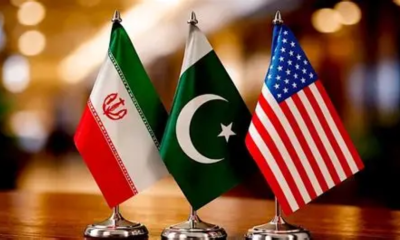
The Iran war changed Pakistan's strategic value, not its political trajectory
-
 European Commission4 days ago
PMI defends AI consultation tool as scrutiny grows over EU tobacco rules review