Conference of Peripheral Maritime Regions of Europe (CPMR)
EU criticized over plan to boost #FishingFleets

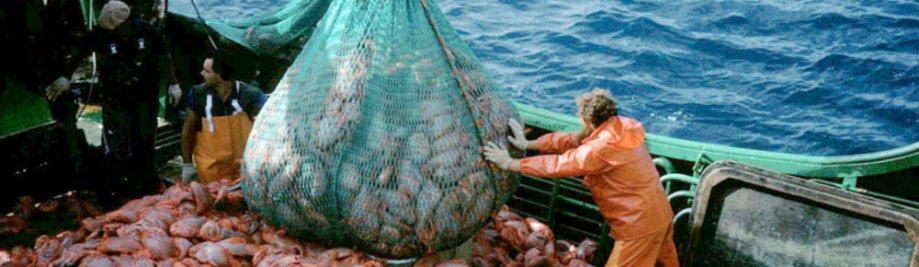
Campaigners trying to protect global fish stocks say an EU proposal to fund fishing boats in the fleets of Europe’s outermost regions breaks the bloc’s international commitments and will lead to overexploitation, writes the Financial Times.
The European Commission has put forward plans to allow member states to help buy boats for the fishing fleets in the French, Portuguese and Spanish overseas territories — including the Canary Islands, Guadeloupe, Madeira and French Guiana. The commission says its plan would encourage sustainable fisheries and wider development in fragile economies that are remote and vulnerable to climate change. These EU “outer regions” host 80% of the bloc’s biodiversity.
Klaudija Cremers, lawyer for environmental campaigner Client Earth, said: “We are very concerned that granting state aid for extra fishing vessels in the EU’s overseas territories will lead to dangerous levels of overfishing. Similar subsidies in the past have shown this to be the case.” A commission spokesperson defended the proposed measure, saying state aid “can only be granted if there is enough scientific information to clearly demonstrate that the stocks which the new vessel would potentially target are in a healthy state”.
Campaigners are concerned the safeguard will not be effective, pointing to a 2017 European parliamentary report, which said there was insufficient data available to assess the health of the fishing stocks in the relevant regions. In 2015 one-third of stocks in the world were fished at biologically unsustainable levels, up from 10% in 1974, according to the latest report on world fisheries from the UN’s Food and Agriculture Organisation. Brussels’ proposal would reverse a ban on providing state funds to increase EU fishing fleet capacity, which has been in place in most of the bloc since 2004 and in the outer regions since 2006. Countries have been negotiating to end subsidies that contribute to overcapacity and overfishing since 2001, including in ongoing World Trade Organization talks.
The EU’s proposal for its next fisheries budget from 2020 would also outlaw funding that increases fishing capacity. Beyond the risk of increased fishing capacity, campaigners also worry that the new subsidy could increase pressure for similar fishing subsidies in other parts of the EU and undermine international progress. “[The proposed subsidy] sends a dangerous signal from Europe to political leaders around the world that such subsidies should be allowed,” said Cremers. While the bloc’s overseas territories have had special EU status since 1999, giving them extraordinary consideration in regard to some union rules, this “does not hand the EU a blank cheque to disregard its promises to stop overfishing and neglect its international commitments”, she said.
The fisheries in the EU’s overseas territories, which are about 5 per cent of the bloc’s overall fleet, received annual subsidies worth €15 million between 2007-13, growing to €27.5m between 2014-20, according to commission figures. The commission’s public consultation on the plan closes in late September; new rules would be reviewed by member states and could be in place as early as November. The EU’s outermost regions are Portugal’s Azores and Madeira; Spain’s Canary Islands; and France’s French Guiana, Guadeloupe, Martinique, Mayotte, Réunion and Saint-Martin.
Share this article:

EU Reporter publishes articles from a variety of outside sources which express a wide range of viewpoints. The positions taken in these articles are not necessarily those of EU Reporter. Please see EU Reporter’s full Terms and Conditions of publication for more information EU Reporter embraces artificial intelligence as a tool to enhance journalistic quality, efficiency, and accessibility, while maintaining strict human editorial oversight, ethical standards, and transparency in all AI-assisted content. Please see EU Reporter’s full A.I. Policy for more information.






Setting a new benchmark in premium travel

Survey on an EU Blueprint for intellectual property licensing and spinoff creation

Burnham as PM? 'Wait and see'

Rule of law report strengthens EU democracy and fundamental rights

Statement by the Ministry of Foreign Affairs of the Republic of Kazakhstan

Ban on destruction of unsold clothes and shoes enters into application

Kazakhstan and Belgium: Building a Partnership for the Future

Kazakhstan: Central Election Committee reviews the results of the nomination of candidates for the deputies of Kurultai

The Digital Markets Act Is Hurting Europeans. It’s Time to Put Progress, Free Markets, and Competition First

From Ukraine to Suez: Why the Mediterranean has become the strategic centre of gravity

Commission sends Statements of Objections to several companies and trade associations in suspected construction chemicals cartel

Commission endorses Latvia’s €617 million Social Climate Plan to support vulnerable households and transport users in the clean transition

Commission fines AliExpress €550 million for breaching the Digital Services Act

Astana Hub unveils infrastructure to support AI innovation in health care

The security environment of the South Caucasus amid changing geopolitical realities

Why the US is losing its legitimacy as a global superpower and the trust of the comity of nations

Kazakhstan reforms under scrutiny at Brussels Press Club round table

Japan should face up to history and contribute more to regional peace

Ambassador calls for 'speeding up' of co-operation between EU and Kazakhstan

Timur Turlov at Smart Moves Summit 2025: How chess can transform global education

Shevtsova’s case: Out-of-court sanctions dismantling trust in Ukrainian cause

The future of European transport

Trump Vs Trueman

US 'no longer' an 'unconditional ally' for Europe - MEP
-
 Aviation/airlines4 days ago
Setting a new benchmark in premium travel
-
 Intellectual Property Rights4 days ago
Survey on an EU Blueprint for intellectual property licensing and spinoff creation
-
 Labour4 days ago
Burnham as PM? 'Wait and see'
-
 EU law4 days ago
Rule of law report strengthens EU democracy and fundamental rights