Brexit
UK to favour skilled migration, no EU preference after #Brexit - reports


Prime Minister Theresa May and her ministers have agreed to focus Britain’s post-Brexit migration system on high-skilled migrants and will not offer preference to European Union workers, newspapers said, writes William Schomberg.
In a nod to the concerns of businesses, the plan backed by May’s cabinet on Monday would also allow some access for low-skilled foreign workers, the newspapers said.
Last week, official advisers recommended prioritising high-skilled migrant workers coming to Britain after Brexit, alarming companies in low-paid sectors. They also said there should be no preferential treatment for workers from the EU.
The Financial Times said that while ministers backed the advisers’ proposals, the idea of giving no preferential treatment to EU workers could change if Britain agrees a trade deal with the bloc.
“That would mean a better deal on migration, but the same offer would be available if we struck trade deals with other countries around the world,” the newspaper quoted a source as saying.
With little more than six months to go before Britain leaves the EU, London and Brussels remain at loggerheads on what their future relationship will look like, and May has insisted on new controls for migrant workers from the bloc.
Spokesmen for May’s office and for Britain’s interior ministry declined to comment on the reports.
The government’s advisers said in their report that evidence suggested high-skilled migrants had a more positive impact on productivity than lower-skilled workers from abroad.
After she was rebuffed by other EU leaders who told her last week that her Brexit plans would not work, May told her ministers that they must hold their nerve in the impasse, her office said after Monday’s (24 September) cabinet meeting.
May said her plan was the only viable one on the table and that she remained confident of securing a deal, it said in a statement. “At the same time, the government will continue to sensibly plan for no deal,” the statement quoted her as saying.
The lack of an agreement could hamper airlines, stop the movement of goods to the world’s biggest trading bloc and cause headaches for pet owners who want to take their dogs on holiday, documents showed.
Share this article:

EU Reporter publishes articles from a variety of outside sources which express a wide range of viewpoints. The positions taken in these articles are not necessarily those of EU Reporter. Please see EU Reporter’s full Terms and Conditions of publication for more information EU Reporter embraces artificial intelligence as a tool to enhance journalistic quality, efficiency, and accessibility, while maintaining strict human editorial oversight, ethical standards, and transparency in all AI-assisted content. Please see EU Reporter’s full A.I. Policy for more information.






EU and South Africa kick off intergovernmental dialogue on Clean Trade and Investment Partnership

Seveso - 50 years on: EU strengthens its commitment to industrial safety in a changing landscape of risk

Why young jobseekers struggle to find roles abroad that fit their expertise

Commission opens formal investigation into possible gun jumping in XXXLutz's acquisition of Porta

Farmers, fair markets and consumers: new report highlights the role of EU competition rules in agriculture

Shared commitment to advance EOSC through new EOSC Nodes and EOSC projects

Falling in love with the Maldives

ECR MEPs question the European Commission on cardiovascular health and diet promoting the Mediterranean diet as an alternative to ultra-processed foods as key to tackling obesity

Kazakhstan seeks regional AI leadership as economic partnership with China enters new phase

Starmer’s problem? 'He is not a politician'

Why a Brussels–Nicosia–Eastern Mediterranean strategic affairs platform would benefit the European Union

Albania's Vlora airport standoff tests investor confidence as EU accession clock ticks
ECR MEPs question the European Commission on cardiovascular health and diet promoting the Mediterranean diet as an alternative to ultra-processed foods as key to tackling obesity

Kazakhstan's fixed capital investment tops 9.5 trillion tenge in H1 2026

Commission adopts simpler rules for EU agri-food promotion policy

Commission approves €659 million German state aid for four new semiconductor facilities

Kazakhstan reforms under scrutiny at Brussels Press Club round table

Japan should face up to history and contribute more to regional peace

Ambassador calls for 'speeding up' of co-operation between EU and Kazakhstan

Timur Turlov at Smart Moves Summit 2025: How chess can transform global education

Shevtsova’s case: Out-of-court sanctions dismantling trust in Ukrainian cause

The future of European transport

Trump Vs Trueman

US 'no longer' an 'unconditional ally' for Europe - MEP
-
 South Africa4 days ago
EU and South Africa kick off intergovernmental dialogue on Clean Trade and Investment Partnership
-
 Disasters4 days ago
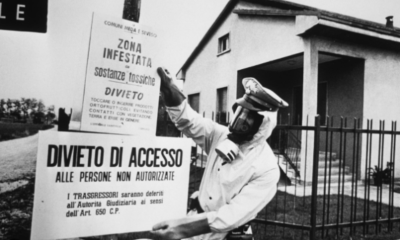
Seveso - 50 years on: EU strengthens its commitment to industrial safety in a changing landscape of risk
-
 Employment4 days ago
Why young jobseekers struggle to find roles abroad that fit their expertise
-
 European Commission4 days ago
Commission opens formal investigation into possible gun jumping in XXXLutz's acquisition of Porta