Brexit
UK #Brexit minister to work with compromise Brexit plan Conservatives


Britain’s Brexit minister Stephen Barclay held a meeting of a new working group of Conservative lawmakers on Monday (4 January) seeking to find an alternative plan to avoid a post-Brexit border in Ireland, Prime Minister Theresa May’s office said, writes Kylie MacLellan.
Last week lawmakers voted to support May’s Brexit deal if she could agree “alternative arrangements” to replace a controversial Irish border arrangement, known as the backstop.
The EU has so far ruled out reopening the exit deal to make any changes to the backstop, an insurance policy that aims to prevent the reintroduction of border controls between EU member Ireland and the British province of Northern Ireland.
May, whose deal was roundly rejected by parliament in January, won the support to seek changes to it thanks in large part to a peace accord between both Eurosceptic and pro-EU factions within her divided Conservative Party.
May said she would work with the backers of the this strategy, dubbed the Malthouse Compromise, which courts Brexiteers with a promise to ditch the backstop and appeals to pro-EU Conservatives by pledging safeguards against the risk of disruption if no exit deal can be agreed.
“To take forward this work, the government is establishing an Alternative Arrangements Working Group which will hold regular meetings with Steve Barclay,” May’s office said in a statement.
The group will be supported by officials from several government departments, and membership will include pro-Brexit lawmakers Steve Baker, Marcus Fysh and Owen Paterson, as well as pro-EU Conservatives Damian Green and Nicky Morgan.
May’s office said Attorney General Geoffrey Cox was also looking into the legal changes Britain is aiming to secure to the backstop, with ideas including a unilateral exit mechanism or a time limit.
Share this article:

EU Reporter publishes articles from a variety of outside sources which express a wide range of viewpoints. The positions taken in these articles are not necessarily those of EU Reporter. Please see EU Reporter’s full Terms and Conditions of publication for more information EU Reporter embraces artificial intelligence as a tool to enhance journalistic quality, efficiency, and accessibility, while maintaining strict human editorial oversight, ethical standards, and transparency in all AI-assisted content. Please see EU Reporter’s full A.I. Policy for more information.





The South Caucasus at a historic turning point: Between lasting peace and renewed confrontation
The security environment of the South Caucasus amid changing geopolitical realities

Commission registers two European Citizens' Initiatives on education and housing

Kazakhstan and Belgium: Building a Partnership for the Future

Why the US is losing its legitimacy as a global superpower and the trust of the comity of nations

Commission endorses Latvia’s €617 million Social Climate Plan to support vulnerable households and transport users in the clean transition

Commission sends Statements of Objections to several companies and trade associations in suspected construction chemicals cartel

Commission publishes state aid guidance on carbon contracts for difference

JoinCare explores scientific exchange during visit to Japan’s National Institute of Infectious Diseases

New episode – DGT podcast: Languages and Technology

Become a European Commission trainee – applications are now open

Commission outlines measures to strengthen Europe's banking sector and support growth

British political shifts and the future of UK-China ties
The South Caucasus at a historic turning point: Between lasting peace and renewed confrontation

As Ireland chairs the EU Presidency, what impact has over fifty years of EU membership had on Ireland

The Digital Markets Act Is Hurting Europeans. It’s Time to Put Progress, Free Markets, and Competition First

Kazakhstan reforms under scrutiny at Brussels Press Club round table

Japan should face up to history and contribute more to regional peace

Ambassador calls for 'speeding up' of co-operation between EU and Kazakhstan

Timur Turlov at Smart Moves Summit 2025: How chess can transform global education

Shevtsova’s case: Out-of-court sanctions dismantling trust in Ukrainian cause

The future of European transport

Trump Vs Trueman

US 'no longer' an 'unconditional ally' for Europe - MEP
-
 South Caucasus1 day ago
The South Caucasus at a historic turning point: Between lasting peace and renewed confrontation
-
South Caucasus2 days ago
The security environment of the South Caucasus amid changing geopolitical realities
-
 European Citizens' Initiative4 days ago
Commission registers two European Citizens' Initiatives on education and housing
-
 Belgium5 days ago
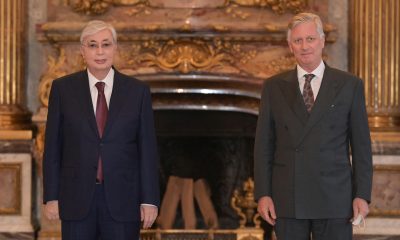
Kazakhstan and Belgium: Building a Partnership for the Future