Brexit
#Brexit set to hurt UK investment for years - BoE's Haskel


British business investment will probably stay weak for the next few years because of uncertainty linked to Brexit, a Bank of England (BoE) interest-rate setter said, calling into question suggestions of a Brexit deal “dividend” by the finance minister, writes Andy Bruce.
As Jonathan Haskel (pictured) gave his first speech since joining the BoE’s Monetary Policy Committee in September, Prime Minister Theresa May’s Brexit strategy was in meltdown after her failure to win last-minute concessions from the EU ahead of a key parliamentary vote on Tuesday.
Haskel said a planned 21-month transition period that is supposed to come into effect when Britain formally exits the European Union on 29 March might run for longer than expected.
In the longer term, companies also need to know whether Britain will have a customs union agreement with the EU or strike a free trade agreement in order to have a sense of how high any new barriers to trade with the bloc will be, he said.
“The longer-term question is whether investment will eventually bounce back after uncertainty is resolved. The answer to this depends on what trade deal is struck,” he said in a speech at the Department of Economics at the University of Birmingham.
“At least for the next few years the prospect of low investment seems possible.”
Companies in Britain cut back their investment in each of the four calendar quarters of 2018 — the longest such run since the depths of the global financial crisis — as the country approached its departure from the European Union.
Haskel said almost 70% of the slowdown in business investment in Britain since the Brexit referendum in June 2016 was linked to uncertainty over Brexit.
The BoE is concerned that weak business investment will aggravate Britain’s low productivity growth, holding down growth in wages and making the economy more susceptible to inflation.
With May facing the risk of another humiliating defeat of her Brexit plan in parliament on Tuesday, she has opened up the possibility of a short extension to the current negotiations.
Finance minister Philip Hammond, seeking to help May get parliament behind her deal, has said investment is likely to pick up once companies have more clarity that Britain can avoid an economically damaging no-deal Brexit.
Haskel declined to comment on the implications of weak investment for the BoE’s thinking on interest rates, saying that would be something for his next speech.
“Since this thing... is very hard to predict, that’s the way I would think about it. But that will be the next speech, to trace through the relative impact on the demand and supply,” he said during a question-and-answer session after his speech.
The BoE has said it expects to resume raising interest rates if Britain can seal a deal to avoid a no-deal Brexit.
Governor Mark Carney and some other policymakers have said they think they would probably need to cut rates if Britain fails to secure a transition deal to ease the shock of its exit from the EU.
Share this article:

EU Reporter publishes articles from a variety of outside sources which express a wide range of viewpoints. The positions taken in these articles are not necessarily those of EU Reporter. Please see EU Reporter’s full Terms and Conditions of publication for more information EU Reporter embraces artificial intelligence as a tool to enhance journalistic quality, efficiency, and accessibility, while maintaining strict human editorial oversight, ethical standards, and transparency in all AI-assisted content. Please see EU Reporter’s full A.I. Policy for more information.




The South Caucasus at a historic turning point: Between lasting peace and renewed confrontation
The security environment of the South Caucasus amid changing geopolitical realities

Commission registers two European Citizens' Initiatives on education and housing

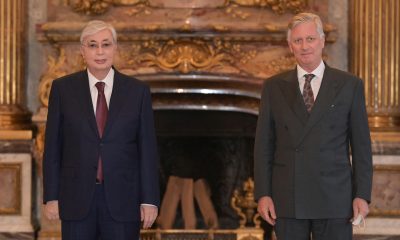
Kazakhstan and Belgium: Building a Partnership for the Future

Commission endorses Latvia’s €617 million Social Climate Plan to support vulnerable households and transport users in the clean transition

Commission sends Statements of Objections to several companies and trade associations in suspected construction chemicals cartel

Why the US is losing its legitimacy as a global superpower and the trust of the comity of nations

Astana Hub unveils infrastructure to support AI innovation in health care

JoinCare explores scientific exchange during visit to Japan’s National Institute of Infectious Diseases

New episode – DGT podcast: Languages and Technology

Become a European Commission trainee – applications are now open

Commission outlines measures to strengthen Europe's banking sector and support growth

British political shifts and the future of UK-China ties
The South Caucasus at a historic turning point: Between lasting peace and renewed confrontation

As Ireland chairs the EU Presidency, what impact has over fifty years of EU membership had on Ireland

The Digital Markets Act Is Hurting Europeans. It’s Time to Put Progress, Free Markets, and Competition First

Kazakhstan reforms under scrutiny at Brussels Press Club round table

Japan should face up to history and contribute more to regional peace

Ambassador calls for 'speeding up' of co-operation between EU and Kazakhstan

Timur Turlov at Smart Moves Summit 2025: How chess can transform global education

Shevtsova’s case: Out-of-court sanctions dismantling trust in Ukrainian cause

The future of European transport

Trump Vs Trueman

US 'no longer' an 'unconditional ally' for Europe - MEP
-
 South Caucasus1 day ago
The South Caucasus at a historic turning point: Between lasting peace and renewed confrontation
-
South Caucasus2 days ago
The security environment of the South Caucasus amid changing geopolitical realities
-
 European Citizens' Initiative4 days ago
Commission registers two European Citizens' Initiatives on education and housing
-
 Belgium5 days ago
Kazakhstan and Belgium: Building a Partnership for the Future