Brexit
Conservative Party faces historically worst election result in #Brexit crisis - poll


Prime Minister Theresa May’s Conservative Party would suffer its worst general election result if a vote were held now, according to an opinion poll, as voters frustrated with the deadlock over Brexit rejected the main political parties, writes Andrew MacAskill.
The Conservatives, one of the most successful parties in the western world, would slump to third place in a nationwide vote with 19 percent, its lowest place since the party was founded almost 200 years ago, the YouGov poll for The Times newspaper showed.
The Labour Party, which is led by socialist Jeremy Corbyn and has been pushing for a softer version of Brexit, would also finish third with 19 percent of the vote, its worst performance since 1918, according to the poll.
The main beneficiaries of the swing against the two main parties would be the political parties that took unequivocal positions for or against Brexit. Voters appear to be abandoning the Conservatives and Labour, which in their own ways have been trying to offer some sort of compromise on Brexit.
The Lib Dems, which has campaigned on a straightforward demand for a new referendum, aiming to reverse Brexit, would emerge as the largest political party with 24 percent of the vote, the poll showed.
The next largest party would be Nigel Farage’s Brexit Party, which has only existed for a few months and supports a clean break with the European Union, with 22 percent of the vote.
The results underscore the growing polarization of British politics, pointing to yet more uncertainty after the country was thrust into its biggest political crisis since World War Two, when voters opted in a referendum to leave the EU in 2016.
The United Kingdom was supposed to have left on March 29 but it remains a member of the EU and its politicians are still arguing over how, when or even whether the country will leave the club it joined in 1973.
May was forced to resign as prime minister last week after three years of trying but failing to pull Britain out of the EU, setting off a contest among lawmakers to replace her.
The Conservatives have ruled alone or in coalition for 63 years in the last century. The party, founded in 1834, has never finished outside the top two parties in a nationwide vote.
Leading candidates to become Britain’s next prime minister have said Britain should be ready to leave the EU with no withdrawal deal at all - a move opposed by a majority in parliament and one that the Bank of England has said could be akin to the 1970s oil shock.
One of the candidates, Foreign Secretary Jeremy Hunt, said it would be “political suicide” to pursue a no-deal Brexit, a reprimand to front-runner Boris Johnson who said last week that Britain should leave with or without a deal by the end of October.
The Confederation of British Industry, Britain’s main lobby group for business, wrote an open letter to the leadership candidates on Thursday evening, warning them they will forfeit the right to be regarded as the leader of the party of business if they fail to secure a Brexit deal.
Labour has since edged closer to a position that could make it possible to call off Brexit, but has stopped short of calling for a new referendum in all circumstances and has said a general election is its preferred outcome.
Britain’s next national election is not due until 2022 although one could be called earlier in certain circumstances such as if a motion of no confidence in the government is passed by a simple majority.
Share this article:

EU Reporter publishes articles from a variety of outside sources which express a wide range of viewpoints. The positions taken in these articles are not necessarily those of EU Reporter. Please see EU Reporter’s full Terms and Conditions of publication for more information EU Reporter embraces artificial intelligence as a tool to enhance journalistic quality, efficiency, and accessibility, while maintaining strict human editorial oversight, ethical standards, and transparency in all AI-assisted content. Please see EU Reporter’s full A.I. Policy for more information.







EU and South Africa kick off intergovernmental dialogue on Clean Trade and Investment Partnership

Seveso - 50 years on: EU strengthens its commitment to industrial safety in a changing landscape of risk

Why young jobseekers struggle to find roles abroad that fit their expertise

Commission opens formal investigation into possible gun jumping in XXXLutz's acquisition of Porta

Shared commitment to advance EOSC through new EOSC Nodes and EOSC projects

Farmers, fair markets and consumers: new report highlights the role of EU competition rules in agriculture

Falling in love with the Maldives

ECR MEPs question the European Commission on cardiovascular health and diet promoting the Mediterranean diet as an alternative to ultra-processed foods as key to tackling obesity

STATEMENT by the Ministry of Foreign Affairs of the Republic of Kazakhstan

Kazakhstan seeks regional AI leadership as economic partnership with China enters new phase

Starmer’s problem? 'He is not a politician'

Why a Brussels–Nicosia–Eastern Mediterranean strategic affairs platform would benefit the European Union

Albania's Vlora airport standoff tests investor confidence as EU accession clock ticks
ECR MEPs question the European Commission on cardiovascular health and diet promoting the Mediterranean diet as an alternative to ultra-processed foods as key to tackling obesity

Kazakhstan's fixed capital investment tops 9.5 trillion tenge in H1 2026

Commission adopts simpler rules for EU agri-food promotion policy

Kazakhstan reforms under scrutiny at Brussels Press Club round table

Japan should face up to history and contribute more to regional peace

Ambassador calls for 'speeding up' of co-operation between EU and Kazakhstan

Timur Turlov at Smart Moves Summit 2025: How chess can transform global education

Shevtsova’s case: Out-of-court sanctions dismantling trust in Ukrainian cause

The future of European transport

Trump Vs Trueman

US 'no longer' an 'unconditional ally' for Europe - MEP
-
 South Africa5 days ago
EU and South Africa kick off intergovernmental dialogue on Clean Trade and Investment Partnership
-
 Disasters5 days ago
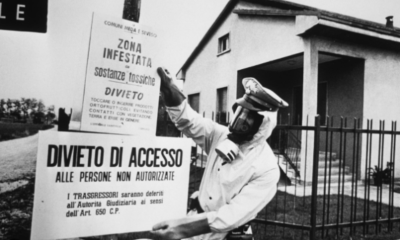
Seveso - 50 years on: EU strengthens its commitment to industrial safety in a changing landscape of risk
-
 Employment5 days ago
Why young jobseekers struggle to find roles abroad that fit their expertise
-
 European Commission5 days ago
Commission opens formal investigation into possible gun jumping in XXXLutz's acquisition of Porta