EU
#Oceana calls upon Mediterranean countries to protect areas crucial for fish survival to address overfishing crisis


Ahead of a political meeting to address the overfishing crisis in the Mediterranean, Oceana is calling upon the region’s countries to protect essential fish habitats (EFHs) as an urgent measure to ensure a future for fisheries in the world’s most overfished sea. Members of the UN’s General Fisheries Commission for the Mediterranean (GFCM) will meet tomorrow (11 June) in Morocco to review the progress made to end overfishing since the signing of the Malta MedFish4Ever Declaration two years ago.
All 23 countries under the GFCM – plus the European Union – are set to gather in Marrakesh on Tuesday for a two-day high-level conference to renew efforts to tackle the overfishing crisis in the region, where 80% of fish populations are now overexploited. Popular and commercial fish - such as hake or mullet - are fished up to 12 and 6 times more than what is considered sustainable.
The Marrakesh meeting is a follow-up to the signing in 2017 of the Malta MedFish4Ever Declaration, a regional political pact with commitments to overcome the overfishing crisis and pave the way towards sustainable fisheries for the next ten years. However, just two years later, many measures have still not been implemented including an agreement to protect nursery and spawning areas – or essential fish habitats – by 2018.
“States gathering this week in Marrakesh have the immediate future of the Mediterranean Sea in their hands. We call on them to honour and strengthen the commitments made under MedFish4Ever back in 2017, as the only way to bring this sea back to life,” said Oceana in Europe Policy and Advocacy Director María José Cornax.
Regarding areas closed to fishing to allow stocks to recover, only one new fisheries closure has been created by the GFCM since 2017 - the “Jabuka Pomo-Pit” - in the Adriatic Sea. More closures, also known as fisheries restricted areas (FRAs), will be needed to reduce fishing pressure in the region.
Online viewer tool to identify essential fish habitats
To coincide with the opening of meeting in Morocco, Oceana is launching an online viewer, which includes examples of existing regional and national areas closed to fishing, including temporary and permanent bottom trawling restrictions, that help protect nursery and spawning grounds. Oceana stresses the need for members to regularly report such measures to the GFCM in order to develop a strong and science-based network of essential fish habitats in the Mediterranean Sea.
“So far, Mediterranean countries are failing to protect essential fish habitats as they committed to do so in 2017 – this is their best chance to protect young fish, rebuild ocean productivity, and resilience against climate change. Protecting areas crucial for the survival of fish is sound fisheries management that must become a top priority for the Mediterranean,” added Oceana in Europe Policy Manager Nicolas Fournier.
Share this article:
EU Reporter publishes articles from a variety of outside sources which express a wide range of viewpoints. The positions taken in these articles are not necessarily those of EU Reporter. Please see EU Reporter’s full Terms and Conditions of publication for more information EU Reporter embraces artificial intelligence as a tool to enhance journalistic quality, efficiency, and accessibility, while maintaining strict human editorial oversight, ethical standards, and transparency in all AI-assisted content. Please see EU Reporter’s full A.I. Policy for more information.




Security realignment inevitable in Middle East after Netanyahu-Trump's war

Better enforcement of passenger rights: New EU agreement strengthens protection across all modes of transport

EU deploys emergency assistance to Venezuela following earthquakes

EU steps up support for Ukraine's defence, recovery and reconstruction at the Ukraine Recovery Conference 2026

Dismantling 'high walls' for a shared European-Asian future

Bangladeshis waking up to reality of Yunus government

What the latest data reveals about labour market imbalances across Europe

Copernicus: Europe’s air quality improves despite persistent pollution episodes

Europe must double down on nuclear progress to achieve its long-term ambitions

Solana Company Partners with Kazakhstan on $6B Alatau Crypto Megacity

Astana's congress of world religions: A global platform for dialogue in an age of division

How Schuman lost Its way

Rating of American Express casino sites in the UK

PMI defends AI consultation tool as scrutiny grows over EU tobacco rules review

Civil society from across the EU gathers in Cork to reinforce Europe’s sustainability agenda

The Iran war changed Pakistan's strategic value, not its political trajectory

Kazakhstan reforms under scrutiny at Brussels Press Club round table

Japan should face up to history and contribute more to regional peace

Ambassador calls for 'speeding up' of co-operation between EU and Kazakhstan

Timur Turlov at Smart Moves Summit 2025: How chess can transform global education

Shevtsova’s case: Out-of-court sanctions dismantling trust in Ukrainian cause

The future of European transport

Trump Vs Trueman

US 'no longer' an 'unconditional ally' for Europe - MEP
-
 Middle East5 days ago
Security realignment inevitable in Middle East after Netanyahu-Trump's war
-
 Transport5 days ago
Better enforcement of passenger rights: New EU agreement strengthens protection across all modes of transport
-
 Earthquake5 days ago
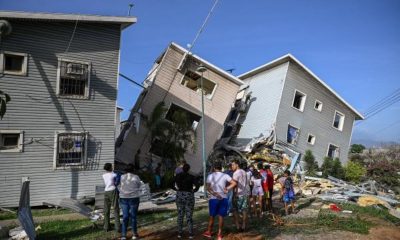
EU deploys emergency assistance to Venezuela following earthquakes
-
 Ukraine5 days ago
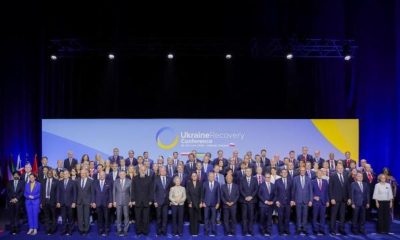
EU steps up support for Ukraine's defence, recovery and reconstruction at the Ukraine Recovery Conference 2026