EU
Evaluation of EU's #EmploymentAndSocialInnovation programme confirms its added value


 A mid-term evaluation by the Commission confirms the success of the EU programme for Employment and Social Innovation (EaSI) in addressing current and future challenges related to the world of work. The evaluation report published today demonstrates that the programme helps to find solutions by providing support to vulnerable groups like young people, long-term unemployed, disabled, migrants, ethnic minorities and women. EaSI brings a clear EU value added: the programme is able to support projects with a larger scope and scale compared to what is possible at national level or regional level. It helps to build EU level networks and partnerships, as well as to produce databases, studies, capacity building and mutual learning activities. Moreover, EaSI fosters social innovation and makes labour and financial markets more accessible. Finally, EaSI fills a clear gap in the supply of microcredits and support to social entrepreneurship across the EU.
Employment, Social Affairs, Skills and Labour Mobility Commissioner Marianne Thyssen said: “The EU Programme for Employment and Innovation has steered innovative social projects all across Europe. The instrument provides crucial funding to improve employment and social policies, increase job mobility and support social entrepreneurs. This mid-term evaluation paves the way for a further fine-tuning to make our actions even more effective.”
During the 2014-2016 period, about 185 projects were funded under EaSI programme, including capacity building for 20 EU-level NGO networks per year. The integrated EURES job mobility portal posted around 1 million vacancies per year and attracted 700,000 visitors a month; 3.5% of people contacting EURES found a job as a direct result. EaSI has also made it easier for vulnerable groups to access small loans to start or develop their business. The number of microloans granted multiplied from 421 in 2015 to 13,021 in 2016, while 64 social enterprises received support during the period under review.
EaSI is managed directly by the European Commission. The total budget for 2014-2020 is around €920 million. In order to streamline the implementation of the programme, simplify rules and use synergies to the fullest, the Commission proposed to integrate EaSI into the future European Social Fund Plus (ESF+) for the budgetary period 2021-2027.
Share this article:
EU Reporter publishes articles from a variety of outside sources which express a wide range of viewpoints. The positions taken in these articles are not necessarily those of EU Reporter. Please see EU Reporter’s full Terms and Conditions of publication for more information EU Reporter embraces artificial intelligence as a tool to enhance journalistic quality, efficiency, and accessibility, while maintaining strict human editorial oversight, ethical standards, and transparency in all AI-assisted content. Please see EU Reporter’s full A.I. Policy for more information.




Bangladeshis waking up to reality of Yunus government

What the latest data reveals about labour market imbalances across Europe

From imitation to leadership: The production-based rise of Japan and China

Copernicus: Europe’s air quality improves despite persistent pollution episodes

Commission approves €402 million Spanish state aid for road transport companies facing increased fuel prices

EMA recommends three new medicines and an orphan treatment for rare Rett Syndrome

Ensuring fairness and safety: €3 customs duty for low-value parcels

EU delivers emergency aid and organises a humanitarian flight in response to earthquakes in Venezuela

Kyrgyzstan launches Tamchy SFIT: a new international jurisdiction as a gateway to Eurasia

Kazakhstan’s dombyra: the two-stringed instrument that carries the soul of the steppe

Europe must double down on nuclear progress to achieve its long-term ambitions

Solana Company Partners with Kazakhstan on $6B Alatau Crypto Megacity

Astana's congress of world religions: A global platform for dialogue in an age of division

How Schuman lost Its way

Rating of American Express casino sites in the UK

PMI defends AI consultation tool as scrutiny grows over EU tobacco rules review

Kazakhstan reforms under scrutiny at Brussels Press Club round table

Japan should face up to history and contribute more to regional peace

Ambassador calls for 'speeding up' of co-operation between EU and Kazakhstan

Timur Turlov at Smart Moves Summit 2025: How chess can transform global education

Shevtsova’s case: Out-of-court sanctions dismantling trust in Ukrainian cause

The future of European transport

Trump Vs Trueman

US 'no longer' an 'unconditional ally' for Europe - MEP
-
 Bangladesh4 days ago
Bangladeshis waking up to reality of Yunus government
-
 Employment4 days ago
What the latest data reveals about labour market imbalances across Europe
-
 China4 days ago
From imitation to leadership: The production-based rise of Japan and China
-
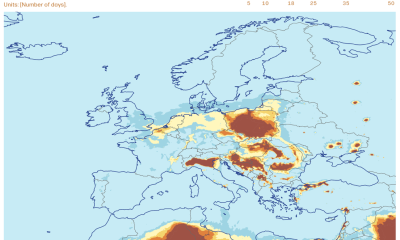 Air quality4 days ago
Copernicus: Europe’s air quality improves despite persistent pollution episodes