EU
#EUTopJobs - New-era EU leadership emerges from stalemate


Few would have predicted, write Mark John and Mike Dolan, the outcome of a European Union summit that will go down as a landmark moment for gender parity, placing for the first time the two most powerful institutional jobs in the 28-member EU in the hands of women.
Neither the IMF’s Christine Lagarde (pictured) nor Germany’s Ursula von der Leyen was considered a main contender for the ECB or European Commission respectively, and their nomination ultimately had as much to do with the political expediency needed to break a deadlock as their narrow suitability for the roles in question.
Assuming their nominations are confirmed (still a relatively sizeable “if” as far as von der Leyen is concerned), they will bring skills to the table that diverge radically from those of their predecessors.
Lagarde's impulses lie in politics and consensus-building, but she lacks direct monetary policy experience; von der Leyen is a tri-lingual polymath who has impeccable European credentials but whose managerial expertise is questionable after a series of crises in her department as German defence minister. However they fare, this promises to be an interesting break with the much-criticised style and image of the EU leadership in the past.
Von der Leyen must secure the backing of the European Parliament, which from today will start poring over her record: she will get a rough ride but few expect her to be rejected outright. Lagarde's nomination has already been welcomed by an easing of euro zone bond yields as financial markets expect the French national to pursue the dovish policy stance of Mario Draghi.
Most of the action on world markets continues to be in bonds, with a fresh slide in benchmark debt yields on simmering global trade war and recession fears, central bank easing bets and ebbing oil prices.
The EU summit’s nomination of IMF chief Lagarde as Draghi’s replacement at the ECB also reinforced expectations for easier monetary policy. Lagarde is expected to sustain Draghi’s approach to do “whatever it takes” to get inflation back to target, and her nomination eases market concerns that the more hawkish Bundesbank chief, Jens Weidmann, might get the job.
Bond markets greeted the decision by sinking German 10-year yields to record lows of minus 39 basis points first thing on Wednesday, and many of the other euro government yields following suit into record low territory.
Italian 10-year yields and spreads over Germany dropped to their lowest in a year, as Italian officials said they were confident the EU Commission would not pursue budget disciplinary action against Rome after 2019’s deficit forecast was cut to near 2% of gross domestic product.
The euro fell as well after slipping below $1.13 yesterday. European stock futures were up before the open. The nomination of Von Der Leyen to head the European Commission was also seen as a "safe pair of hands" running the EU executive rather than a major disruption.
Yet while Lagarde’s nomination reinforces expectations of easier European monetary policy, anxiety about the weakening of global business sentiment amid the protectionist push against China and increasingly against Europe by the United States shows why monetary policymakers are on high alert and why inflation expectations and bond yields are on the wane.
Share this article:

EU Reporter publishes articles from a variety of outside sources which express a wide range of viewpoints. The positions taken in these articles are not necessarily those of EU Reporter. Please see EU Reporter’s full Terms and Conditions of publication for more information EU Reporter embraces artificial intelligence as a tool to enhance journalistic quality, efficiency, and accessibility, while maintaining strict human editorial oversight, ethical standards, and transparency in all AI-assisted content. Please see EU Reporter’s full A.I. Policy for more information.







EU and South Africa kick off intergovernmental dialogue on Clean Trade and Investment Partnership

Seveso - 50 years on: EU strengthens its commitment to industrial safety in a changing landscape of risk

Why young jobseekers struggle to find roles abroad that fit their expertise

Commission opens formal investigation into possible gun jumping in XXXLutz's acquisition of Porta

Farmers, fair markets and consumers: new report highlights the role of EU competition rules in agriculture

Shared commitment to advance EOSC through new EOSC Nodes and EOSC projects

ECR MEPs question the European Commission on cardiovascular health and diet promoting the Mediterranean diet as an alternative to ultra-processed foods as key to tackling obesity

Falling in love with the Maldives

Kazakhstan seeks regional AI leadership as economic partnership with China enters new phase

Starmer’s problem? 'He is not a politician'

Why a Brussels–Nicosia–Eastern Mediterranean strategic affairs platform would benefit the European Union

Albania's Vlora airport standoff tests investor confidence as EU accession clock ticks
ECR MEPs question the European Commission on cardiovascular health and diet promoting the Mediterranean diet as an alternative to ultra-processed foods as key to tackling obesity

Kazakhstan's fixed capital investment tops 9.5 trillion tenge in H1 2026

Commission adopts simpler rules for EU agri-food promotion policy

Commission approves €659 million German state aid for four new semiconductor facilities

Kazakhstan reforms under scrutiny at Brussels Press Club round table

Japan should face up to history and contribute more to regional peace

Ambassador calls for 'speeding up' of co-operation between EU and Kazakhstan

Timur Turlov at Smart Moves Summit 2025: How chess can transform global education

Shevtsova’s case: Out-of-court sanctions dismantling trust in Ukrainian cause

The future of European transport

Trump Vs Trueman

US 'no longer' an 'unconditional ally' for Europe - MEP
-
 South Africa4 days ago
EU and South Africa kick off intergovernmental dialogue on Clean Trade and Investment Partnership
-
 Disasters4 days ago
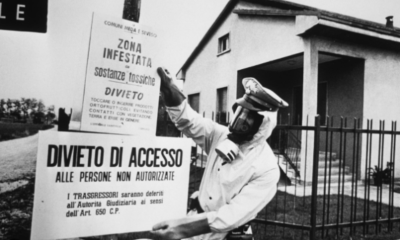
Seveso - 50 years on: EU strengthens its commitment to industrial safety in a changing landscape of risk
-
 Employment4 days ago
Why young jobseekers struggle to find roles abroad that fit their expertise
-
 European Commission4 days ago
Commission opens formal investigation into possible gun jumping in XXXLutz's acquisition of Porta