EU
#CouncilOfEurope criticized over resolution on voting and credentials


Amidst controversy over the restoration of Russia’s voting rights at the Council of Europe’s Parliamentary Assembly (PACE) in late June, seven delegations left the meeting in Strasbourg in protest of a resolution aiming to adjust the human rights body’s decision-making process over voting and credentials.
“The unconditional restoration of the Russian Delegation’s rights without the Russian Federation honouring any of the Assembly’s numerous demands runs counter to the core values of the Council of Europe and its Statute,” the delegations of Estonia, Georgia, Latvia, Lithuania, Poland, Slovakia and Ukraine said in a joint statement, adding“we wish good luck to the newly elected Secretary General and hope she/he finds a way to solve this unprecedented crisis.”
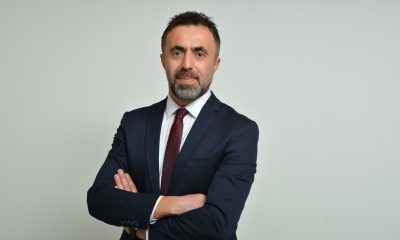
The PACE resolution, which aims to adjust the Rules of Procedure by introducing a new rule to prevent the suspension of voting, speaking and representation rights of its members, was also criticized by former delegates. “The resolution is unacceptable but this is not the first time we see such contradictory decisions by the Assembly, which has not shied away from sanctioning and punishing its delegates on fabricated grounds with an absolute disregard for principles, such as non-discrimination, impartiality and equal rights”, said former PACE delegate and Azerbaijani MP Elkhan Suleymanov.
While the resolution does not discard the possibility of future modifications to the rules of the organisation to uphold its values, it notes that the introduction of a procedure for challenging the credentials of individual members of national delegations “deserves further consideration”. In addition, it sympathises with the idea to adopt a joint reaction mechanism in case of violation of statutory obligations by member states proposed during the ministerial session of the Council of Europe in Helsinki last May.
According to Suleymanov, it is rather ironic that PACE intends to “analyse the consistency, relevance, effectiveness and legitimacy of its procedures and mechanisms” just now. “While the organization’s will to revise its machinery and procedures to uphold its fundamental values may seem benign at first glance, it raises some questions regarding its credibility and legitimacy as the upholder of these values during the last 70 years,” he argued.
“There are already examples where 14 individual PACE delegates were punished and their credentials were challenged in a farce investigation. If the Statute and the Rules of Procedure of the Assembly do not allow for such discretions, on which grounds were they made?”, the Azerbaijani MP asked in an open letter addressed to the Council of Europe on 4 July.
Highlighting the “double standards and biased attitude” of the organization - which had singled out Azerbaijan on the issue of political prisoners in the past - Suleymanov says “the definition of criteria regarding political prisoners cannot be entrusted to one single MP. No wonder this report, based on such biased criteria, was rejected by the Assembly.”
He condemned the unsubstantiated smear campaign launched by PACE against some of its representatives who actually brought the human rights violations in Nagorno-Karabakh to the forefront. The Azerbaijani territory and surrounding provinces have been occupied by Armenia despite resolutions calling for its immediate withdrawal by a host of international bodies, including the United Nations Security Council and the European Parliament.
“Regular discrimination on Member States is commonplace in the Assembly, which creates an environment of distrust. It is obvious that the occupation of Nagorno-Karabakh was not treated with the same sensitivity as the annexation of Crimea,” concluded Suleymanov.
Back in 2014, the Council of Europe had withdrawn the voting rights of Russia over its annexation of Crimea. Russia’s response was to stop paying its annual contribution of 32,6 million euros from 2017 onwards, depriving the Strasbourg-based body of a large part of its budget. Although Russia recently accepted to resume its contribution, critics challenged the country’s reinstatement, arguing that the underlying reasons behind its suspension remain unchanged.
Share this article:
EU Reporter publishes articles from a variety of outside sources which express a wide range of viewpoints. The positions taken in these articles are not necessarily those of EU Reporter. Please see EU Reporter’s full Terms and Conditions of publication for more information EU Reporter embraces artificial intelligence as a tool to enhance journalistic quality, efficiency, and accessibility, while maintaining strict human editorial oversight, ethical standards, and transparency in all AI-assisted content. Please see EU Reporter’s full A.I. Policy for more information.



Bangladeshis waking up to reality of Yunus government

Copernicus: Europe’s air quality improves despite persistent pollution episodes

What the latest data reveals about labour market imbalances across Europe

From imitation to leadership: The production-based rise of Japan and China

Commission approves €402 million Spanish state aid for road transport companies facing increased fuel prices

Ensuring fairness and safety: €3 customs duty for low-value parcels

EU delivers emergency aid and organises a humanitarian flight in response to earthquakes in Venezuela

European Inventor Award 2026 winners announced: Honouring the innovators shaping tomorrow

Kyrgyzstan launches Tamchy SFIT: a new international jurisdiction as a gateway to Eurasia

Kazakhstan’s dombyra: the two-stringed instrument that carries the soul of the steppe

Europe must double down on nuclear progress to achieve its long-term ambitions

Solana Company Partners with Kazakhstan on $6B Alatau Crypto Megacity

Astana's congress of world religions: A global platform for dialogue in an age of division

How Schuman lost Its way

Rating of American Express casino sites in the UK

PMI defends AI consultation tool as scrutiny grows over EU tobacco rules review

Kazakhstan reforms under scrutiny at Brussels Press Club round table

Japan should face up to history and contribute more to regional peace

Ambassador calls for 'speeding up' of co-operation between EU and Kazakhstan

Timur Turlov at Smart Moves Summit 2025: How chess can transform global education

Shevtsova’s case: Out-of-court sanctions dismantling trust in Ukrainian cause

The future of European transport

Trump Vs Trueman

US 'no longer' an 'unconditional ally' for Europe - MEP
-
 Bangladesh4 days ago
Bangladeshis waking up to reality of Yunus government
-
 Air quality4 days ago
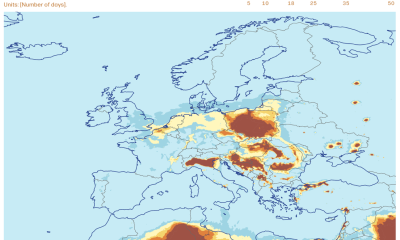
Copernicus: Europe’s air quality improves despite persistent pollution episodes
-
 Employment4 days ago
What the latest data reveals about labour market imbalances across Europe
-
 China4 days ago
From imitation to leadership: The production-based rise of Japan and China