EU
The consequences of delaying the #EULongTermBudget


On Thursday 20 February a summit on the EU’s next long-term budget takes place in Brussels. If EU leaders fail to reach a common position, the consequences for EU citizens could be dire.
European Council President Charles Michel (pictured) has called the make-or-break summit to try and bring EU heads of state and government together behind a common position that can serve as a mandate to start negotiations with the Parliament and Commission.
Parliament adopted its position in November 2018, following the European Commission’s proposal in May 2018. After discussions with EU leaders, Michel put forward a budget proposal on 14 February, which will form the basis of talks. It has already been criticized as inadequate by MEPs.
Time is money
If the Council fails once more to deliver, it will have serious consequences for the EU’s next seven-year budget, which is meant to start on 1 January 2021. As many as a million young people would not be able to benefit from an Erasmus+ exchange in 2021, according to estimates.
About 5,000 research jobs in the EU per month (3-4% of overall EU research jobs) would be lost, together with 7,000 jobs in the wider economy and more than 100,000 EU-funded projects within areas such as energy efficiency, healthcare and business support would not be able to start on time.

The current EU long-term budget was adopted at least six months too late for it to be implemented properly by the member states.
This had consequences for example in the area of migration. It was difficult for the Greek administration to use EU funding to prepare for the migration crisis in 2015. Shelters were not ready and conditions to receive refugees were poor. Sweden and Austria did not have EU funding to help accommodate people coming through the Balkan route.
In addition, about 25,000-30,000 Erasmus+ exchanges between students and teachers from member states and partner countries planned for 2014 could not take place.
Last week in Strasbourg, Parliament president David Sassoli stressed that it’s not enough for the Council to agree on its own budget position. Its proposal also has to be “ambitious” in order to improve and add value to people's lives in the future.
“These are not just abstract figures, but have real consequences for the lives of all Europeans,” he said, mentioning the significant investments needed for example for Europe to become the first climate neutral continent.
“A well-funded EU budget is in the interest of all Europeans and all member states.”
Read more about the EU’s long-term budget.
Share this article:
EU Reporter publishes articles from a variety of outside sources which express a wide range of viewpoints. The positions taken in these articles are not necessarily those of EU Reporter. Please see EU Reporter’s full Terms and Conditions of publication for more information EU Reporter embraces artificial intelligence as a tool to enhance journalistic quality, efficiency, and accessibility, while maintaining strict human editorial oversight, ethical standards, and transparency in all AI-assisted content. Please see EU Reporter’s full A.I. Policy for more information.



Bangladeshis waking up to reality of Yunus government

What the latest data reveals about labour market imbalances across Europe

From imitation to leadership: The production-based rise of Japan and China

Copernicus: Europe’s air quality improves despite persistent pollution episodes

Commission approves €402 million Spanish state aid for road transport companies facing increased fuel prices

Ensuring fairness and safety: €3 customs duty for low-value parcels

EU delivers emergency aid and organises a humanitarian flight in response to earthquakes in Venezuela

European Inventor Award 2026 winners announced: Honouring the innovators shaping tomorrow

Kyrgyzstan launches Tamchy SFIT: a new international jurisdiction as a gateway to Eurasia

Kazakhstan’s dombyra: the two-stringed instrument that carries the soul of the steppe

Europe must double down on nuclear progress to achieve its long-term ambitions

Solana Company Partners with Kazakhstan on $6B Alatau Crypto Megacity

Astana's congress of world religions: A global platform for dialogue in an age of division

How Schuman lost Its way

Rating of American Express casino sites in the UK

PMI defends AI consultation tool as scrutiny grows over EU tobacco rules review

Kazakhstan reforms under scrutiny at Brussels Press Club round table

Japan should face up to history and contribute more to regional peace

Ambassador calls for 'speeding up' of co-operation between EU and Kazakhstan

Timur Turlov at Smart Moves Summit 2025: How chess can transform global education

Shevtsova’s case: Out-of-court sanctions dismantling trust in Ukrainian cause

The future of European transport

Trump Vs Trueman

US 'no longer' an 'unconditional ally' for Europe - MEP
-
 Bangladesh4 days ago
Bangladeshis waking up to reality of Yunus government
-
 Employment4 days ago
What the latest data reveals about labour market imbalances across Europe
-
 China4 days ago
From imitation to leadership: The production-based rise of Japan and China
-
 Air quality4 days ago
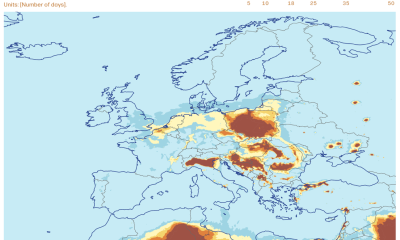
Copernicus: Europe’s air quality improves despite persistent pollution episodes