General
New EU sanctions to hit Russian oil, target more banks


The European Union will impose new sanctions against Russia for waging war on Ukraine. These sanctions will target Russia's oil industry and disinformation agents, according to the EU's top diplomat.
Josep Borrell (head of the EU's foreign policy unit, executive European Commission) said in a tweet that "We are currently working on the sixth set of sanctions which aims at de-SWIFT additional banks, list disinformation agents and tackle oil imports."
Diplomats confirmed that the latest round of sanctions will also affect Sberbank (SBER.MM ), Russia's largest lender.
Borrell stated that the proposed measures of the Commission against Russia, which attacked Ukraine via land, sea, and air on February 24, 2017, would be presented to 27 EU member countries for approval.
Officials stated that Ursula von der Leyen, President of the European Commission, would outline the new sanctions proposed on Wednesday. They will include a ban on Russian oil imports by the end this year.
On Tuesday, Russian President Vladimir Putin warned the West that he could end exports and deal in response to sanctions imposed by the EU.
Moscow would lose a significant revenue stream if it were to embargo Russian oil, but the agreement reached has divided the bloc's member countries, which rely on Russia for 26% its oil imports.
Germany and Hungary were two of the countries that expressed reservations about an oil embargo. One of their concerns was that rising energy prices could hurt EU economies already struggling with inflation.
Diplomats said that resistance to an oil import ban fell over the past week, after an agreement was reached that would exempt Slovakia and Hungary. This is citing two countries heavily dependent on Russian crude.
According to the Centre for Research on Energy and Clean Air, EU countries have paid more 47 billion euros ($47.43 trillion) to Russia for oil and gas since its invasion of Ukraine.
Share this article:
EU Reporter publishes articles from a variety of outside sources which express a wide range of viewpoints. The positions taken in these articles are not necessarily those of EU Reporter. Please see EU Reporter’s full Terms and Conditions of publication for more information EU Reporter embraces artificial intelligence as a tool to enhance journalistic quality, efficiency, and accessibility, while maintaining strict human editorial oversight, ethical standards, and transparency in all AI-assisted content. Please see EU Reporter’s full A.I. Policy for more information.



Bangladeshis waking up to reality of Yunus government

What the latest data reveals about labour market imbalances across Europe

From imitation to leadership: The production-based rise of Japan and China

Copernicus: Europe’s air quality improves despite persistent pollution episodes

Commission approves €402 million Spanish state aid for road transport companies facing increased fuel prices

EMA recommends three new medicines and an orphan treatment for rare Rett Syndrome

Ensuring fairness and safety: €3 customs duty for low-value parcels

EU delivers emergency aid and organises a humanitarian flight in response to earthquakes in Venezuela

Kyrgyzstan launches Tamchy SFIT: a new international jurisdiction as a gateway to Eurasia

Kazakhstan’s dombyra: the two-stringed instrument that carries the soul of the steppe

Europe must double down on nuclear progress to achieve its long-term ambitions

Solana Company Partners with Kazakhstan on $6B Alatau Crypto Megacity

Astana's congress of world religions: A global platform for dialogue in an age of division

How Schuman lost Its way

Rating of American Express casino sites in the UK

PMI defends AI consultation tool as scrutiny grows over EU tobacco rules review

Kazakhstan reforms under scrutiny at Brussels Press Club round table

Japan should face up to history and contribute more to regional peace

Ambassador calls for 'speeding up' of co-operation between EU and Kazakhstan

Timur Turlov at Smart Moves Summit 2025: How chess can transform global education

Shevtsova’s case: Out-of-court sanctions dismantling trust in Ukrainian cause

The future of European transport

Trump Vs Trueman

US 'no longer' an 'unconditional ally' for Europe - MEP
-
 Bangladesh4 days ago
Bangladeshis waking up to reality of Yunus government
-
 Employment4 days ago
What the latest data reveals about labour market imbalances across Europe
-
 China4 days ago
From imitation to leadership: The production-based rise of Japan and China
-
 Air quality4 days ago
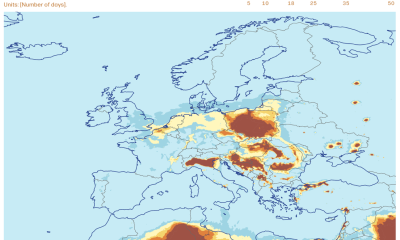
Copernicus: Europe’s air quality improves despite persistent pollution episodes