EU
The European Semester must work to aid EU-wide personalised medicine


By European Alliance for Personalised Medicine (EAPM) Executive Director Denis Horgan
One of the newer EU initiatives, and one that has been little noted broadly speaking so far, is the European Semester process. This allows Europe’s institutions an intimate overview of member states’ economies and forward planning on an annual basis and tasks the European Commission with giving advice and guidance to all 28 countries in the bloc.
This guidance is based on fiscal and structural objectives for the upcoming 12-18 month period and is designed to help member states achieve the individually targeted 2020 growth goals. Every member state has committed to these goals but the European Semester has a knock-on effect in that, theoretically at least, it can also help to ensure that some of the problems that occurred during the recent financial crisis can be avoided. Hence a close watch is being kept on those countries deemed to have excessive deficits.
Nobody wants to see a repeat of the bailouts that occurred a few years ago and everybody wants to see sustainable growth across the EU. This is essentially what the European Semester sets out to bring about. The process runs from October to May-June, by which point each country has received individual advice and guidance prior to the finalizing of budgets for the next year.
The current cycle is already well under way. The goals are certainly ambitious. But the whole idea is, as stated, very new and, in these early stages, some commentators have put their heads above the parapet and expressed the view that the process as it stands is lacking in transparency. This is primarily due to the fact that, at present, the European Parliament plays only a minor role. That may change but, regardless, this annual scrutiny is here to stay and, while in practical terms it represents an upgrading of EU powers in this area, it is intended as a force for good.
So, with its detailed scrutiny of budget plans and structural reforms designed to reach the growth targets and increase employment levels in individual member states, the European Semester also acknowledges a need to co-ordinate the work of all 28 countries. No single country can achieve all the aims alone, whether for 2020 or, indeed, beyond. Thus far, given that it is such a large budget area in every member state, the Commission has yet to involve itself in the health arena as much as may have been expected in most countries. Certainly compared to its involvement in health budgets during bailout negotiations.
However, there is a growing belief, and in some cases, desire (certainly within the European Alliance for Personalised Medicine (EAPM)) for this to change. This is especially the case when it comes to smaller member states (and regions within larger ones) that are more vulnerable to imbalances in access to the best health care, find it difficult to hear about or get to clinical trials and suffer inequalities in the reimbursement of, and again access to, cross-border health care. So could this ambitious and over-arching scrutiny scheme assist? EAPM believes so but, at the moment, there are concerns that the European Semester is too top-down, and cannot take into account any other stakeholder views other than those of the member states it is advising. It is fair to say that there is not much subsidiarity going on in this field right now.
In 2015, two smaller member states – Latvia and Luxembourg – will hold the rotating presidency of the EU. There has rarely been a better time to involve stakeholders from every area of health – patients, clinicians, academics, researchers, payers, industry representatives and policymakers – in small countries and the regions of larger ones in collaborating to build more efficient and effective health care systems across Europe. All stakeholders are needed to help ensure the best access to personalised medicine in these countries, and offer the best health care possible to all of the EU’s 500 million citizens. Realistically, the Semester is likely to look towards reductions in spending in the health arenas of individual countries and this will only have a negative impact on those citizens in the smaller – and thus more fiscally vulnerable – states. EAPM is therefore of the view that the Semester should be encouraging good investment, collaboration, sharing of resources, research and the use of best practices. The Commission does this ably with its excellent research initiatives – such as IMI – and should apply the same ideals to its Semester activities.
Given groundbreaking science and new collaborations, personalised medicine for all 500 million citizens in 28 member states is an achievable goal, but cutting health budgets is certainly not the way to achieve it. Mere reductions in health spending are not the way forward – health is not like any other commodity and cannot be treated as such. EAPM supports the goals of the European Semester but would expect the process to be stakeholder sensitive, by taking into account patients and all other parties involved in the health and personalised medicine arena, and not merely the budgetary authorities in member states. It should acknowledge that squeezing budgets alone does not necessarily represent value, but that there must be investment, better research, plus encouragement of inter-disciplinary and cross-border cooperation. Meanwhile, the needs of all EU patients must be upheld under the basic tenets of equality in the Treaties.
Thus, fiscal measures recommended or enforced in one country should not disproportionately affect the health of its citizens through reduced budgets but should reflect the need for more efficiency and better decision making. Finally, EAPM believes that all decisions and recommendations taken under the European Semester should promote growth, research and efficiency in the areas of health and personalised medicine. The European Semester is young and not yet fully formed. Its potential as a force for good is immense – but it has to strike a balance between short- to mid-term growth goals and the need to work towards better and more sustainable health care for all.
Share this article:
EU Reporter publishes articles from a variety of outside sources which express a wide range of viewpoints. The positions taken in these articles are not necessarily those of EU Reporter. Please see EU Reporter’s full Terms and Conditions of publication for more information EU Reporter embraces artificial intelligence as a tool to enhance journalistic quality, efficiency, and accessibility, while maintaining strict human editorial oversight, ethical standards, and transparency in all AI-assisted content. Please see EU Reporter’s full A.I. Policy for more information.



The South Caucasus at a historic turning point: Between lasting peace and renewed confrontation
The security environment of the South Caucasus amid changing geopolitical realities

Commission endorses Latvia’s €617 million Social Climate Plan to support vulnerable households and transport users in the clean transition

Commission sends Statements of Objections to several companies and trade associations in suspected construction chemicals cartel

As Ireland chairs the EU Presidency, what impact has over fifty years of EU membership had on Ireland

EU and Portugal team up to keep brightest tech talents at home

British political shifts and the future of UK-China ties

Why the US is losing its legitimacy as a global superpower and the trust of the comity of nations

Tokayev urges Putin to 'freeze' Ukraine war in rare public appeal for peace

JoinCare explores scientific exchange during visit to Japan’s National Institute of Infectious Diseases

New episode – DGT podcast: Languages and Technology

Become a European Commission trainee – applications are now open

Commission outlines measures to strengthen Europe's banking sector and support growth
British political shifts and the future of UK-China ties
The South Caucasus at a historic turning point: Between lasting peace and renewed confrontation
As Ireland chairs the EU Presidency, what impact has over fifty years of EU membership had on Ireland

Kazakhstan reforms under scrutiny at Brussels Press Club round table

Japan should face up to history and contribute more to regional peace

Ambassador calls for 'speeding up' of co-operation between EU and Kazakhstan

Timur Turlov at Smart Moves Summit 2025: How chess can transform global education

Shevtsova’s case: Out-of-court sanctions dismantling trust in Ukrainian cause

The future of European transport

Trump Vs Trueman

US 'no longer' an 'unconditional ally' for Europe - MEP
-
 South Caucasus2 days ago
The South Caucasus at a historic turning point: Between lasting peace and renewed confrontation
-
South Caucasus3 days ago
The security environment of the South Caucasus amid changing geopolitical realities
-
 European Commission3 days ago
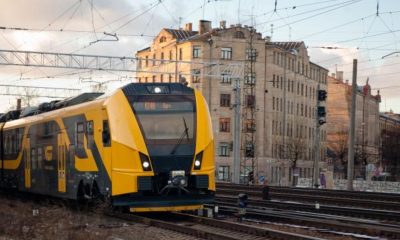
Commission endorses Latvia’s €617 million Social Climate Plan to support vulnerable households and transport users in the clean transition
-
 European Commission3 days ago
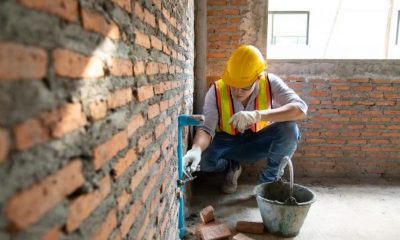
Commission sends Statements of Objections to several companies and trade associations in suspected construction chemicals cartel