EU
Narrowing the gap between luck and judgement in health


Opinion by European Alliance for Personalised Medicine (EAPM) Executive Director Denis Horgan
Currently in the news is a study suggesting that two-thirds of all cancers can be put down to ‘bad luck’ with randomly mutating stem cells the cause, rather than individual lifestyle choices or a lack of efforts at prevention.
The US researchers went so far as to say that even a focus on lifestyle and prevention would not stop the majority of cancers from developing, While this is true, and hardly ‘news’, really, the fact remains that full DNA sequencing, in line with the principles of personalised medicine (PM), will very often flag up a propensity towards developing a certain type, or types, of cancer, before illness occurs.
Also, once a cancer has developed, the same process will allow a patient to receive the right treatment at the right time, possibly catching and dealing with the cancer at an early stage and certainly improving the odds of a better patient outcome and quality of life.
The results of the study, published in the journal Science, showed that, indeed, all cancer has an element of chance but what it doesn’t show is that; on top of this, often the chance of being diagnosed and given the best treatment at an early stage is down to the roll of a dice – or ‘bad luck’ – too.
The study added that more resources should be focused upon finding ways to detect cancers at early, curable stages. This is something that the European Alliance for Personalised Medicine – EAPM – fully agrees with but, with the barriers to access when it comes to personalised medicine being many and varied, achieving this can be difficult.
And this is where more ‘bad luck’ comes in – bad luck that could be financial, geographical, a lack of access to new drugs or simply down to the knowledge of available treatments on the part of particular doctors, for example. Some doctors are not fully aware of PM’s potential and its current application, which strongly suggests that up-to-the-minute and continuous training for health care workers is urgently required. And in the age of Big Data, legislation should take into account the specifics of PM and create an infrastructure in which genetic information is available in a regulated context. Assuming that satisfactory ethical and workable legislation is put in place; information then has to be collected, disseminated and understood. There is a huge education gap when it comes to PM, even among some doctors, nurses and patients.
Meanwhile, Europe’s patients must be more involved in every aspect of their own health - from clinical trial remodelling to legislation and all other issues that affect them. On a broader note, PM needs to be regulated centrally to ensure its safe and effective use. Regulations need to be robust and consistent while being flexible enough to adapt to a fast-moving field.
When it comes to cross-border treatment, where a country cannot or will not give a patient the best treatment available in Europe, there is often a price lottery in which, if a patient travels to another, richer member state to be treated, the reimbursement levels back at home may be too low to make such treatment viable.
Similarly, a patient isolated geographically, or with a rare disease, may not even hear of, let alone be able to get to, clinical trials that could improve, or even save, his or her life. Bad luck, indeed – or a disjointed system that can be, and must be, improved if we are to raise the quality of life for a potential 500 million patients across 28 member states.
On the ‘good luck’ side, in 2014 the European Medicines Agency recommended the highest number of orphan designated medicines for marketing authorization in any single year. From 82 human-use medicines, 17 focus on a rare disease, giving patients more treatment options.
Among the goals of EAPM is to ensure that any European patient needing these drugs will have equal and affordable access to them. The situation is improving, slowly, but there is still a long way to go. ‘Luck’ will only take us so far.
Share this article:
EU Reporter publishes articles from a variety of outside sources which express a wide range of viewpoints. The positions taken in these articles are not necessarily those of EU Reporter. Please see EU Reporter’s full Terms and Conditions of publication for more information EU Reporter embraces artificial intelligence as a tool to enhance journalistic quality, efficiency, and accessibility, while maintaining strict human editorial oversight, ethical standards, and transparency in all AI-assisted content. Please see EU Reporter’s full A.I. Policy for more information.



EU foreign ministers to discuss options for restricting trade with Israeli communities in Judea and Samaria

Srebrenica's lesson is prevention. Why isn't the world applying It to Kashmir?

EU-Mexico: While others build walls, Europe builds bridges

Europe's Cloud moment: The DMA must now deliver

European operation dismantles €10 million illicit cigarette network in Spain

Survey of city economic experts: Cities are driving Draghi’s competitiveness agenda, but need EU recognition to scale action

Joint statement by High Representative/Vice-President Kallas and Commissioner Kos on the 31st anniversary of the Srebrenica genocide

AIFC to host Astana Finance Days 2026 in September

Seveso - 50 years on: EU strengthens its commitment to industrial safety in a changing landscape of risk

Commission opens formal investigation into possible gun jumping in XXXLutz's acquisition of Porta

EU weighs age-13 limit for 'social media plus'

ALROSA Re-elects Supervisory Board with Minimal Changes

Public consultation on Joint Undertakings, Art. 185 initiatives, and thematic priorities for European Partnerships under Horizon Europe 28-34

Poland sees new research and changes to policies on migrant integration

EU launches a Team Gaza Initiative to support early recovery in Gaza with an initial amount of nearly €900 million

NESBp: Strengthening maritime spatial planning across the North Sea and Baltic Sea

Kazakhstan reforms under scrutiny at Brussels Press Club round table

Japan should face up to history and contribute more to regional peace

Ambassador calls for 'speeding up' of co-operation between EU and Kazakhstan

Timur Turlov at Smart Moves Summit 2025: How chess can transform global education

Shevtsova’s case: Out-of-court sanctions dismantling trust in Ukrainian cause

The future of European transport

Trump Vs Trueman

US 'no longer' an 'unconditional ally' for Europe - MEP
-
 Israel3 days ago
EU foreign ministers to discuss options for restricting trade with Israeli communities in Judea and Samaria
-
 Kashmir2 days ago
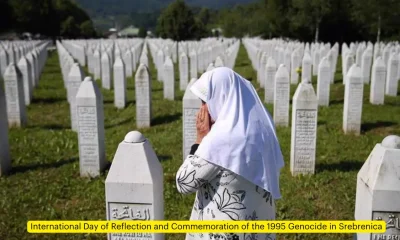
Srebrenica's lesson is prevention. Why isn't the world applying It to Kashmir?
-
 Mexico5 days ago
EU-Mexico: While others build walls, Europe builds bridges
-
 Cloud computing5 days ago
Europe's Cloud moment: The DMA must now deliver