EU
#EAPM2017: Personalised medicine is now the 'dominant therapy' for treating cancer, conference told

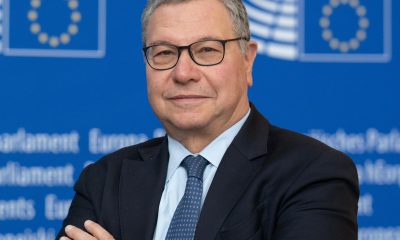
 Romanian MEP Cristian Busoi has told a conference that personalised medicine has become the “dominant therapy” for treating cancer and other serious health conditions, writes Martin Banks.
The EPP deputy was speaking at the first annual congress held by the European Alliance for Personalised Medicine (EAPM), which ran until 30 November.
Entitled ‘Personalising Your Health: A Global Imperative’, the congress was being held in Belfast with the collaboration of the Estonian Presidency of the EU and in association with Queen’s University Belfast and Visit Belfast.
The opening session dealt with the theme of 'Growth in Personalised Medicine - the promise for future generations'.
Seizing on this Busoi, a keynote speaker, said: “Action is necessary at a cooperative and EU level - in gaining new insights into diseases, personalised medicine is already becoming the dominant therapy for cancer and a host of other afflictions.”
The deputy added: “Quality assurance needs to be further developed to respond to patients requirements. And affordability is the most crucial issue - can we ‘afford’ to beat cancer?”
Concerning the regulation of medicines in the EU, which is an integral part of personalised medicine, Dublin's Health Products Regulatory Authority chief executive Lorraine Nolan said: “I think we have a really good reputation in terms of regulations of medicines within the EU. We’re viewed as open and progressive. Tough, but fair.
"Much has changed in the regulatory mindset - regulators are working to ensure that they stay abreast of the latest innovations.
This was a theme that was expanded on by European Organization for Research and Treatment of Cancer Director General Denis Lacombe, who noted: "New regulations should therefore be good news. The European Commission has adopted a directive in order to pave the way for a pan-European research area. The principle is fine, the implementation is the problem.”
Mark Lawler, chairman in Translational Cancer Genomics, Queen's University Belfast, said: “We must look at how to realize the promise of the patient-centred approach. Better methods of treatment and treatment education need to help the person at the level of the person.”
Further comment came from Desmond Schatz MD, of the UF Diabetes Institute, who said: “There is a sense of urgency and a call for action on diabetes - understanding the disease is key to personalised medicine treating it.
“Diabetes is the epidemic of the 21st century - at present, there are 415 million sufferers, with 620m projected by 2040. Treatment requirements are not being met by current methods.”
Addressing the issue of diabetes, Peter Meeus, head of Region Europe, Shire, London, said: "With 415 million people living with the condition globally, and costing health-care systems around $465bn annually, it's no surprise that much of the health-care world has its eyes on diabetes and the damaging effect it can have both economically and to the individuals who live with it."
The congress heard that with the world’s population increasing and people living longer, models of treatment delivery are rapidly changing, and many of the decisions behind those changes are being driven by data.
Ewan Birney, director, European VBioinformatics Institute, Cambridge, said: "The bulk of our work [in genomics deployed standards] is done by tactical volunteers across the world. But there is still much to do, particularly concerning policy, and the regulation and implementation of science, and this is where Big Data truly comes into its own."
But Ruth March, of ETH Zurich, added a note of caution, warning: "However, the implementation of science is frequently like a post-code lottery, as to whether patients will receive the correct tests or not."
Her colleague Ernst Hafen added: "With my strong interest in human genetics and personalized medicine, I believe that an individual’s control over his or her personal health data will be a key asset for better and more effective health care, and the growth of big data posits legal, ethical and societal issues about health data ownership - it is very important to find commercial models permitting owners, not third parties, to benefit from personal data assets."
Share this article:
EU Reporter publishes articles from a variety of outside sources which express a wide range of viewpoints. The positions taken in these articles are not necessarily those of EU Reporter. Please see EU Reporter’s full Terms and Conditions of publication for more information EU Reporter embraces artificial intelligence as a tool to enhance journalistic quality, efficiency, and accessibility, while maintaining strict human editorial oversight, ethical standards, and transparency in all AI-assisted content. Please see EU Reporter’s full A.I. Policy for more information.



ECR MEPs question the European Commission on cardiovascular health and diet promoting the Mediterranean diet as an alternative to ultra-processed foods as key to tackling obesity

Falling in love with the Maldives

Kurmuk gold project highlights Africa’s changing investment landscape

Albania's Vlora airport standoff tests investor confidence as EU accession clock ticks

EU steps up international support for Palestinians with major initiative for Gaza's early recovery and stronger international coordination

Commission adds exemptions to rules on removability of portable batteries

Iran’s regime in crisis: Negotiations, internal divisions and growing resistance

Natura 2000 Network offers opportunities for sustainable tourism across Europe

Kazakhstan and Belgium: Building a Partnership for the Future

New court ruling questions 'proportionality' of Mayor Erion Veliaj’s detention

Rome–Washington Axis: Italian Diplomat Zanardi Landi to Help Save Bosnia

Burnham as PM? 'Wait and see'

Ban on destruction of unsold clothes and shoes enters into application

Survey on an EU Blueprint for intellectual property licensing and spinoff creation

Rule of law report strengthens EU democracy and fundamental rights

EU launches Ukraine defence industrial partnership, Drone Deal and disburses €1 billion for drones *

Kazakhstan reforms under scrutiny at Brussels Press Club round table

Japan should face up to history and contribute more to regional peace

Ambassador calls for 'speeding up' of co-operation between EU and Kazakhstan

Timur Turlov at Smart Moves Summit 2025: How chess can transform global education

Shevtsova’s case: Out-of-court sanctions dismantling trust in Ukrainian cause

The future of European transport

Trump Vs Trueman

US 'no longer' an 'unconditional ally' for Europe - MEP
-
 Italy3 days ago
ECR MEPs question the European Commission on cardiovascular health and diet promoting the Mediterranean diet as an alternative to ultra-processed foods as key to tackling obesity
-
 Tourism5 days ago
Falling in love with the Maldives
-
 China5 days ago
Kurmuk gold project highlights Africa’s changing investment landscape
-
 Albania3 days ago
Albania's Vlora airport standoff tests investor confidence as EU accession clock ticks