Cancer
After years of cherry-picking, can #IARC turn over a new leaf?

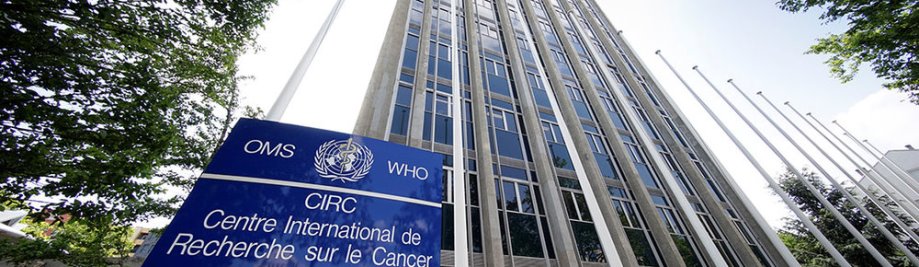
The International Agency for Research on Cancer (IARC), a semi-autonomous unit of the World Health Organisation (WHO), elected Dr. Elisabete Weiderpass last week as the agency’s incoming director. Weiderpass is scheduled to take over from current director Dr. Christopher Wild in January 2019.
IARC, which is dedicated to coordinating research into the causes of human cancer, will come under Dr. Weiderpass’ direction after years of gruelling controversy over the organisation’s methodology and system of evaluating and classifying chemicals. Dr. Weiderpass’s ascension is not a heartening one amid widespread calls for IARC to reform. And since she’s been involved with the agency since 1994, change seems unlikely.
The fiercest debate surrounding IARC is undoubtedly its 2015 classification of glyphosate, the world’s most popular herbicide, as “probably carcinogenic.” IARC’s ruling surprised many observers, as all other major international institutions, including the European Food Safety Authority (EFSA) and the European Chemicals Agency, had determined that glyphosate was not carcinogenic to humans.
Despite the fact that the IARC’s classification was such an outlier in the scientific community, the agency still carries heavy clout in political circles, partly due to its connection with WHO. As a result, the glyphosate ruling sent shockwaves through the agricultural industry both in Europe and abroad, and the EU’s debate over whether or not glyphosate would be reapproved dragged on for more than two years. Even when the herbicide was finally reauthorized, farmers’ groups who argued that no feasible alternative to glyphosate exists had to settle for a five-year renewal, rather than the 15-year one they had sought. Meanwhile, in the United States, IARC’s classification was considered “proof” enough to land glyphosate on California’s Proposition 65 list. The inclusion under Proposition 65 means that products containing the chemical will have to carry an intimidating cancer warning starting in July 2018, though this is being challenged in federal court.
The controversy surrounding IARC’s glyphosate assessment only deepened when it came out that the evaluation’s methodology had been seriously flawed. Several scientists who had found no link between glyphosate and cancer saw their results removed from the final draft of IARC’s report. In one case, new statistical analysis was inserted, effectively reversing the original finding of the study in question. In a separate pathology report, notes that glyphosate was “unanimously” understood to have no relation to abnormal growths in mice were entirely deleted. IARC appears to have massively overstated the health impacts of glyphosate, with unnecessarily disastrous results for the agricultural industry the world over.
Lest this be chalked up to a mere excess of caution, the organisation has also done the reverse, drastically underplaying the damage caused by the carcinogen benzene. Emails from IARC’s own scientists showed a failure to comprehensively review evidence on human exposure to benzene, and a consistent underestimation of the realities of occupational exposure to the substance. Even after a scientist pointed out these flaws, including to outgoing Director Christopher Wild, the agency seemed peculiarly unconcerned: “we do not plan to amend (it) or take any further action,” one senior scientist at the organisation remarked.
Critics of IARC had thus hoped that the election to replace Dr. Wild would usher in a new era for the agency, but the appointment of Dr. Weiderpass has dashed any such optimism. In fact, Dr. Weiderpass was deeply implicated in the IARC glyphosate review, and remains a major part of IARC’s credibility problem. Her ties to fellow scientist and activist Christopher Portier, who was also a candidate for the director position, are a further black mark on her candidacy. In October 2017, it was found that Portier received some $160,000 in payments from law firms bringing claims by cancer victims against Monsanto, which produces a widely used weed killer containing glyphosate.
For Europe, the Weiderpass-Portier partnership should be deeply concerning. In 2016, the duo co-authored a paper criticising EFSA for its evaluation of glyphosate as “unlikely to pose a carcinogenic hazard to humans.” In an ironic twist given how the IARC cherry-picked its own evidence, Portier and Weiderpass accused the EFSA of failing to remedy “serious flaws” in the evaluation process. IARC’s attacks on respected European agencies has bitterly divided European lawmakers at the political level, and has forced distance between IARC and Europe’s top regulators – including EFSA and the European Chemicals Agency (ECHA), not to mention organizations at the national level.
Worse still, European farmers have expressed concern over the harm the glyphosate debacle has done to the credibility of EU institutions, with the “IARC effect” spilling over to damage the once-respected verdicts of both EFSA and ECHA. In response to such pressures, the Commission has taken proactive measures to improve the transparency of scientific studies in the food safety area, allowing citizens greater access to information submitted to EFSA on agri-approvals and opening the door for the Commission to request additional studies where necessary. IARC has yet to make any such moves to evolve.
From Washington to Brussels, prominent voices are calling on IARC to actively pursue reforms and redeem its now-embattled reputation. The agency’s credibility has sunk so low that it has even been brought before a U.S. congressional committee, which threatened to pull its funding and called out its “shoddy work” and “cherry-picked science.” Unfortunately, Dr. Weiderpass’s career spent on the inside of IARC suggests that the next five years will likely be more of the same.
Share this article:
EU Reporter publishes articles from a variety of outside sources which express a wide range of viewpoints. The positions taken in these articles are not necessarily those of EU Reporter. Please see EU Reporter’s full Terms and Conditions of publication for more information EU Reporter embraces artificial intelligence as a tool to enhance journalistic quality, efficiency, and accessibility, while maintaining strict human editorial oversight, ethical standards, and transparency in all AI-assisted content. Please see EU Reporter’s full A.I. Policy for more information.



The South Caucasus at a historic turning point: Between lasting peace and renewed confrontation

As Ireland chairs the EU Presidency, what impact has over fifty years of EU membership had on Ireland

British political shifts and the future of UK-China ties

The Digital Markets Act Is Hurting Europeans. It’s Time to Put Progress, Free Markets, and Competition First

Become a European Commission trainee – applications are now open

Commission outlines measures to strengthen Europe's banking sector and support growth

JoinCare explores scientific exchange during visit to Japan’s National Institute of Infectious Diseases

Tokayev urges Putin to 'freeze' Ukraine war in rare public appeal for peace

EU gambling policy watch: Are we headed towards harmonization?

Commission approves €54 million Luxembourgish state aid for road and rail transport firms facing increased fuel prices

Commission invites comments on draft new rescue and restructuring state aid guidelines

Commission proposes more than €410,000 from the European Globalisation Adjustment Fund to support dismissed car industry workers in Finland

Commission welcomes the Council's adoption of a renewed Interim Regulation to detect child sexual abuse online

Commission provides €1.5 billion in macro-financial assistance to Egypt

ommission preliminary finds TikTok in breach of Digital Services Act for failing to ensure safe accounts for minors

Europe’s AI crossroads: Regulation and the race to keep up

Kazakhstan reforms under scrutiny at Brussels Press Club round table

Japan should face up to history and contribute more to regional peace

Ambassador calls for 'speeding up' of co-operation between EU and Kazakhstan

Timur Turlov at Smart Moves Summit 2025: How chess can transform global education

Shevtsova’s case: Out-of-court sanctions dismantling trust in Ukrainian cause

The future of European transport

Trump Vs Trueman

US 'no longer' an 'unconditional ally' for Europe - MEP
-
 South Caucasus4 days ago
The South Caucasus at a historic turning point: Between lasting peace and renewed confrontation
-
 EU Presidency4 days ago
As Ireland chairs the EU Presidency, what impact has over fifty years of EU membership had on Ireland
-
 China4 days ago
British political shifts and the future of UK-China ties
-
 Digital economy5 days ago
The Digital Markets Act Is Hurting Europeans. It’s Time to Put Progress, Free Markets, and Competition First