Health
‘Last piece of the puzzle’ in the WHO pandemic agreement delayed to 2027


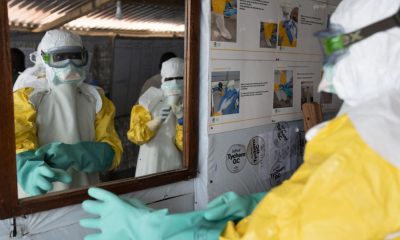
The WHO Pandemic Agreement adopted in May 2025 contained one crucial proviso: it couldn’t be ratified until one of its most contested elements, the Pathogen Access and Benefit Shifting (PABS) was agreed. Despite an additional year of negotiations, diplomats have failed to bridge diverging views.
“Real progress was made on the PABS annex and I am confident that through continued negotiations differences will be overcome,” said WHO Director-General Dr Tedros Adhanom Ghebreyesus. “Member states should continue approaching the outstanding issues with a sense of urgency because the next pandemic is a matter of when, not if. The PABS annex is the last piece of the puzzle.”
Intergovernmental Working Group (IGWG) Co-Chair Ambassador Tovar da Silva Nunes of Brazil said that finalizing a document of such technical and legal complexity requires “precision and dedication”, which he said negotiating parties had shown: “We are not there yet, but with an extension of our negotiations, we will get there.” British Co-Chair, Matthew Harpur said states had demonstrated “strong and continuing commitment”.
Negotiators have been at loggerheads with sharp divisions between low- and middle-income countries (LMICs) and wealthier nations. The process was extended for a further week in March in the hopes...

Share this article:

EU Reporter publishes articles from a variety of outside sources which express a wide range of viewpoints. The positions taken in these articles are not necessarily those of EU Reporter. Please see EU Reporter’s full Terms and Conditions of publication for more information EU Reporter embraces artificial intelligence as a tool to enhance journalistic quality, efficiency, and accessibility, while maintaining strict human editorial oversight, ethical standards, and transparency in all AI-assisted content. Please see EU Reporter’s full A.I. Policy for more information.



The South Caucasus at a historic turning point: Between lasting peace and renewed confrontation
The security environment of the South Caucasus amid changing geopolitical realities

Commission registers two European Citizens' Initiatives on education and housing

Kazakhstan and Belgium: Building a Partnership for the Future

Commission sends Statements of Objections to several companies and trade associations in suspected construction chemicals cartel

Why the US is losing its legitimacy as a global superpower and the trust of the comity of nations

Rome–Washington Axis: Italian Diplomat Zanardi Landi to Help Save Bosnia

Commission endorses Latvia’s €617 million Social Climate Plan to support vulnerable households and transport users in the clean transition

JoinCare explores scientific exchange during visit to Japan’s National Institute of Infectious Diseases

New episode – DGT podcast: Languages and Technology

Become a European Commission trainee – applications are now open

Commission outlines measures to strengthen Europe's banking sector and support growth

British political shifts and the future of UK-China ties
The South Caucasus at a historic turning point: Between lasting peace and renewed confrontation

As Ireland chairs the EU Presidency, what impact has over fifty years of EU membership had on Ireland

The Digital Markets Act Is Hurting Europeans. It’s Time to Put Progress, Free Markets, and Competition First

Kazakhstan reforms under scrutiny at Brussels Press Club round table

Japan should face up to history and contribute more to regional peace

Ambassador calls for 'speeding up' of co-operation between EU and Kazakhstan

Timur Turlov at Smart Moves Summit 2025: How chess can transform global education

Shevtsova’s case: Out-of-court sanctions dismantling trust in Ukrainian cause

The future of European transport

Trump Vs Trueman

US 'no longer' an 'unconditional ally' for Europe - MEP
-
 South Caucasus1 day ago
The South Caucasus at a historic turning point: Between lasting peace and renewed confrontation
-
South Caucasus2 days ago
The security environment of the South Caucasus amid changing geopolitical realities
-
 European Citizens' Initiative4 days ago
Commission registers two European Citizens' Initiatives on education and housing
-
 Belgium5 days ago
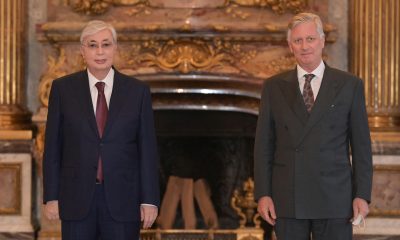
Kazakhstan and Belgium: Building a Partnership for the Future