Cancer
#Cancer - Protecting people from #Carcinogens at work


Cancer is linked to more than half of work-related deaths in the EU. Learn about the EU rules to protect people from carcinogens in the workplace.
In 2017, MEPs set exposure limits on 11 additional carcinogens during the first revision of the 2004 directive to limit harmful substances in the workplace.
Today (10 December) MEPs will debate on even stricter rules to further eliminate and reduce carcinogens and mutagens in the workplace. They will vote on them the following day.
-
Chemical agents that may cause cancer or genetic mutations
The new legislation will include exposure limit values for eight additional cancer-causing substances, whether inhaled or handled. These substances include diesel fumes and used engine oil. It will also include skin notations for these substances, which are used to warn against the potential health effects associated with skin penetration.
Belgian EPP member Claude Rolin, the MEP responsible for steering the legislation through Parliament, said: "The most important thing for me is that there is an ongoing re-evaluation of risks, because we cannot put a price on the health of our workers.”
MEPs are already working on a third revision to further improve working conditions and better protect workers’ health by setting exposure limits on another five carcinogens.
Cancer in the workplace
Cancer is the number one cause of work-related deaths in the EU. Every year 53% can be linked to cancer, 28% to circulatory diseases and 6% to respiratory diseases. The most common types of work-related cancers are lung cancer, mesothelioma (caused by exposure to asbestos particles) and bladder cancer. According to the World Health Organization, one in ten lung cancer deaths is closely related to workplace risks.
Sectors that are especially affected are the construction sector, chemicals manufacturers, automotive and furniture industries, food producers, textiles manufacturers, the wood working industry and the healthcare sector.
100,000: How many lives these rules could help save over the next 50 years
Share this article:
EU Reporter publishes articles from a variety of outside sources which express a wide range of viewpoints. The positions taken in these articles are not necessarily those of EU Reporter. Please see EU Reporter’s full Terms and Conditions of publication for more information EU Reporter embraces artificial intelligence as a tool to enhance journalistic quality, efficiency, and accessibility, while maintaining strict human editorial oversight, ethical standards, and transparency in all AI-assisted content. Please see EU Reporter’s full A.I. Policy for more information.





European operation dismantles €10 million illicit cigarette network in Spain

Energy Union Task Force takes stock of oil and gas security of supply in the EU

Srebrenica's lesson is prevention. Why isn't the world applying It to Kashmir?

AIFC to host Astana Finance Days 2026 in September

ALROSA Re-elects Supervisory Board with Minimal Changes

EU launches a Team Gaza Initiative to support early recovery in Gaza with an initial amount of nearly €900 million

EU clarifies rules to allow continued waste recovery shipments to Switzerland

Joint statement by High Representative/Vice-President Kallas and Commissioner Kos on the 31st anniversary of the Srebrenica genocide

Starmer’s problem? 'He is not a politician'

Why a Brussels–Nicosia–Eastern Mediterranean strategic affairs platform would benefit the European Union

Albania's Vlora airport standoff tests investor confidence as EU accession clock ticks

ECR MEPs question the European Commission on cardiovascular health and diet promoting the Mediterranean diet as an alternative to ultra-processed foods as key to tackling obesity

Kazakhstan's fixed capital investment tops 9.5 trillion tenge in H1 2026

Commission adopts simpler rules for EU agri-food promotion policy

Commission approves €659 million German state aid for four new semiconductor facilities

EU law on nitrates pollution remains effective, with scope for smarter implementation

Kazakhstan reforms under scrutiny at Brussels Press Club round table

Japan should face up to history and contribute more to regional peace

Ambassador calls for 'speeding up' of co-operation between EU and Kazakhstan

Timur Turlov at Smart Moves Summit 2025: How chess can transform global education

Shevtsova’s case: Out-of-court sanctions dismantling trust in Ukrainian cause

The future of European transport

Trump Vs Trueman

US 'no longer' an 'unconditional ally' for Europe - MEP
-
 Cigarettes5 days ago
European operation dismantles €10 million illicit cigarette network in Spain
-
 Energy market4 days ago
Energy Union Task Force takes stock of oil and gas security of supply in the EU
-
 Kashmir5 days ago
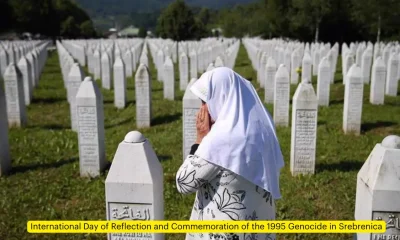
Srebrenica's lesson is prevention. Why isn't the world applying It to Kashmir?
-
 Kazakhstan4 days ago
AIFC to host Astana Finance Days 2026 in September