EU
Scottish parliament approves free #SanitaryProducts for all women

 The Scottish parliament approved plans on Tuesday (25 February) to make sanitary products freely available to all women, the first nation in the world to do so, writes Elizabeth Howcroft.
The legislation would make tampons and sanitary pads available at designated public places such as community centres, youth clubs and pharmacies, at an estimated annual cost of 24.1 million pounds ($31.2 million).
The Period Products (Free Provision) Scotland Bill passed through its first stage with 112 votes in favour, none against and one abstention. It now moves to the second stage, where members of the devolved Scottish parliament can propose amendments.
During the debate, the bill’s proposer Monica Lennon said passing it would be a “milestone moment for normalizing menstruation in Scotland and sending out that real signal to people in this country about how seriously parliament takes gender equality.”
Fellow lawmaker Alison Johnstone asked: “Why is it in 2020 that toilet paper is seen as a necessity but period products aren’t? Being financially penalized for a natural bodily function is not equitable or just.”
In 2018, Scotland became the first country in the world to provide free sanitary products in schools, colleges and universities.
Sanitary products in the United Kingdom are currently taxed at 5%. Former Prime Minister David Cameron’s government said it wanted to end that “tampon tax”, but that its hands were tied by European Union rules which set tax rates for certain products.
The government announced it would drop the tax in 2016, but this has not happened yet.
Earlier on Tuesday, Lennon joined a rally gathered outside the Scottish parliament, and held a sign which said 'Access to menstrual products is a right. Period.'
($1 = 0.7714 pounds)
Share this article:

EU Reporter publishes articles from a variety of outside sources which express a wide range of viewpoints. The positions taken in these articles are not necessarily those of EU Reporter. Please see EU Reporter’s full Terms and Conditions of publication for more information EU Reporter embraces artificial intelligence as a tool to enhance journalistic quality, efficiency, and accessibility, while maintaining strict human editorial oversight, ethical standards, and transparency in all AI-assisted content. Please see EU Reporter’s full A.I. Policy for more information.


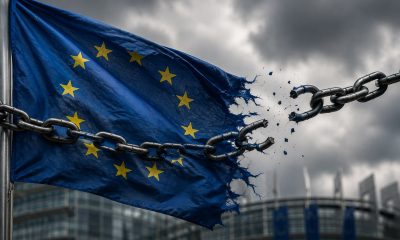



The South Caucasus at a historic turning point: Between lasting peace and renewed confrontation
The security environment of the South Caucasus amid changing geopolitical realities

Commission registers two European Citizens' Initiatives on education and housing

Commission sends Statements of Objections to several companies and trade associations in suspected construction chemicals cartel

Commission endorses Latvia’s €617 million Social Climate Plan to support vulnerable households and transport users in the clean transition

Why the US is losing its legitimacy as a global superpower and the trust of the comity of nations

Commission outlines measures to strengthen Europe's banking sector and support growth

As Ireland chairs the EU Presidency, what impact has over fifty years of EU membership had on Ireland

JoinCare explores scientific exchange during visit to Japan’s National Institute of Infectious Diseases

New episode – DGT podcast: Languages and Technology

Become a European Commission trainee – applications are now open

Commission outlines measures to strengthen Europe's banking sector and support growth

British political shifts and the future of UK-China ties
The South Caucasus at a historic turning point: Between lasting peace and renewed confrontation
As Ireland chairs the EU Presidency, what impact has over fifty years of EU membership had on Ireland

The Digital Markets Act Is Hurting Europeans. It’s Time to Put Progress, Free Markets, and Competition First

Kazakhstan reforms under scrutiny at Brussels Press Club round table

Japan should face up to history and contribute more to regional peace

Ambassador calls for 'speeding up' of co-operation between EU and Kazakhstan

Timur Turlov at Smart Moves Summit 2025: How chess can transform global education

Shevtsova’s case: Out-of-court sanctions dismantling trust in Ukrainian cause

The future of European transport

Trump Vs Trueman

US 'no longer' an 'unconditional ally' for Europe - MEP
-
 South Caucasus2 days ago
The South Caucasus at a historic turning point: Between lasting peace and renewed confrontation
-
South Caucasus3 days ago
The security environment of the South Caucasus amid changing geopolitical realities
-
 European Citizens' Initiative5 days ago
Commission registers two European Citizens' Initiatives on education and housing
-
 European Commission3 days ago
Commission sends Statements of Objections to several companies and trade associations in suspected construction chemicals cartel