Brexit
#EAPM - Tough questions and mask opposition for health care

Welcome all – as summer finally gets into its swing, here is your second August update from the European Alliance for Personalised Medicine (EAPM) for those of you still to depart on much-needed holidays, writes EAPM Executive Director Denis Horgan.
Mark your calendars
As ever, a reminder that there is still time to register for the ESMO Virtual Congress 2020, at which EAPM will be organizing a round table on 18 September, bringing its stellar cast of specialists from the patients network, as well as experts from the oncology community and the European Medicine Agency (EMA) and European Parliament.
The agenda is available here, and you can already register here. In addition, there is the Presidency Conference upcoming during the German EU Presidency, which takes place on Monday 12 October from 9h-17h, and which is entitled ‘Ensuring Access to Innovation and Data-rich Biomarker Space to Speed Better Quality of Care for Citizens’. Registration will open in the next few weeks.
Extraordinary EU summit
Also, on 24-25 September, European Council President Charles Michel will be calling an extraordinary EU summit, in order to discuss topics “that the crisis threw off the agenda in the first semester”. Digital policies, the single market, foreign affairs and the relationships with Turkey and China are all set to feature, with coronavirus making an appearance as well, none too surprisingly. The summit is intended to be in-person – on verras…
Asking tough questions at these events...
Amidst conference season, and in a field as complex as personalised medicine, which involves so many disciplines, dimensions and stakeholders, it is important that tough questions are faced if society is to live in the real world, rather than seeking, out of timidity, to emulate the head-hiding behaviour of the ostrich, the interface between an individual patient and a professionalized and regulated system, is pre-eminently a nexus between private and public interests. And as a major area of continual research and technological development, it produces a constant stream of innovations - and consequently becomes a classic battleground on which conflicting views on the merits of innovation are played out.
The specific field of medical innovation offers a rich display of such conflicts - with controversies over high-profile issues such as the direction of research and how to incentivize it, the morality of medicine pricing systems and practices, the ever-multiplying options for gathering and exploiting health-related data, or the adequacy of regulatory controls. So, in discussions of innovation relating to health, meticulous navigation is needed to chart the best path through a multitude of variables.
The engagement of the individual too is a point of potential dissension, since for innovations to take effect, they must be accepted. The system may be in place, and society may encourage the citizen to take advantage of an opportunity, but at the end of the day, the citizen must take the responsibility. The controversy sweeping across Europe about rights and duties in respect of vaccination offers a compelling example: many parents, unconvinced of the merits of vaccination for their child, are withholding permission for the conduct of immunisation procedures.
Here the contrast between private and public interests is also clear, as an individual's insistence on refusing vaccination clashes with the public benefit of herd protection that vaccination affords.
No ‘silver bullet’
The World Health Organization (WHO) has warned that, despite strong hopes for a vaccine, there might never be a "silver bullet" for COVID-19, and the road ahead back to normality would be long. WHO Director-General Tedros Adhanom Ghebreyesus and WHO emergencies chief Mike Ryan have strongly encouraged all nations to rigorously enforce health measures such as mask-wearing, social distancing, handwashing and testing. "The message to people and governments is clear: 'Do it all'," Dr Tedros told a virtual news briefing from the UN body's headquarters in Geneva on Tuesday (4 August). He said face masks should become a symbol of solidarity around the world.
Surfing or sinking with a second wave?
Whether or not the much-touted ‘second wave’ is already with the UK, is coming or is not, British researchers have warned the government this week that reopening schools in September without first implementing an effective Test, Trace, and Isolating system (TTI) could result in a second wave of COVID-19 more than twice as worse as the first, while the government warned drugs companies to stockpile on medicine to protect against the risks of a no-deal Brexit. The British researchers, drawn from University College London and the London School of Hygiene and Tropical Medicine (LSHTM), researched the impact of reopening schools and its consequences, such as parents returning to work and increased socializing in society.
They said that an optimistic scenario would be 68% of contacts of infected people being traced, and a pessimistic scenario being just 40% traced. Currently, they believe the system has 50% coverage. In the best-case scenario with an effective TTI, “an epidemic rebound might be prevented,” but in a worst-case scenario, the second wave could be 2.3 times higher than the first. In Germany, on the other hand, the chairwoman of a major doctors’ association said that the country was already in “a second, shallow wave”, adding: “We all long for normality, but we are in a state that is not normal.” The doctor told citizens to comply with restrictions and wear masks, in the face of coronavirus deniers who have a strong voice in the country.
Medicine shortages
The COVID-19 health crisis has highlighted a growing problem: shortages of medicines and medical equipment that put patients at risk and national health systems under pressure. In April 2020, the European University Hospital Alliance warned that rising demand in intensive care units for certain anaesthetics, antibiotics, muscle relaxants and medicines used in a way they were not originally approved for to treat COVID-19 could mean stocks run out.
Decreased production, logistical problems, export bans and stockpiling due to the health crisis further increased the risk of bottlenecks. Recently, Parliament’s Environment and Public Health Committee adopted a report calling for European health “independence”by securing supplies, restoring local drug manufacturing and ensuring better EU coordination of national health strategies. Between 2000 and 2018, shortages in the EU increased 20-fold and according to a note by the European Commission are rising for widely used essential products.
The reasons are complex, ranging from manufacturing problems, industry quotas, legal parallel trade and unexpected peaks in demand following epidemics or natural disasters to pricing, which is decided at national level. The EU is increasingly dependent on non-EU countries – mainly India and China – when it comes to the production of active pharmaceutical ingredients, chemical raw materials and medicines.
‘Orphan’ status could prove costly for COVID-19 treatments
Scientists are turning to rare disease medicines, so-called orphan drugs, as possible treatments for COVID-19, with at least 17 of these treatments being trialed to fight coronavirus infections. However, the orphan status tends to push the prices higher, according to STAT, which could be an obstacle to access for the drugs.
Spanish coronavirus epicentre located
According to Spanish daily El Pais, the northern Spanish city of Zaragoza has become the epicentre of the coronavirus pandemic in Europe . The region of Aragón, which has Zaragoza as its capital, has reached 567 reported cases of infection per 100,000 people, the highest in Europe.
Anti-maskers mock French government on mandatory mask-wearing
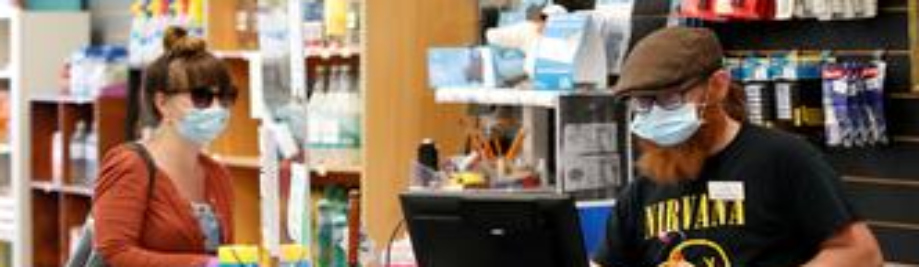
In France, an anti-mask movement has emerged, insisting that wearing a face covering to prevent the spread of COVID-19 is inefficient and an infringement on their personal freedom. This comes as authorities in several more cities decreed masks mandatory in all public spaces.
The French scientific council, which published its seventh recommendation to the government on Tuesday (4 August), warns that France is at a tipping point and could see a runaway situation with regards to COVID-19 if social distancing and testing is not sustained adequately. Among the followers of this new movement, particularly active on social media, there are those who boycott shops, complain to their local mayors and call for acts of civil disobedience. "Believing that a paper or cloth mask will stop us catching the virus is just as outrageous as saying that a swimsuit will keep us dry when we go swimming," one follower said in a video.
And that’s all for this week – don’t forget to register for the ESMO Virtual Congress 2020 here and check out the agenda here. Have a lovely, safe weekend, stay well, see you next week.
Share this article:
EU Reporter publishes articles from a variety of outside sources which express a wide range of viewpoints. The positions taken in these articles are not necessarily those of EU Reporter. Please see EU Reporter’s full Terms and Conditions of publication for more information EU Reporter embraces artificial intelligence as a tool to enhance journalistic quality, efficiency, and accessibility, while maintaining strict human editorial oversight, ethical standards, and transparency in all AI-assisted content. Please see EU Reporter’s full A.I. Policy for more information.





ECR MEPs question the European Commission on cardiovascular health and diet promoting the Mediterranean diet as an alternative to ultra-processed foods as key to tackling obesity

Falling in love with the Maldives

Kurmuk gold project highlights Africa’s changing investment landscape

Albania's Vlora airport standoff tests investor confidence as EU accession clock ticks

EU steps up international support for Palestinians with major initiative for Gaza's early recovery and stronger international coordination

Commission adds exemptions to rules on removability of portable batteries

Iran’s regime in crisis: Negotiations, internal divisions and growing resistance

Natura 2000 Network offers opportunities for sustainable tourism across Europe

Kazakhstan and Belgium: Building a Partnership for the Future

New court ruling questions 'proportionality' of Mayor Erion Veliaj’s detention

Rome–Washington Axis: Italian Diplomat Zanardi Landi to Help Save Bosnia

Burnham as PM? 'Wait and see'

Ban on destruction of unsold clothes and shoes enters into application

Survey on an EU Blueprint for intellectual property licensing and spinoff creation

Rule of law report strengthens EU democracy and fundamental rights

EU launches Ukraine defence industrial partnership, Drone Deal and disburses €1 billion for drones *

Kazakhstan reforms under scrutiny at Brussels Press Club round table

Japan should face up to history and contribute more to regional peace

Ambassador calls for 'speeding up' of co-operation between EU and Kazakhstan

Timur Turlov at Smart Moves Summit 2025: How chess can transform global education

Shevtsova’s case: Out-of-court sanctions dismantling trust in Ukrainian cause

The future of European transport

Trump Vs Trueman

US 'no longer' an 'unconditional ally' for Europe - MEP
-
 Italy3 days ago
ECR MEPs question the European Commission on cardiovascular health and diet promoting the Mediterranean diet as an alternative to ultra-processed foods as key to tackling obesity
-
 Tourism5 days ago
Falling in love with the Maldives
-
 China5 days ago
Kurmuk gold project highlights Africa’s changing investment landscape
-
 Albania3 days ago
Albania's Vlora airport standoff tests investor confidence as EU accession clock ticks