coronavirus
Coronavirus and supporting the financial service sector: How the National Bank of Ukraine has met the challenge

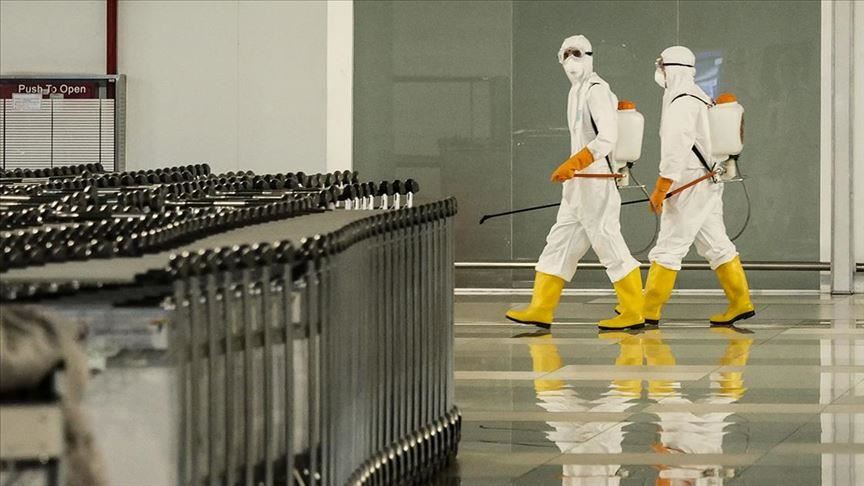
Aside from the severe public health implications of tackling the virus, Coronavirus has posed significant challenges to Ukraine’s financial services sector – undermining the stability of balance sheets, risking the survival of our businesses and imperiling jobs.
In order to face down this crisis, the National Bank of Ukraine (NBU) has taken a broad range of measures to reduce turbulence on the Ukrainian financial market; laying the foundations for economic recovery.
In order to get the Ukrainian economy back on track, the NBU has adopted a number of key policies, including providing cheaper financing for businesses, households and governments by cutting the specific interest rate that determines bank lending rates (the “key policy rate”), supporting liquidity and expanding the funding base of banks and encouraging financial institutions to ramp up lending through introducing interest rate swaps and relaxing regulatory and supervisory requirements.
The NBU is maintaining the key policy rate at an all-time low, at 6% per year - down by 7.5% from the start of 2020. Today, Ukraine is taking the lead among emerging markets in cutting the key policy rate since the pandemic broke out.
Interest rates on most instruments have fallen gradually in response to the lowering of the key policy rate. Banks have actively lowered interest rates on deposits from, and loans to, nonfinancial corporations, pushing these rates close to all-time lows. More specifically, the weighted average interest rate on Ukrainian currency (hryvnia) corporate loans fell below 10% in August, while that on deposits remains below the key policy rate. The weighted average interest rate on hryvnia household deposits also dropped below 10%.
Crucially, when it comes to protecting individuals and families from the worst of the financial fallout from the Coronavirus crisis, the average quarterly interest rate on hryvnia household loans decreased for the first time in the last year and a half.
As the Governor of the National Bank of Ukraine, I am committed to maintaining an understandable and predictable monetary policy that provides comfort to both Ukrainian citizens and our international partners. This has helped decrease uncertainty among financial market participants, enabling them to adapt their expectations to the future cost of financial resources. As a result, the cost of Ukrainian hryvnia financing for the budget has hit a record low.
A number of tools for managing liquidity and minimizing exchange rate and interest rate risks have helped decrease market interest rates on hryvnia loans when the strictest quarantine restrictions were in place.
To make banks more flexible in terms of liquidity management and to support the economy in a crisis, the NBU has introduced support loans for the banks. These loans mature in one to five years and carry interest rates that equal the key policy rate.
The NBU has already issued €640 million (UAH 21.4 billion) in these loans. Additionally, we have expanded the list of acceptable collateral that the banks can pledge against loans from the central bank. This list includes publi
In Ukraine, any solvent bank that temporarily needsfunds can now quickly and easily take out loans from the NBU. Furthermore, the banks can use interest rate swaps to fix affordable rates on 2–3 years loans to deliver on areas of critical need – including loans for SMEs and large infrastructure projects.
I am aware that there is still room for a further reduction in interest rates in the financial market. In particular, I will ensure that monetary policy continues to reflect market conditions and that banking stability remains vibrant – avoiding a situation where lenders do not maintain artificially high liquidity by keepinginterest r
To reduce interest rates further and return Ukraine to economic growth, it is more important than ever to pursue a sound fiscal policy.
To do this, we must make even more progress on strengthening the protection of creditors’ rights, clamping down on the shadow economy, pursuing meaningful reforms to the judiciary and law enforcement agencies and increasing cooperationcooperation with the IMF and Ukraine’s other international partners.
Ukraine has faced – and faced down – significant challenges in recent years. For the National Bank of Ukraine, the work of fighting Coronavirus and ensuring the recovery of our economy is well in-hand.
Kyrylo Shevchenko is the governor of the National Bank of Ukraine.
Share this article:

EU Reporter publishes articles from a variety of outside sources which express a wide range of viewpoints. The positions taken in these articles are not necessarily those of EU Reporter. Please see EU Reporter’s full Terms and Conditions of publication for more information EU Reporter embraces artificial intelligence as a tool to enhance journalistic quality, efficiency, and accessibility, while maintaining strict human editorial oversight, ethical standards, and transparency in all AI-assisted content. Please see EU Reporter’s full A.I. Policy for more information.





Security realignment inevitable in Middle East after Netanyahu-Trump's war

Better enforcement of passenger rights: New EU agreement strengthens protection across all modes of transport

EU deploys emergency assistance to Venezuela following earthquakes

EU steps up support for Ukraine's defence, recovery and reconstruction at the Ukraine Recovery Conference 2026

Dismantling 'high walls' for a shared European-Asian future

Bangladeshis waking up to reality of Yunus government

From imitation to leadership: The production-based rise of Japan and China

Copernicus: Europe’s air quality improves despite persistent pollution episodes

Europe must double down on nuclear progress to achieve its long-term ambitions

Solana Company Partners with Kazakhstan on $6B Alatau Crypto Megacity

Astana's congress of world religions: A global platform for dialogue in an age of division

How Schuman lost Its way

Rating of American Express casino sites in the UK

PMI defends AI consultation tool as scrutiny grows over EU tobacco rules review

Civil society from across the EU gathers in Cork to reinforce Europe’s sustainability agenda

The Iran war changed Pakistan's strategic value, not its political trajectory

Kazakhstan reforms under scrutiny at Brussels Press Club round table

Japan should face up to history and contribute more to regional peace

Ambassador calls for 'speeding up' of co-operation between EU and Kazakhstan

Timur Turlov at Smart Moves Summit 2025: How chess can transform global education

Shevtsova’s case: Out-of-court sanctions dismantling trust in Ukrainian cause

The future of European transport

Trump Vs Trueman

US 'no longer' an 'unconditional ally' for Europe - MEP
-
 Middle East5 days ago
Security realignment inevitable in Middle East after Netanyahu-Trump's war
-
 Transport5 days ago
Better enforcement of passenger rights: New EU agreement strengthens protection across all modes of transport
-
 Earthquake5 days ago
EU deploys emergency assistance to Venezuela following earthquakes
-
 Ukraine5 days ago
EU steps up support for Ukraine's defence, recovery and reconstruction at the Ukraine Recovery Conference 2026