European Commission
'No health without mental health' – Commission

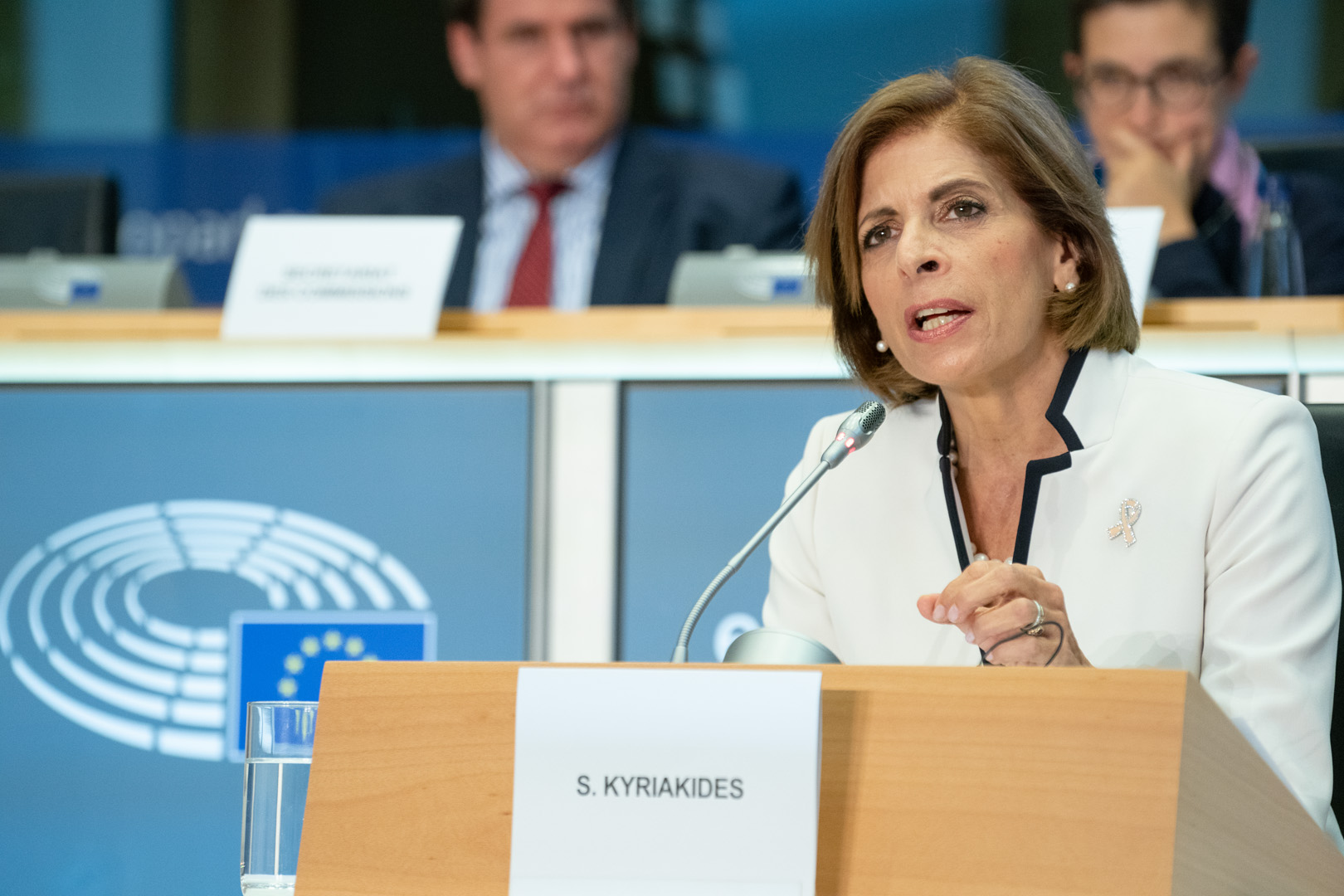
The European Commission held a high-level conference in Brussels this week (10 October) to commemorate World Mental Health Day, writes Martin Banks.
The conference was hosted by Health and Food Safety Commissioner Stella Kyriakides (pictured) and it saw the participation of hundreds of representatives from EU institutions, national governments, and international organizations including UNICEF and WHO.
The aim of the conference was to raise awareness of the EU’s new approach to mental health, announced in June, hear from experts and those with lived experience, and encourage the exchange good practices related to mental health across all policy areas, including promotion and prevention, and equal access for all.
“There is no health without mental health”, Kyriakides said. “The fact that almost half of Europeans have experienced mental health difficulties, and that more than half of those citizens have not received any professional help, is truly alarming.”
The new approach, named the “comprehensive approach to mental health”, takes as its key strategic element the integration of mental health policy across hundreds of relevant policy areas. The approach is designed to reflect that many causes and solutions to mental health conditions are found in the jobs market, schools, transport, art, culture, housing and sports programmes, and therefore that tackling it requires making mental health a key overarching consideration across all these policy areas, and more, going forward.
The days of treating EU mental health policy as the work of a single department are coming to an end, with €1.23bn in funding to back up the plan.
Speakers at the conference included Kyriakides herself, alongside the Queen of Belgium and health and social affairs ministers from several member states, including Hungary’s Judit Bidló, Spain’s José Miñones and Belgium’s Frank Vanderbroucke. Each spoke about policy and experience that demonstrated the need for cross-sectoral work.
In a video message, First Lady Olena Zelenska spoke of the way that the news and foreign events can affect families’ mental health, focusing on traumatic events in Ukraine.
"Recently, we have become more aware that the world is truly global. Everything that happens, from terrorist attacks to earthquakes, from famine to climate change, will sooner or later affect us all. The well-being of every person, every country," she argued.
Zelenska went on to credit the effectiveness of the Ukrainian mental health programme for its ability to turn “pain into resilience”, even working with extremely traumatized people.
Similarly, the First Lady of Malta, Dr Lydia Abela, who works as President of Special Olympics Malta, used her unique experience to show how sport can be a powerful tool for those with intellectual disabilities who struggle with mental health. ‘It’s okay not to be okay”, she spoke, “but you should not walk this path alone”.
This comes at a time when sporting organisations around Europe are beginning to extol the virtues of sport for both physical and mental health, as well as for other psychological benefits such as focus. However, inclusivity can be a challenge for those less able to take part in sport. The theme for World Mental Health Day 2023, “Mental health is a universal human right”, is designed to enhance understanding, elevate consciousness, and spur actions that advocate and safeguard mental health as a fundamental human right.
This encompasses the right to be shielded from mental health hazards, the right to obtain care that is available, accessible, acceptable, and of high quality, and the right to freedom, autonomy, and community inclusion.
In practice, this will mean that new sports, community events or activities must be explored for those not able to take part.
Table sports can be appropriate for many who are restricted in movement, for example, while other solutions like sugar-free chewing gum are known to bring many of the same benefits, for instance by helping with Cognitive Behavioural Therapy (CBT) techniques and by helping to improve focus though improved circulation and boosting oxygen levels in the brain, just like social sport.
Critics of the direction argue that the Commission has failed to get clear targets, goals or indicators. A Eurobarometer poll released alongside Mental Health Day events showed that while 89% of respondents consider that mental health promotion is as important as physical health promotion, “less than half of respondents agree that people with mental health issues receive the same level of care as those with a physical condition”.
There was criticism, including from the trade unionEUROCADRES, about merely just “raising awareness” on mental health issues rather than taking concrete steps. Describing it as a “toothless initiative”, it reiterated the importance of legal moves and more funding to drive forward mental health change, a sentiment echoed by mental health experts. The European Parliament, working on its own mental health report in line with the Commission’s new strategy, has seen calls from MEPs for specific funding from the Horizon Europe programme.
Share this article:
EU Reporter publishes articles from a variety of outside sources which express a wide range of viewpoints. The positions taken in these articles are not necessarily those of EU Reporter. Please see EU Reporter’s full Terms and Conditions of publication for more information EU Reporter embraces artificial intelligence as a tool to enhance journalistic quality, efficiency, and accessibility, while maintaining strict human editorial oversight, ethical standards, and transparency in all AI-assisted content. Please see EU Reporter’s full A.I. Policy for more information.



ECR MEPs question the European Commission on cardiovascular health and diet promoting the Mediterranean diet as an alternative to ultra-processed foods as key to tackling obesity

Albania's Vlora airport standoff tests investor confidence as EU accession clock ticks

Iran’s regime in crisis: Negotiations, internal divisions and growing resistance

Commission approves €659 million German state aid for four new semiconductor facilities

Why a Brussels–Nicosia–Eastern Mediterranean strategic affairs platform would benefit the European Union

Kazakhstan seeks regional AI leadership as economic partnership with China enters new phase

EU law on nitrates pollution remains effective, with scope for smarter implementation

Commission adopts simpler rules for EU agri-food promotion policy

The EU’s Forced-Labour Regulation Faces a Credibility Test

European Statistical Monitor: July edition

Commission publishes state aid guidance on carbon contracts for difference

Commission greenlights Estonia's fourth payment request for €135.5 million under NextGenerationEU

Drones, dominance, and the Iranian impasse: The West's strategic blind spot

Kazakhstan's fixed capital investment tops 9.5 trillion tenge in H1 2026

Commission registers two European Citizens' Initiatives on education and housing

Kazakhstan and Belgium: Building a Partnership for the Future

Kazakhstan reforms under scrutiny at Brussels Press Club round table

Japan should face up to history and contribute more to regional peace

Ambassador calls for 'speeding up' of co-operation between EU and Kazakhstan

Timur Turlov at Smart Moves Summit 2025: How chess can transform global education

Shevtsova’s case: Out-of-court sanctions dismantling trust in Ukrainian cause

The future of European transport

Trump Vs Trueman

US 'no longer' an 'unconditional ally' for Europe - MEP
-
 Italy4 days ago
ECR MEPs question the European Commission on cardiovascular health and diet promoting the Mediterranean diet as an alternative to ultra-processed foods as key to tackling obesity
-
 Albania4 days ago
Albania's Vlora airport standoff tests investor confidence as EU accession clock ticks
-
 Iran5 days ago
Iran’s regime in crisis: Negotiations, internal divisions and growing resistance
-
 Germany4 days ago
Commission approves €659 million German state aid for four new semiconductor facilities