Health
Give genes a chance: Over 1,000 scientists in 14 countries demonstrate in support of gene editing


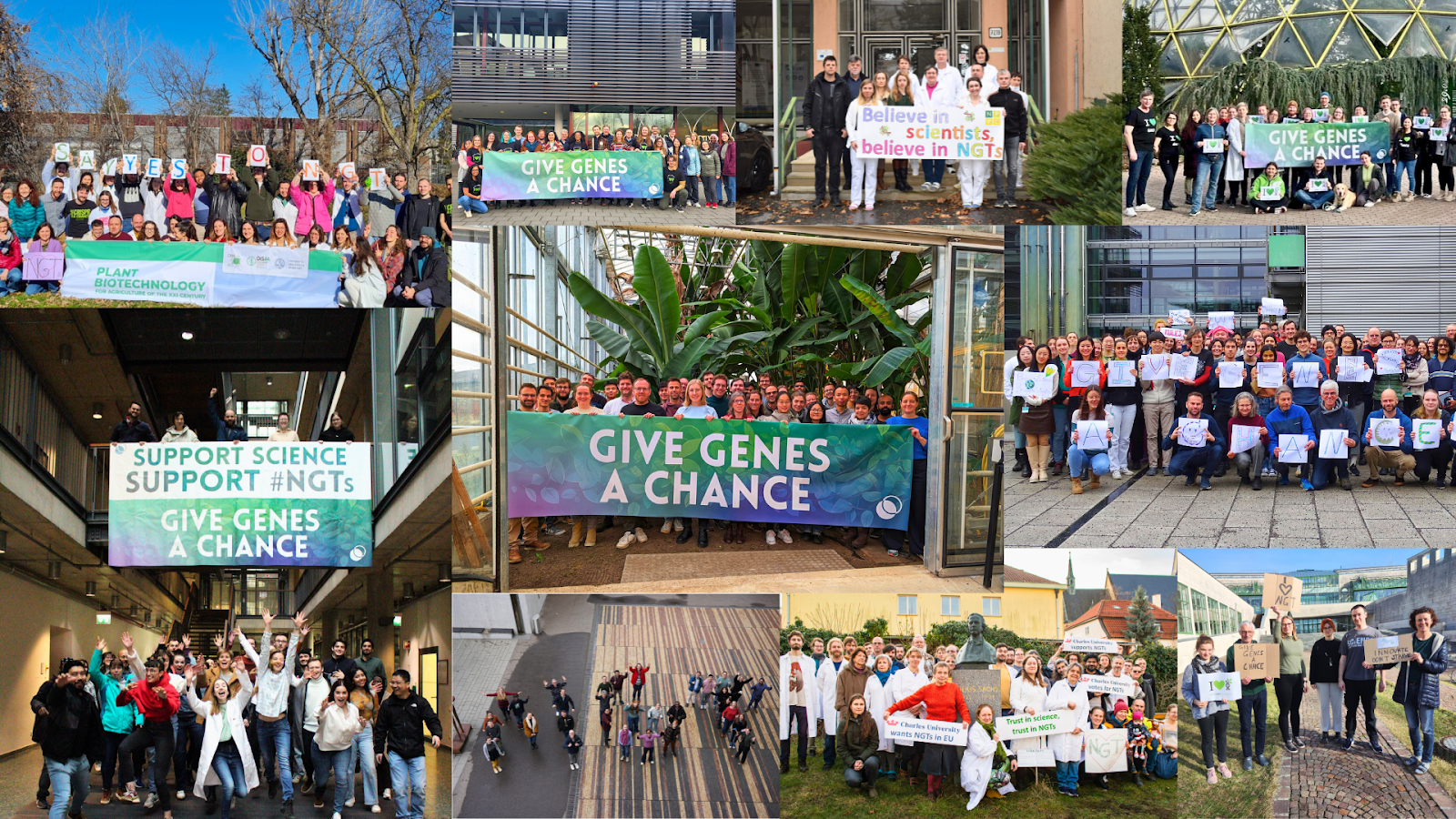
Over 1,000 scientists from 14 European nations have held unprecedented demonstrations across the continent urging MEPs to back New Genomic Techniques (NGTs) ahead of a crunch vote in the EU parliament tomorrow.
Gene editing technology, argue those taking part, will help create crops that use less pesticides, are more resistant to disease and are more climate resilient - but only if European scientists and plant breeders are allowed to use them outside the lab.

Use of NGTs in agriculture are currently de facto illegal outside the lab in the EU. Over 1,000 scientists took to the streets to call for this to change. Photo credit: WePlanet
The rare display of activism from the scientific community comes after 37 Nobel laureates and over 1,500 scientists wrote to MEPs last month calling on them to “reject the darkness of anti-science fearmongering” in the face of a fierce campaign run by anti-GMO activists.
“This is fundamentally about whether Europe trusts in scientists or not.” says Dr Hidde Boersma PHD, a Dutch microbiologist and spokesperson for WePlanet who coordinated the campaign. “The scientific community is overwhelmingly united in supporting NGTs and stands ready to use them to dramatically reduce pesticide use, create land efficient high yield crops and unlock billions of Euros of economic growth. It’s time to reject superstition and believe in Europe’s young scientists.”
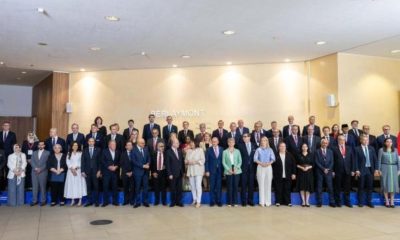
1,002 scientists from 29 Universities in 14 European nations took part in the action. A full list can be found here and a photo library here Photo credit: WePlanet
Holding banners reading “Support science, support NGTs!” and “Give genes a chance!”, a total of 1,002 professors and researchers from 29 universities took part. A full list of universities participating can be found here. In an effort to swing the vote in favour of NGTs, participants tagged undecided MEPs on X, formerly Twitter, and undertook a mass email writing campaign to local MEPs throughout the day.
The action was coordinated by WePlanet, an international ecohumanist NGO that also campaigns for nuclear power, cellular agriculture and rewilding large areas of Europe.
Joel Scott-Halkes, Campaigns Director for WePlanet says: “We’ve been blown away by this demonstration of support for NGTs from the scientific community. To see over 1,000 scientists in 14 nations taking coordinated action on one day is a historic display of scientists’ dedication to build a more sustainable future. Lets hope MEPs share that dedication when they vote tomorrow!”
Notes to editors
- The most notable New Genomic Technique under consideration is CRISPR-cas9, also known as ‘genetic scissors’. Unlike tradition GMOs, the technique does not “import” DNA from other organisms and instead “edits” parts of the of organisms own genome to obtain desirable traits.
- The vote will be held in the Strasbourg Plenary on 7th February, with a debate on the afternoon of the 6th. It will consider a proposal by the EU commission to relax regulations on NGTs. Similar legislation was passed in the UK following Brexit making NGTs legal in that country.
- The open letter signed by 37 Nobel prizes winners and over 1,500 scientists can be read in full here.
- WePlanet is entirely charitably funded and has no industry links, funding or partnerships. Please find our transparency statement here.
- A recent report found that rejecting New Genomic Techniques in Europe could cost up to 3 trillion in missed economic opportunities.
About WePlanet
WePlanet (formerly RePlanet) is a new, charitably-funded global environmental NGO with campaigners in 15 different countries across Europe, Africa and the Asia-Pacific. United under the emerging philosophy of eco-humanism, WePlanet is unique among environmental NGOs for promoting the use of technologies such as advanced nuclear power, cellular agriculture and gene editing. It aims to see 50%-75% of Europe rewilded, animal farming disrupted, the climate cooled and energy abundance achieved in the Global South.
Share this article:

EU Reporter publishes articles from a variety of outside sources which express a wide range of viewpoints. The positions taken in these articles are not necessarily those of EU Reporter. Please see EU Reporter’s full Terms and Conditions of publication for more information EU Reporter embraces artificial intelligence as a tool to enhance journalistic quality, efficiency, and accessibility, while maintaining strict human editorial oversight, ethical standards, and transparency in all AI-assisted content. Please see EU Reporter’s full A.I. Policy for more information.







ECR MEPs question the European Commission on cardiovascular health and diet promoting the Mediterranean diet as an alternative to ultra-processed foods as key to tackling obesity

Falling in love with the Maldives

Kurmuk gold project highlights Africa’s changing investment landscape

EU steps up international support for Palestinians with major initiative for Gaza's early recovery and stronger international coordination

Commission adds exemptions to rules on removability of portable batteries

Albania's Vlora airport standoff tests investor confidence as EU accession clock ticks

Iran’s regime in crisis: Negotiations, internal divisions and growing resistance

Britain’s leadership crisis is a symptom, not the disease

New court ruling questions 'proportionality' of Mayor Erion Veliaj’s detention

Rome–Washington Axis: Italian Diplomat Zanardi Landi to Help Save Bosnia

Burnham as PM? 'Wait and see'

Ban on destruction of unsold clothes and shoes enters into application

Survey on an EU Blueprint for intellectual property licensing and spinoff creation

Rule of law report strengthens EU democracy and fundamental rights

EU launches Ukraine defence industrial partnership, Drone Deal and disburses €1 billion for drones *

Setting a new benchmark in premium travel

Kazakhstan reforms under scrutiny at Brussels Press Club round table

Japan should face up to history and contribute more to regional peace

Ambassador calls for 'speeding up' of co-operation between EU and Kazakhstan

Timur Turlov at Smart Moves Summit 2025: How chess can transform global education

Shevtsova’s case: Out-of-court sanctions dismantling trust in Ukrainian cause

The future of European transport

Trump Vs Trueman

US 'no longer' an 'unconditional ally' for Europe - MEP
-
 Italy3 days ago
ECR MEPs question the European Commission on cardiovascular health and diet promoting the Mediterranean diet as an alternative to ultra-processed foods as key to tackling obesity
-
 Tourism4 days ago
Falling in love with the Maldives
-
 China4 days ago
Kurmuk gold project highlights Africa’s changing investment landscape
-
 Gaza Strip4 days ago
EU steps up international support for Palestinians with major initiative for Gaza's early recovery and stronger international coordination