Kazakhstan
Kazakhstan’s GDP per capita surges past Russia and China

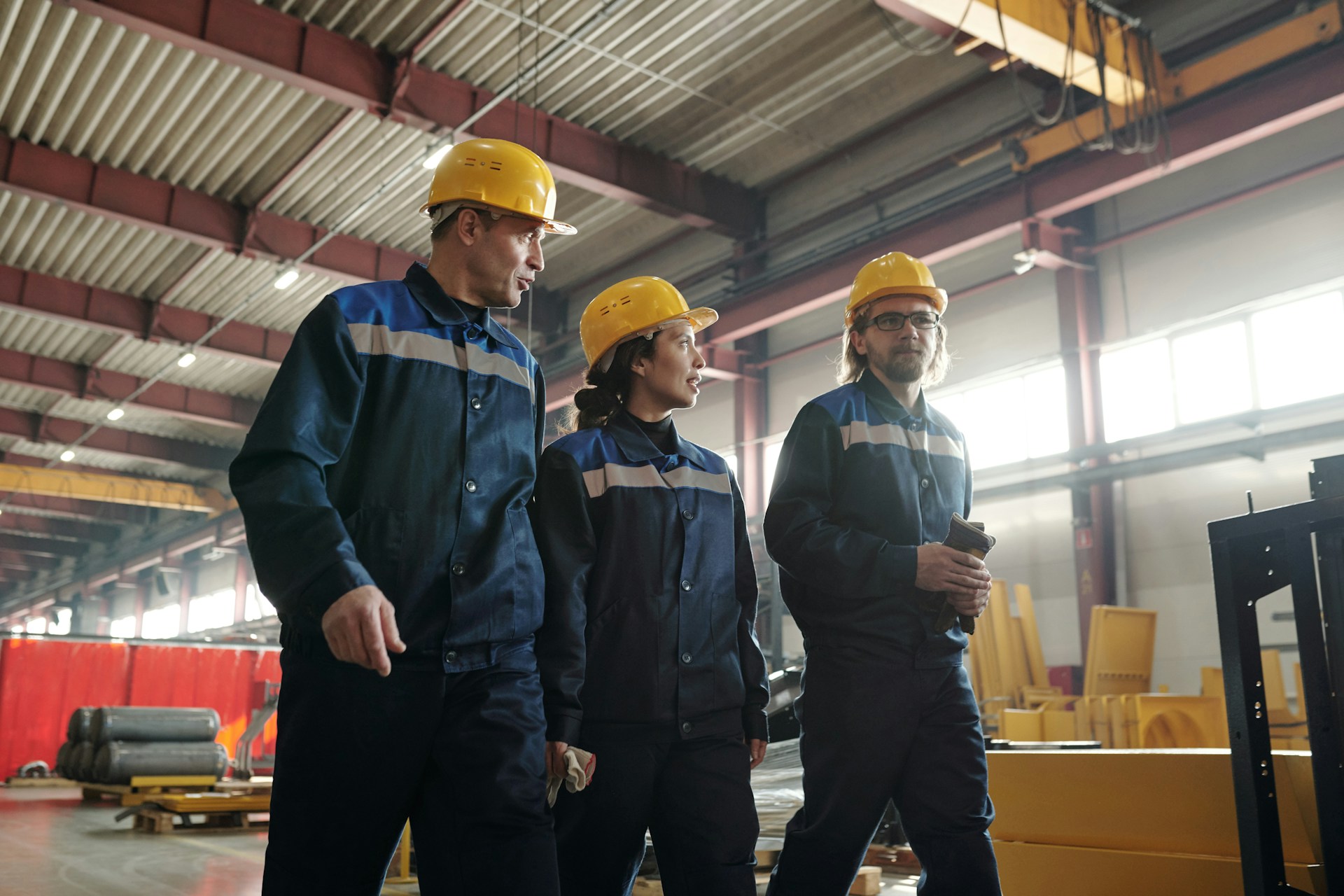
From economic growth to political influence on the international stage (President Kassym-Jomart Tokayev held talks with UN Secretary-General António Guterres a few days ago), Kazakhstan is increasingly emerging as a new power.
Recently, the International Monetary Fund (IMF) declared that Kazakhstan has emerged as the regional leader in gross domestic product (GDP) per capita, overtaking both Russia and China. The IMF projected 3% growth in 2025 in its updated outlook.
IMF data shows that in 2025 Kazakhstan’s GDP per capita reached $14,770, compared to $14,260 in Russia and $13,690 in China. Within Central Asia, Turkmenistan followed with $13,340, while Uzbekistan posted $3,510, Kyrgyzstan $2,750, and Tajikistan $1,430.
Kazakhstan also leads among Commonwealth of Independent States (CIS) members, ahead of Georgia ($9,570), Armenia ($8,860), according to an article written by Pokidaev, D. (2025, August 15) for Times.ca.
The IMF also noted low inflation thanks to the policies of the National Bank and the government to maintain stability. A steady tenge exchange rate and a balanced budget are observed. On this subject, Aisultan wrote for Kazinform: “The country also maintains relatively strong macroeconomic stability, reflected in low inflation, a stable national currency (tenge), and a balanced budget. The policies of the National Bank and the government have helped sustain economic resilience even in the face of global challenges.”
Kazakhstan as a leader in multiple sectors
Kazakhstan is also becoming a leader in transport, logistics, cryptocurrency, tourism, technology, education, healthcare, artificial intelligence, and social services. The real sector expanded by 8%, with transport and construction leading the charge. Transport infrastructure grew by 22.7%, fueled by a 35.2% spike in grain and flour exports (11.8 million tons), according to the article by Stone, N. (2025, May 12) for Aivenst. With $35 billion allocated for infrastructure, Kazakhstan is positioning itself as a Eurasian transit hub, wrote Stone (2025, May 12).
The Middle Corridor’s cargo volumes are projected to double by 2027, offering opportunities in port expansions, dry ports, and rail logistics.
Understanding Kazakhstan’s economic growth
This great success and excellent performance are mainly due to its vast mineral resources, energy and mineral exports, raw material processing, and the production of high value-added goods. Kazakhstan has the ability to leverage its natural resources while transitioning toward higher-value industries. This stimulates growth, not to mention the rise in foreign investment and infrastructure upgrades, according to Astana Times. The EU is the biggest foreign investor in the country. Furthermore, the European Union is Kazakhstan’s biggest overall trading partner, with data for 2023 placing it as the destination for 37% of total Kazakh exports and representing 27.9% of its total trade that year, according to Euractiv. Former Deputy Foreign Minister Roman Vassilenko (now Kazakhstan’s ambassador in Brussels) said the trade turnover between Kazakhstan and the EU bloc had reached $44.2 billion for the period between January and November 2024, marking a 17.7% growth compared to the same period in 2023.
It should also be recalled that the country is rich and possesses some of the world’s largest reserves of oil, gas, uranium, and other minerals. This is why it is a preferred partner of many European Union countries, including France. Exports of energy resources and raw materials remain a central driver of the economy. In recent years, Kazakhstan has worked to diversify its exports by developing processing industries and increasing the share of high value-added products. President Kassym-Jomart Tokayev has reiterated the diversification of the economy as a priority for 2025. The diversification of the Kazakh economy will bring the EU and Kazakhstan closer. On this issue, Zajmi, X. (2025, May 16) wrote: “Kazakhstan’s economic diversification strategy has EU market front and centre.”
Indeed, Kazakhstan is actively diversifying its economy by focusing on deep processing of raw materials, leading to 6.1% growth in the manufacturing sector from January through July. In the first half of 2025, Kazakhstan’s non-oil sectors delivered a staggering 6.3% GDP growth, marking the fastest expansion in 14 years.
The government has carried out consistent reforms aimed at improving the business climate, attracting foreign investment, and developing infrastructure. Kazakhstan is a highly attractive destination for foreign investors, as the government and the country inspire their confidence. Moreover, state programs have modernized the economy and strengthened its competitiveness, while investments in sectors such as transport, logistics, and technology have played a significant role, according to Kazinform.
Spending on education, healthcare, and social infrastructure has raised living standards, which in turn has supported productivity growth and expanded the domestic consumer market, wrote Aisultan for Kazinform. It should also be highlighted that Kazakhstan’s economic diversification efforts and focus on digital transformation are opening new avenues for growth, particularly in financial services and trade, according to David Livingstone, Citi’s Chief Client Officer, in an interview for Astana Times.
Given the growing interest of major powers in the region, it goes without saying that the country will experience exponential growth. Kazakhstan’s strategic position in Central Asia makes it a vital link between Europe and Asia, as well as between Russia and India. Moreover, its participation in initiatives such as the Belt and Road, along with its active cooperation with Russia, China, the European Union, and other partners, has expanded the country’s economic opportunities. Economic diversification, digitalization, and massive foreign investment inflows are steering the country toward non-oil growth, which also gives it a strong potential for green growth.
Kazakhstan’s multi-vector policy makes it an exemplary country in international politics, and this is also bearing fruit in its economy.
BIBLIOGRAPHY
Aisultan, A. (2025, 15 August). IMF data: Kazakhstan leads post-Soviet states in GDP per capita. Kazinform News Agency. https://qazinform.com/news/imf-data-kazakhstan-leads-post-soviet-states-in-gdp-per-capita-b9b559
Gasimov, A. (2023, 31 December). Kazakhstan leads among Central Asian countries in GDP growth. Trend News Agency. https://www.trend.az/business/economy/4080261.html
Haidar, A. (2025, 15 August). Citi: Kazakhstan’s digital drive, trade ambitions set stage for financial hub aspirations. The Astana Times. https://astanatimes.com/2025/08/citi-kazakhstans-digital-drive-trade-ambitions-set-stage-for-financial-hub-aspirations/
Omirgazy, D. (2025, 15 August). IMF: Kazakhstan achieves highest GDP per capita in region. The Astana Times. https://astanatimes.com/2025/08/imf-kazakhstan-achieves-highest-gdp-per-capita-in-region/
Pokidaev, D. (2025, 15 August). Kazakhstan tops Central Asia in GDP per capita, surpassing Russia and China. The Times of Central Asia. https://timesca.com/kazakhstan-tops-central-asia-in-gdp-per-capita-surpassing-russia-and-china/
Stone, N. (2025, 12 May). Kazakhstan’s economic surge: A 6% GDP growth spurred by key sectors. AInvest. https://www.ainvest.com/news/kazakhstan-economic-surge-6-gdp-growth-spurred-key-sectors-2505/
Zajmi, X. (2025, 16 May). Kazakhstan’s economic diversification strategy has EU market front and centre. Euractiv. https://www.euractiv.com/section/politics/news/kazakhstans-economic-diversification-strategy-has-eu-market-front-and-centre/
Share this article:

EU Reporter publishes articles from a variety of outside sources which express a wide range of viewpoints. The positions taken in these articles are not necessarily those of EU Reporter. Please see EU Reporter’s full Terms and Conditions of publication for more information EU Reporter embraces artificial intelligence as a tool to enhance journalistic quality, efficiency, and accessibility, while maintaining strict human editorial oversight, ethical standards, and transparency in all AI-assisted content. Please see EU Reporter’s full A.I. Policy for more information.





ECR MEPs question the European Commission on cardiovascular health and diet promoting the Mediterranean diet as an alternative to ultra-processed foods as key to tackling obesity

Falling in love with the Maldives

Kurmuk gold project highlights Africa’s changing investment landscape

Albania's Vlora airport standoff tests investor confidence as EU accession clock ticks

Commission adds exemptions to rules on removability of portable batteries

EU steps up international support for Palestinians with major initiative for Gaza's early recovery and stronger international coordination

Iran’s regime in crisis: Negotiations, internal divisions and growing resistance

Natura 2000 Network offers opportunities for sustainable tourism across Europe

Kazakhstan and Belgium: Building a Partnership for the Future

New court ruling questions 'proportionality' of Mayor Erion Veliaj’s detention

Rome–Washington Axis: Italian Diplomat Zanardi Landi to Help Save Bosnia

Burnham as PM? 'Wait and see'

Ban on destruction of unsold clothes and shoes enters into application

Survey on an EU Blueprint for intellectual property licensing and spinoff creation

Rule of law report strengthens EU democracy and fundamental rights

EU launches Ukraine defence industrial partnership, Drone Deal and disburses €1 billion for drones *

Kazakhstan reforms under scrutiny at Brussels Press Club round table

Japan should face up to history and contribute more to regional peace

Ambassador calls for 'speeding up' of co-operation between EU and Kazakhstan

Timur Turlov at Smart Moves Summit 2025: How chess can transform global education

Shevtsova’s case: Out-of-court sanctions dismantling trust in Ukrainian cause

The future of European transport

Trump Vs Trueman

US 'no longer' an 'unconditional ally' for Europe - MEP
-
 Italy4 days ago
ECR MEPs question the European Commission on cardiovascular health and diet promoting the Mediterranean diet as an alternative to ultra-processed foods as key to tackling obesity
-
 Tourism5 days ago
Falling in love with the Maldives
-
 China5 days ago
Kurmuk gold project highlights Africa’s changing investment landscape
-
 Albania4 days ago
Albania's Vlora airport standoff tests investor confidence as EU accession clock ticks