Kazakhstan
Astana: Modern centre of global dialogue of world religions

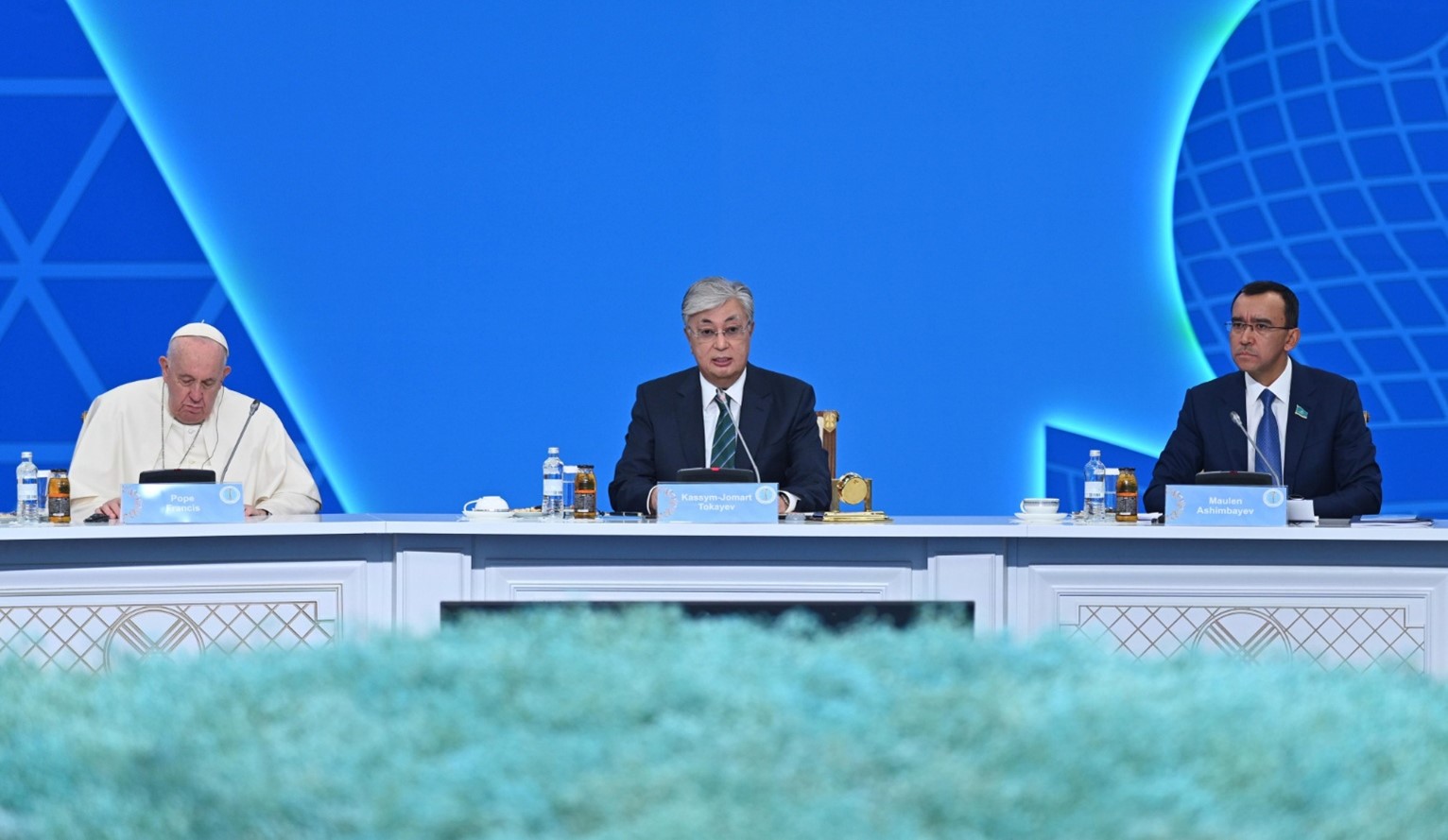
Last week, the Kazakh capital Astana hosted the 8th Congress of Leaders of World and Traditional Religions, bringing together representatives of Islam, Christianity, Judaism, Buddhism, Hinduism, Taoism, Zoroastrianism, Shintoism, and other traditions.
Over the years, the Congress in Astana has become a unique phenomenon: since 2003 it has grown from Kazakhstan’s initiative into one of the world’s main dialogue platforms.
This unique venue for spiritual diplomacy and meetings in the heart of Central Asia allows religious leaders to exchange views and assessments about the future of the world in a calm environment.
For the eighth time in the history of independent Kazakhstan, amid global turbulence, the Congress of Leaders of World and Traditional Religions has become a platform for exchanging ideas on strengthening peace, advancing spiritual diplomacy, and determining the most important directions of cooperation.
The main theme of this year’s forum was 'Dialogue of Religions: Synergy on the Path to the Future'.
Behind this slogan lies a concrete agenda: from strengthening trust between cultures and countering extremism to discussing the impact of digital technologies and artificial intelligence on human spiritual life. One of the special sessions addressed the protection of sacred sites and places of worship, which has become especially relevant against the backdrop of international conflicts.
Kazakhstan’s President Kassym-Jomart Tokayev delivered a keynote speech, emphasizing the importance of interfaith respect and the need to respond to global challenges. The Head of Kazakhstan also held separate meetings with religious leaders and representatives of international organizations.
“Today you (participants) are showing the whole world an example of foresight and prudence. In conditions of geopolitical instability, this takes on special significance. The Congress has shown how important it is today to develop interaction between religions and cultures, and to strengthen cooperation for a better future for all humanity,” said K.Tokayev.
During the plenary and sectional sessions, the special session on the protection of religious sites and symbols, an expert roundtable, and the forum of young religious leaders, many valuable ideas and proposals were voiced. The participants firmly condemned destructive ideologies and violence, explored ways to resolve modern crises, discussed methods of overcoming social inequality, and the building of inclusive societies. Special attention was given to ecology, sustainable development, and the impact of new technologies and artificial intelligence on people’s lives.
This time the 8th Congress also gathered many participants: more than 100 delegations from 60 countries of the world. Key decisions were adopted and enshrined in the final “Astana Peace Declaration — 2025.”
It is worth noting that representatives of Catholicism are regular participants of the Congress. The visit of Pope Francis to the 7th Congress in Astana in 2022 gave the event special status.
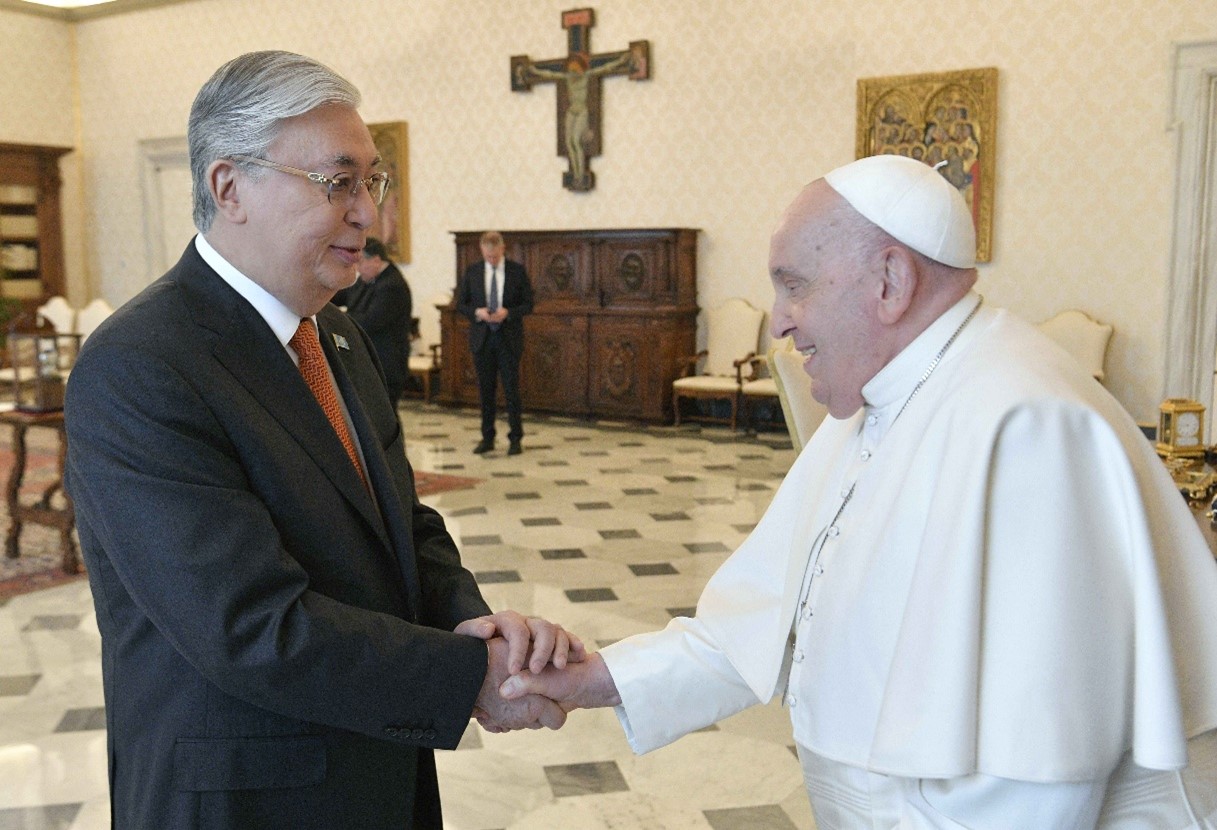
In the sixth paragraph of the 2025 Declaration, the contribution of Pope Francis to interreligious dialogue was also highlighted:
“Pope Francis was an outstanding spiritual leader of modern times, who dedicated his life to serving peace, dialogue among nations and religions, and the protection of human dignity and justice. His legacy remains a bright guide for all who strive for harmony, mercy, and mutual understanding in the world,” states the Astana Peace Declaration – 2025.
The document also sets out the following commitments:
- Deepening interreligious and intercultural dialogue as the foundation of peace and stability.
- Responsibility of religious leaders to serve as moral guides and strengthen trust in society.
- Recognition of the need to protect religious and cultural sites affected by conflicts.
- Active protection of the rights of women, children, the elderly, people with disabilities, and refugees.
- Condemnation of extremism, radicalism, violence, and the use of religion for political purposes.
- Call for responsible use of technologies, including artificial intelligence.
Overall, the Congress in Astana reaffirmed the high role of spiritual diplomacy as an instrument of international cooperation and dialogue. Specific directions for further interaction through international and regional platforms, including the UN, were outlined.
Thus, Kazakhstan once again strengthened its position as a global hub of interreligious dialogue.
The capital Astana has reconfirmed its status as the capital of global dialogue, where different religions and cultures unite for one goal — peace and a future without wars.
Share this article:
EU Reporter publishes articles from a variety of outside sources which express a wide range of viewpoints. The positions taken in these articles are not necessarily those of EU Reporter. Please see EU Reporter’s full Terms and Conditions of publication for more information EU Reporter embraces artificial intelligence as a tool to enhance journalistic quality, efficiency, and accessibility, while maintaining strict human editorial oversight, ethical standards, and transparency in all AI-assisted content. Please see EU Reporter’s full A.I. Policy for more information.



Better enforcement of passenger rights: New EU agreement strengthens protection across all modes of transport

Security realignment inevitable in Middle East after Netanyahu-Trump's war

EU deploys emergency assistance to Venezuela following earthquakes

Shen Yun - The Abuses and Human Rights Violations

The Third International Maqom Art Forum and the New Uzbekistan

EU steps up support for Ukraine's defence, recovery and reconstruction at the Ukraine Recovery Conference 2026

Dismantling 'high walls' for a shared European-Asian future

Bangladeshis waking up to reality of Yunus government

Europe must double down on nuclear progress to achieve its long-term ambitions

Solana Company Partners with Kazakhstan on $6B Alatau Crypto Megacity

Astana's congress of world religions: A global platform for dialogue in an age of division

How Schuman lost Its way

Rating of American Express casino sites in the UK

PMI defends AI consultation tool as scrutiny grows over EU tobacco rules review

Civil society from across the EU gathers in Cork to reinforce Europe’s sustainability agenda

The Iran war changed Pakistan's strategic value, not its political trajectory

Kazakhstan reforms under scrutiny at Brussels Press Club round table

Japan should face up to history and contribute more to regional peace

Ambassador calls for 'speeding up' of co-operation between EU and Kazakhstan

Timur Turlov at Smart Moves Summit 2025: How chess can transform global education

Shevtsova’s case: Out-of-court sanctions dismantling trust in Ukrainian cause

The future of European transport

Trump Vs Trueman

US 'no longer' an 'unconditional ally' for Europe - MEP
-
 Transport4 days ago
Better enforcement of passenger rights: New EU agreement strengthens protection across all modes of transport
-
 Middle East5 days ago
Security realignment inevitable in Middle East after Netanyahu-Trump's war
-
 Earthquake4 days ago
EU deploys emergency assistance to Venezuela following earthquakes
-
 Human Rights5 days ago
Shen Yun - The Abuses and Human Rights Violations