FIFA
FIFA Futsal World Cup reaches climax

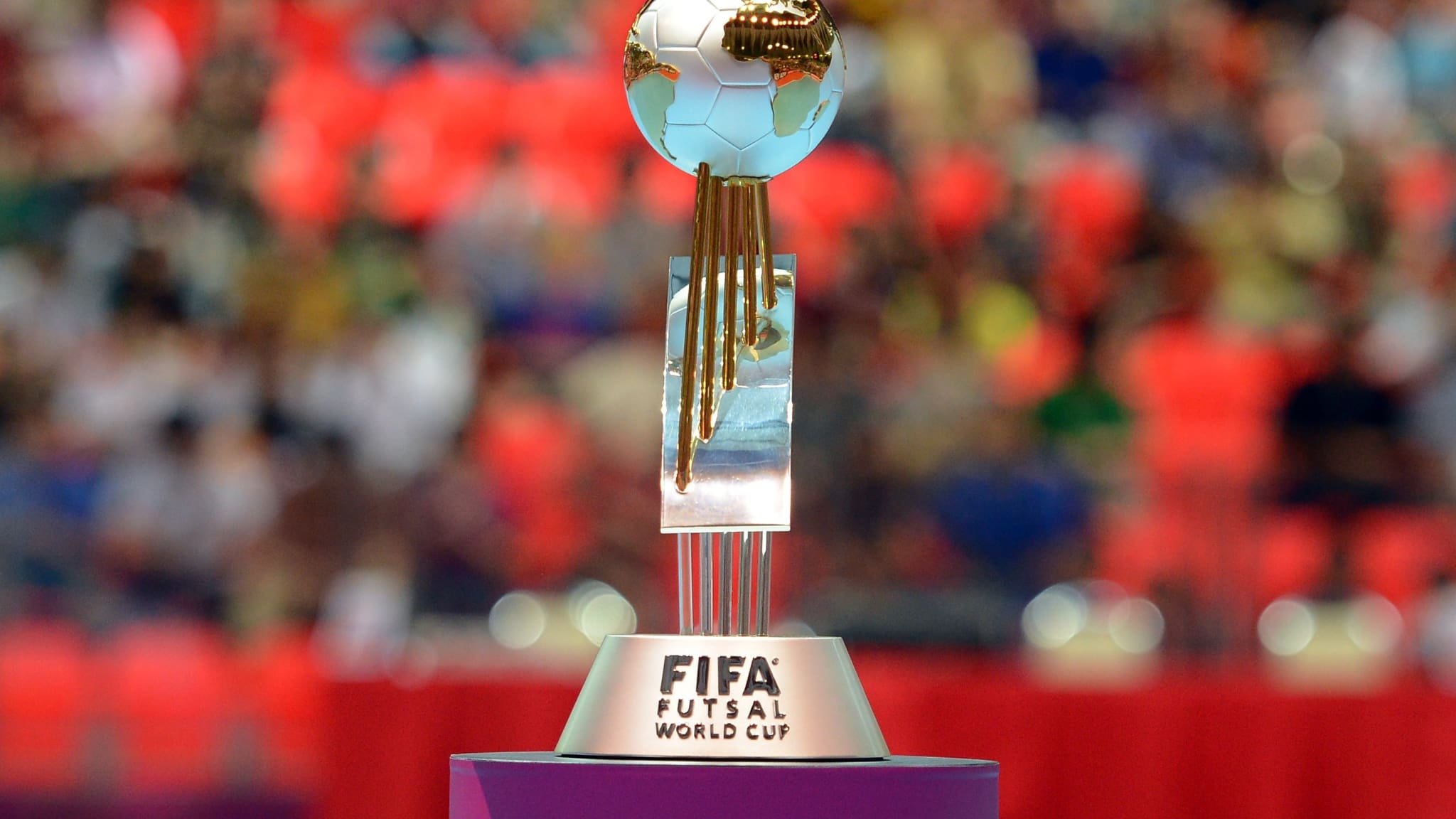
The tenth edition of the FIFA Futsal World Cup reaches its much-awaited climax this weekend, writes Martin Banks.
The final of the global competition that kicked off on 14 September with 24 teams takes place on Sunday (6 October) in the Humo Arena in the Uzbek capital, Tashkent.
It has deemed the most competitive and open edition in tournament’s history but how did the central Asian nation come to stage such a prestige event in the first place and how successful has the event been?
Among the teams taking part were the Netherlands and Bram Groot, spokesman for the Dutch Football Association, gives an upbeat assessment.
He told this site: “Our experience with the locals was very good. We came to know the Uzbeks as friendly and welcoming people and they organized a very good tournament in the opinion of our team.”
The Humo Arena also staged the semi final and, speaking on 3 October, he added, “The hotels and stadiums were very nice.
“We had no complaints whatsoever about the facilities around the tournament. FIFA and the local organization did very well on this.”
Timofey Smirnov, CEO of Enera, a major Uzbekistan-based investment and industrial group, said: "As the management company behind Tashkent’s Humo Arena, we have been delighted to host FIFA for this past month and to make the facility a center of attraction for futsal fans all over the world. We will continue our work to ensure that all spectators, without exception, feel comfortable at our stadium, and the area adjacent to Humo becomes a favourite place for leisure among residents and guests of the Uzbekistan's capital. We plan to continue our cooperation with FIFA, including in the area of sports development for youth and children."
For those unfamiliar with it, Futsal is a form of indoor football played between two teams of five players at any one time. There are rolling substitutes and a smaller, harder ball than in traditional football is used.
According to respected Futsal expert Stephen McGettigan, Uzbekistan was chosen in recognition of its recent achievements, including their impressive performances in the 2016 and 2021 Futsal World Cups.
McGettigan, founder of “Futsal Focus” and an authority on the sport, said there was a prevailing viewpoint that the previous two World Cups “fell short” in terms of effectively leveraging their potential as platforms to promote the sport.
He said: “These events were unable to capture a wider audience and generate heightened interest in futsal, especially among the media and business sectors.”
Uzbekistan has, in fact, hosted international futsal tournaments before (the Futsal Asian Cups in 2006, 2010, and 2016 where they reached the final each time).
McGettigan, who has worked in the Futsal industry for 15 years, said that hosting the 2024 World Cup has been an opportunity for Uzbekistan to “showcase its futsal capabilities and demonstrate its progress as a nation”.
His verdict? “The global visibility and international visitors associated with the tournament will undoubtedly contribute to the country’s exposure and reputation.”
In the selection phase, FIFA President Gianni Infantino visited the country and acknowledged Uzbekistan’s strong desire to host major tournaments.
Ravshan Irmatov, first vice-president of the Uzbekistan Football Association (UFA), believes the nation has, in fact, a good track record in organizing prestigious tournaments in recent years but hosting the World Cup itself has been a long-standing “dream” for the Uzbekistan public and its futsal players.
Its selection as host was, he adds, due to the “significant attention and investment” in sport by the Uzbek government.
Jahangir Usmanov, head of UFA’s Futsal development committee, points out that the World Cup required even better preparation than for previous competitions.
Jaime Yarza Gonzalez, head of FIFA’s Competitions Department, agrees that staging the event has been a chance for Uzbekistan to showcase its progress as a nation on the global stage. During their pre-tournament visit to Uzbekistan, Gonzalez, Irmatov and Usmanov explored five cities before giving the green light for Uzbekistan for it to become the first Central Asian nation to host a FIFA event.
Besides the capital, Tashkent, the city of Andijan in the Fergana Valley and the ancient Silk Road trading centre of Bukhara have staged games. Uzbekistan is the fourth Asia Football Confederation (AFC) member to host the FIFA Futsal World Cup after Hong Kong, China (1992), Chinese Taipei (2004) and Thailand (2012).
Such is the success that the event is deemed to have been there is now a push for Futsal to be included in the 2020 Olympics, with Fifa president Sepp Blatter one of its biggest supporters, while Commonwealth Games Federation president Prince Tunku Imran has called for it to be added to the Games programme.
An estimated 30 million people play Futsal worldwide - putting it on par with women's football - and it is recognised by Fifa as the "fastest growing indoor sport in the world". Around 170 of Fifa member associations play Futsal while a record 24 countries participated in the Futsal World Cup last year.
First played in Uruguay in 1932, it’s played on a hard indoor court with no walls or barriers used. There are five players on each side, one of whom is a goalkeeper and unlimited substitutions allowed. A smaller ball than a regular-sized football is used and a standard match consists of two period of 20 minutes. It hugely popular in Brazil, Spain, Italy and Iran. It has been played for decades in countries like Brazil, Argentina, Spain and Italy – countries who have won seven of the previous eight World Cups between them, and are also the top sides in Futsal.
Stars such as Cristiano Ronaldo, Lionel Messi and Neymar are thought to have developed their skills as youngsters playing the game in Portugal, Argentina and Brazil respectively.
Share this article:
EU Reporter publishes articles from a variety of outside sources which express a wide range of viewpoints. The positions taken in these articles are not necessarily those of EU Reporter. Please see EU Reporter’s full Terms and Conditions of publication for more information EU Reporter embraces artificial intelligence as a tool to enhance journalistic quality, efficiency, and accessibility, while maintaining strict human editorial oversight, ethical standards, and transparency in all AI-assisted content. Please see EU Reporter’s full A.I. Policy for more information.



EU foreign ministers to discuss options for restricting trade with Israeli communities in Judea and Samaria

European operation dismantles €10 million illicit cigarette network in Spain

Energy Union Task Force takes stock of oil and gas security of supply in the EU

Srebrenica's lesson is prevention. Why isn't the world applying It to Kashmir?

ALROSA Re-elects Supervisory Board with Minimal Changes

AIFC to host Astana Finance Days 2026 in September

EU launches a Team Gaza Initiative to support early recovery in Gaza with an initial amount of nearly €900 million

Joint statement by High Representative/Vice-President Kallas and Commissioner Kos on the 31st anniversary of the Srebrenica genocide

European Commission rewards spurious PA textbook reforms

Iran’s regime in crisis: Negotiations, internal divisions and growing resistance

Top EU official speaks of 'very special feeling' over new deal with UK

Shusha Global Media Forum: Azerbaijan’s Answer to Disinformation

Commission approves French state aid to support offshore wind energy

Natura 2000 Network offers opportunities for sustainable tourism across Europe

Commission adds exemptions to rules on removability of portable batteries

EU steps up international support for Palestinians with major initiative for Gaza's early recovery and stronger international coordination

Kazakhstan reforms under scrutiny at Brussels Press Club round table

Japan should face up to history and contribute more to regional peace

Ambassador calls for 'speeding up' of co-operation between EU and Kazakhstan

Timur Turlov at Smart Moves Summit 2025: How chess can transform global education

Shevtsova’s case: Out-of-court sanctions dismantling trust in Ukrainian cause

The future of European transport

Trump Vs Trueman

US 'no longer' an 'unconditional ally' for Europe - MEP
-
 Israel5 days ago
EU foreign ministers to discuss options for restricting trade with Israeli communities in Judea and Samaria
-
 Cigarettes4 days ago
European operation dismantles €10 million illicit cigarette network in Spain
-
 Energy market3 days ago
Energy Union Task Force takes stock of oil and gas security of supply in the EU
-
 Kashmir4 days ago
Srebrenica's lesson is prevention. Why isn't the world applying It to Kashmir?