EU
Things we learned in plenary: New Commission, Sakharov Prize and the EU's 2015 budget


The October plenary saw the new European Commission led byJean-Claude Juncker receive the Parliament's approval to start its five-year term, while outgoing president José Manuel Barroso gave his farewell speech to MEPs. The Parliament also voted against cuts proposed by EU governments to the EU's budget for next year, as MEPs want to preserve spending for growth and jobs. Meanwhile Denis Mukwege, who helps the victims of sexual violence, was announced as the 2014 Sakharov prize laureate.
Members condemned the violence of Islamic State militants and said Turkey should do more to help the Kurds counter the IS threat in the besieged Syrian city of Kobane. In a separate debate, MEPs discussed how to deal with IS fighters of European origin, with some calling for a swift approval of the EU Passenger Name Record (PNR) proposal to better detect potential terrorists entering or leaving the EU.
In a resolution about the European semester of economic policy coordination, MEPs urged member states to deliver on their own pledges for economic reforms and to implement recommendations made by the European Commission.
About 2,800 workers, let go by companies in Spain, Belgium and France, should be helped to find new jobs, MEPs said, approving a request that now has to be considered by member states in the Council. The grants, totalling €15.2 million, will come from the European Globalisation Adjustment Fund.
On Wednesday, MEPs discussed Mos Maiorum, an EU-wide police operation aimed at disrupting people-smuggling networks. MEPs stressed that the authorities should tackle traffickers, but this should not turn into a witch-hunt against migrants.
The Parliament supported plans that would grant Ukraine's exports to the EU duty-free access until the end of 2015. This extends the application of unilateral trade measures introduced by the EU earlier this year in support of the economy in Ukraine.
MEPs expressed concerns about the Hungarian government's policies on pluralism, freedom of speech and civil society in a debate on Tuesday. EU values must be respected in all EU countries, they said.
The Europe of Freedom and Direct Democracy (EFDD) group continues. Last week the Eurosceptic group collapsed after the departure of its only member from Latvia, Iveta Grigule, but this week it met again the requirement of having members from at least seven EU countries, by bringing in Polish MEP Robert Jarosław Iwaszkiewicz.
Share this article:
EU Reporter publishes articles from a variety of outside sources which express a wide range of viewpoints. The positions taken in these articles are not necessarily those of EU Reporter. Please see EU Reporter’s full Terms and Conditions of publication for more information EU Reporter embraces artificial intelligence as a tool to enhance journalistic quality, efficiency, and accessibility, while maintaining strict human editorial oversight, ethical standards, and transparency in all AI-assisted content. Please see EU Reporter’s full A.I. Policy for more information.



EU and South Africa kick off intergovernmental dialogue on Clean Trade and Investment Partnership

Seveso - 50 years on: EU strengthens its commitment to industrial safety in a changing landscape of risk

Why young jobseekers struggle to find roles abroad that fit their expertise

Commission opens formal investigation into possible gun jumping in XXXLutz's acquisition of Porta

Shared commitment to advance EOSC through new EOSC Nodes and EOSC projects

Falling in love with the Maldives

Farmers, fair markets and consumers: new report highlights the role of EU competition rules in agriculture

ECR MEPs question the European Commission on cardiovascular health and diet promoting the Mediterranean diet as an alternative to ultra-processed foods as key to tackling obesity

STATEMENT by the Ministry of Foreign Affairs of the Republic of Kazakhstan

Kazakhstan seeks regional AI leadership as economic partnership with China enters new phase

Starmer’s problem? 'He is not a politician'

Why a Brussels–Nicosia–Eastern Mediterranean strategic affairs platform would benefit the European Union

Albania's Vlora airport standoff tests investor confidence as EU accession clock ticks
ECR MEPs question the European Commission on cardiovascular health and diet promoting the Mediterranean diet as an alternative to ultra-processed foods as key to tackling obesity

Kazakhstan's fixed capital investment tops 9.5 trillion tenge in H1 2026

Commission adopts simpler rules for EU agri-food promotion policy

Kazakhstan reforms under scrutiny at Brussels Press Club round table

Japan should face up to history and contribute more to regional peace

Ambassador calls for 'speeding up' of co-operation between EU and Kazakhstan

Timur Turlov at Smart Moves Summit 2025: How chess can transform global education

Shevtsova’s case: Out-of-court sanctions dismantling trust in Ukrainian cause

The future of European transport

Trump Vs Trueman

US 'no longer' an 'unconditional ally' for Europe - MEP
-
 South Africa5 days ago
EU and South Africa kick off intergovernmental dialogue on Clean Trade and Investment Partnership
-
 Disasters5 days ago
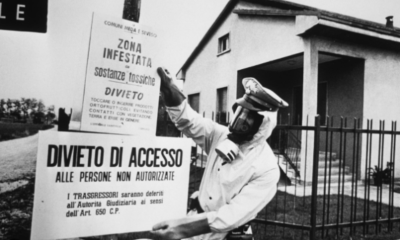
Seveso - 50 years on: EU strengthens its commitment to industrial safety in a changing landscape of risk
-
 Employment5 days ago
Why young jobseekers struggle to find roles abroad that fit their expertise
-
 European Commission5 days ago
Commission opens formal investigation into possible gun jumping in XXXLutz's acquisition of Porta