EU non-discrimination rules
5.9% felt discrimination when looking for housing


In 2024, 5.9% of people aged 16 and over in the EU reported feeling discriminated against when looking for housing. At the same time, 5.2% of people felt discriminated against when in contact with public services or administrative offices, 3.4 % in public spaces (cafes, shops, sports facilities, etc.) and 2.6% in education.
Rates of self-perceived discrimination were higher among people at risk of poverty or social exclusion (AROPE), compared with those not at risk across all surveyed life situations. The gap in self-perceived discrimination was largest when looking for housing (10.1% among people at risk vs 4.7% among those not at risk) and when dealing with public services (9.2% vs 4.2%). Self-perceived discrimination in public spaces was also more prevalent among people at risk of poverty or social exclusion (5.7% vs 2.8%) as was discrimination in education (4.4% vs 2.1%).
Source dataset: ilc_atsd01
For more information
- Statistics Explained article on living conditions in Europe - self-perceived discrimination
- Thematic section equality and non-discrimination
- Database on equality and non-discrimination
- Thematic section on income and living conditions
- Database on income and living conditions
Methodological note
Discrimination is the unfair or prejudicial treatment of people and groups based on the protected characteristics in the EU law: sex, age, disability, religion or belief, ethnic or racial origin and sexual orientation. Self-perceived discrimination refers to the self-reported experience of discrimination. It is measured by asking individuals if they have felt, in the last 12 months (last 5 years for housing), personally discriminated against in a certain number of situations. Subjective perceptions of discrimination, as measured through surveys, can be influenced by various factors, including individuals’ awareness, expectations, the legal context and the degree of societal acceptance. As a result, these factors can significantly impact the reporting of discrimination and affect the comparability of data across different population groups, countries, or cultural settings.
Share this article:
EU Reporter publishes articles from a variety of outside sources which express a wide range of viewpoints. The positions taken in these articles are not necessarily those of EU Reporter. Please see EU Reporter’s full Terms and Conditions of publication for more information EU Reporter embraces artificial intelligence as a tool to enhance journalistic quality, efficiency, and accessibility, while maintaining strict human editorial oversight, ethical standards, and transparency in all AI-assisted content. Please see EU Reporter’s full A.I. Policy for more information.



EU and South Africa kick off intergovernmental dialogue on Clean Trade and Investment Partnership

Seveso - 50 years on: EU strengthens its commitment to industrial safety in a changing landscape of risk

Why young jobseekers struggle to find roles abroad that fit their expertise

Commission opens formal investigation into possible gun jumping in XXXLutz's acquisition of Porta

Shared commitment to advance EOSC through new EOSC Nodes and EOSC projects

Farmers, fair markets and consumers: new report highlights the role of EU competition rules in agriculture

Falling in love with the Maldives

ECR MEPs question the European Commission on cardiovascular health and diet promoting the Mediterranean diet as an alternative to ultra-processed foods as key to tackling obesity

STATEMENT by the Ministry of Foreign Affairs of the Republic of Kazakhstan

Kazakhstan seeks regional AI leadership as economic partnership with China enters new phase

Starmer’s problem? 'He is not a politician'

Why a Brussels–Nicosia–Eastern Mediterranean strategic affairs platform would benefit the European Union

Albania's Vlora airport standoff tests investor confidence as EU accession clock ticks
ECR MEPs question the European Commission on cardiovascular health and diet promoting the Mediterranean diet as an alternative to ultra-processed foods as key to tackling obesity

Kazakhstan's fixed capital investment tops 9.5 trillion tenge in H1 2026

Commission adopts simpler rules for EU agri-food promotion policy

Kazakhstan reforms under scrutiny at Brussels Press Club round table

Japan should face up to history and contribute more to regional peace

Ambassador calls for 'speeding up' of co-operation between EU and Kazakhstan

Timur Turlov at Smart Moves Summit 2025: How chess can transform global education

Shevtsova’s case: Out-of-court sanctions dismantling trust in Ukrainian cause

The future of European transport

Trump Vs Trueman

US 'no longer' an 'unconditional ally' for Europe - MEP
-
 South Africa5 days ago
EU and South Africa kick off intergovernmental dialogue on Clean Trade and Investment Partnership
-
 Disasters5 days ago
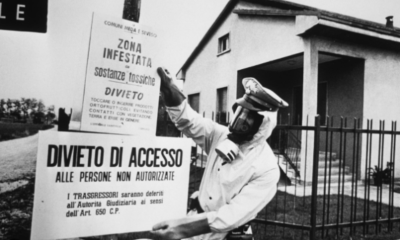
Seveso - 50 years on: EU strengthens its commitment to industrial safety in a changing landscape of risk
-
 Employment5 days ago
Why young jobseekers struggle to find roles abroad that fit their expertise
-
 European Commission5 days ago
Commission opens formal investigation into possible gun jumping in XXXLutz's acquisition of Porta