European Commission
New EU guidance helps companies to combat forced labour in supply chains


The Commission and the European External Action Service (EEAS) have published a Guidance on due diligence to help EU companies to address the risk of forced labour in their operations and supply chains, in line with international standards. The Guidance will enhance companies' capacity to eradicate forced labour from their value chains by providing concrete, practical advice on how to identify, prevent, mitigate and address this risk. Executive Vice President and Trade Commissioner Valdis Dombrovskis said: “There is no room in the world for forced labour. The Commission is committed to wiping this blight out as part of our broader work to defend human rights. This is why we put strengthening the resilience and sustainability of EU supply chains at the core of our recent trade strategy. Businesses are key to making this happen, because they can make all the difference by acting responsibly. With today's Guidance, we are supporting EU companies in these efforts. We will ramp up our due diligence work with our upcoming legislation on Sustainable Corporate Governance.”
High Representative/Vice President Josep Borrell said: “Forced labour is not only a serious violation of human rights but also a leading cause of poverty and an obstacle to economic development. The European Union is a global leader on responsible business conduct and business and human rights. The Guidance we publish today translates our commitment into concrete action. It will help EU companies to ensure their activities do not contribute to forced labour practices in any sector, region or country.”
More information is available in our press release.
Share this article:
EU Reporter publishes articles from a variety of outside sources which express a wide range of viewpoints. The positions taken in these articles are not necessarily those of EU Reporter. Please see EU Reporter’s full Terms and Conditions of publication for more information EU Reporter embraces artificial intelligence as a tool to enhance journalistic quality, efficiency, and accessibility, while maintaining strict human editorial oversight, ethical standards, and transparency in all AI-assisted content. Please see EU Reporter’s full A.I. Policy for more information.



Open letter to president of the European Commission on the Schengen Entry/Exit System (EES)

The Iran war changed Pakistan's strategic value, not its political trajectory

EU policy toward Azerbaijan: Why Brussels must move beyond political dialogue

New rules to protect EU steel industry from damaging impacts of global overcapacity enter into application

PMI defends AI consultation tool as scrutiny grows over EU tobacco rules review

EU and Canada conclude the Energy Security Business Roundtable to deepen transatlantic business relations

Civil society from across the EU gathers in Cork to reinforce Europe’s sustainability agenda

Democracy cannot be selective: Why Europe must apply the same standards abroad that it demands at home

Commission seeks feedback on targeted amendment of EMFAF

Commission proposes five joint defence projects to strengthen Europe's industrial capabilities

Study: Europe's defense runs on American servers

The ancient myths that tourism boards (and slot designers) can't stop selling

Europe must double down on nuclear progress to achieve its long-term ambitions

Solana company partners with Kazakhstan on $6B Alatau Crypto Megacity

Astana's congress of world religions: A global platform for dialogue in an age of division

International Plastic Bag Free Day – from single use to reuse

Kazakhstan reforms under scrutiny at Brussels Press Club round table

Japan should face up to history and contribute more to regional peace

Ambassador calls for 'speeding up' of co-operation between EU and Kazakhstan

Timur Turlov at Smart Moves Summit 2025: How chess can transform global education

Shevtsova’s case: Out-of-court sanctions dismantling trust in Ukrainian cause

The future of European transport

Trump Vs Trueman

US 'no longer' an 'unconditional ally' for Europe - MEP
-
 Schengen4 days ago
Open letter to president of the European Commission on the Schengen Entry/Exit System (EES)
-
 Iran4 days ago
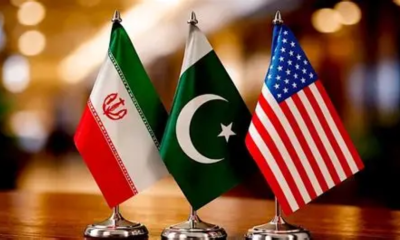
The Iran war changed Pakistan's strategic value, not its political trajectory
-
 Azerbaijan4 days ago
EU policy toward Azerbaijan: Why Brussels must move beyond political dialogue
-
 EU steel industry5 days ago
New rules to protect EU steel industry from damaging impacts of global overcapacity enter into application