European Commission
Commission sets new reduced limits for nitrites and nitrates as food additives


To ensure that the food on the market in the EU is as safe as possible for consumers and protect them from carcinogenic substances as part of the actions under Europe's Beating Cancer Plan, the Commission is setting new limits for the use of nitrites and nitrates as food additives. These new significantly reduced limits protect against pathogenic bacteria (e.g., Listeria, Salmonella, Clostridia), as well as reduce the exposure to nitrosamines, some of which are carcinogenic. Based on a stringent scientific assessment by EFSA, the new limits were endorsed unanimously by the member states last spring.
Health and Food Safety Commissioner Stella Kyriakides said: “Our citizens expect the peace of mind that comes with safe food to eat, this has always been a cornerstone of my mandate. Today, by setting new limits for nitrites and nitrates additives in food, we are taking another step in this direction and delivering on another important action under Europe's Beating Cancer Plan. I now call on the food industry to swiftly implement these science-based rules, and wherever possible, to reduce them further to protect the health of citizens.”
The new stricter limits take into account the diversity of products and their manufacturing conditions across the EU. They give a clear signal to the industry and smaller producers that it is time to address the challenges posed by the presence of nitrites and nitrates in foods across the EU, and along the whole food chain. Food business operators will now have two years to adapt to these new limits.
For more information, please consult these pages on additives and Europe's Beating Cancer Plan.
Share this article:
EU Reporter publishes articles from a variety of outside sources which express a wide range of viewpoints. The positions taken in these articles are not necessarily those of EU Reporter. Please see EU Reporter’s full Terms and Conditions of publication for more information EU Reporter embraces artificial intelligence as a tool to enhance journalistic quality, efficiency, and accessibility, while maintaining strict human editorial oversight, ethical standards, and transparency in all AI-assisted content. Please see EU Reporter’s full A.I. Policy for more information.



Setting a new benchmark in premium travel

Burnham as PM? 'Wait and see'

Kazakhstan: Central Election Committee reviews the results of the nomination of candidates for the deputies of Kurultai

Rule of law report strengthens EU democracy and fundamental rights

Survey on an EU Blueprint for intellectual property licensing and spinoff creation

Kazakhstan and Belgium: Building a Partnership for the Future

Statement by the Ministry of Foreign Affairs of the Republic of Kazakhstan

Ban on destruction of unsold clothes and shoes enters into application

New episode – DGT podcast: Languages and Technology

Become a European Commission trainee – applications are now open

Commission outlines measures to strengthen Europe's banking sector and support growth

British political shifts and the future of UK-China ties

The South Caucasus at a historic turning point: Between lasting peace and renewed confrontation

As Ireland chairs the EU Presidency, what impact has over fifty years of EU membership had on Ireland

The Digital Markets Act Is Hurting Europeans. It’s Time to Put Progress, Free Markets, and Competition First

From Ukraine to Suez: Why the Mediterranean has become the strategic centre of gravity

Kazakhstan reforms under scrutiny at Brussels Press Club round table

Japan should face up to history and contribute more to regional peace

Ambassador calls for 'speeding up' of co-operation between EU and Kazakhstan

Timur Turlov at Smart Moves Summit 2025: How chess can transform global education

Shevtsova’s case: Out-of-court sanctions dismantling trust in Ukrainian cause

The future of European transport

Trump Vs Trueman

US 'no longer' an 'unconditional ally' for Europe - MEP
-
 Aviation/airlines4 days ago
Setting a new benchmark in premium travel
-
 Labour4 days ago
Burnham as PM? 'Wait and see'
-
 Kazakhstan4 days ago
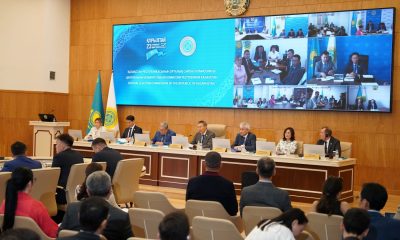
Kazakhstan: Central Election Committee reviews the results of the nomination of candidates for the deputies of Kurultai
-
 EU law4 days ago
Rule of law report strengthens EU democracy and fundamental rights