Frontpage
#EAPM: Empowerment for patients is way of the future


Today and tomorrow (16-17 May), Milan is hosting an International Forum on Cancer Patients Empowerment aimed at urging member states and stakeholders to boost the EU’s fight against cancer, writes European Alliance for Personalised Medicine (EAPM) Executive Director Denis Horgan.
Milan is internationally recognized as a place for innovation in medical treatment, so is a fitting venue.
The key goal of the high-level gathering is to align efforts internationally via a central focus to agree one policy, backed by multi-stakeholders, to put in front of policy-makers.
The event has been organized by the Università degli Studi di Milano, in co-operation with the Fondazioni Umberto Veronesi. The founder of the latter, Umberto Veronesi, died at the age of 90 and was a leading light in fighting and preventing breast cancer, as well as an activist in anti-tobacco campaigns.
Organizations at the Forum include the European Cancer Patient Coalition, European Alliance for Personalised Medicine, the European Society of Medical Oncology, and the European Organization for the Research and Treatment of Cancer.
“A central aim is to remind the EU and its member states of the EPAAC and CanCon initiatives and call on the EU and member states to collaborate,” said EAPM co-chair and former European commissioner for health David Byrne, who addressed the meeting.
“There is a need in the fast-moving area of healthcare for a focus on preventative care and personalised health care. This is something the Alliance has always been geared towards and this meeting in Milan can only help to further our goals and those of our fellow stakeholders,” he added.
European collaboration works well when properly focused and streamlined and it has proven to be successful in producing joint policy recommendations and tools said Tit Albrecht from the Institute of Public Health, Slovenia.
Gianluca Vago, chancellor of the University of Milan, said that he was delighted that the event was taking place in Milan, it being a hub of innovation in healthcare, while Gabriella Pravettoni, professor of Cognitive and Decision Making Psychology at the University of Milan, said: “It is vital for Europe’s patients that personalised medicine is integrated into health-care systems both at national and regional level.
“Empowering patients is key and the University of Milan has established, for the first time in Italy, a 'Chair of Humanity', a course on the humanisation of care. This is aimed at training physicians to listen and relate to patients in an existential, emotional and social dimension.”
“We are very proud of that, here,” she added.
Doctor Giulia Veronesi, chief of the Robotic Thoracic Surgery Unit, Division of Thoracic and General Surgery, at the Milan-based Humanitas Research Hospital, said: “We need to improve the knowledge of policymakers and world health agencies to formulate effective guidelines on the international stage.”
“Not only that,” added Dr. Veronesi, “We must work across national borders to ensure co-operation and collaboration and advance parallel work done by professional groups, patient groups, healthcare funders, pharmaceutical companies and academic institutions to a new level.”
Karen Benn, deputy CEO of Europa Donna, said: "Shared decision making is (or should be) all about the patient, but the barriers to equitable access in general are great while the disparities between member states are equally substantial. Shared decision making can be, and must be, king."
EAPM Executive Director Denis Horgan added that: “Harnessing big data is crucial. It has such a vital part to play in getting the best treatment possible to the 500 million potential patients across the EU”, while Queen’s University Belfast’s Mark Lawler said: “The rights of cancer patients are not being fully realised at the moment and it is incumbent on all stakeholders to make sure that this changes.
“What is the point of rolling out brilliant new science if patients are left in the dark, fail to gain access, and are left without empowerment and suffer needlessly because of it?”
The aforementioned CanCon followed in the wake of EPAAC, and is led mainly by member states with the support of the EU. It also involves other stakeholders, including NGOs, working across Europe.
CanCon has the goal of reducing cancer incidence by 15% by 2020, and among the ‘asks’ from the meeting are to create up-to-date frameworks to allow for shared decision making, provide incentives and rewards in research, bring about better education for clinicians in respect of new methods of stakeholder involvement, focus on shared decision making to improve interoperability issues, and to overcome collection and sharing complications in the case of big data.
Patient empowerment will be a major aspect of EAPM’s four-day personalised medicine EU Presidency Congress in Belfast at the end of November.
This will be the first ever pan-European, multi-disciplinary Congress specific to the fast-moving field of personalised medicine and it will take place from 27-30 November, entitled ‘Personalising Your Health: A Global Imperative!'. To register, please see the following link.
Share this article:
EU Reporter publishes articles from a variety of outside sources which express a wide range of viewpoints. The positions taken in these articles are not necessarily those of EU Reporter. Please see EU Reporter’s full Terms and Conditions of publication for more information EU Reporter embraces artificial intelligence as a tool to enhance journalistic quality, efficiency, and accessibility, while maintaining strict human editorial oversight, ethical standards, and transparency in all AI-assisted content. Please see EU Reporter’s full A.I. Policy for more information.





Bangladeshis waking up to reality of Yunus government

What the latest data reveals about labour market imbalances across Europe

From imitation to leadership: The production-based rise of Japan and China

Copernicus: Europe’s air quality improves despite persistent pollution episodes

Commission approves €402 million Spanish state aid for road transport companies facing increased fuel prices

Ensuring fairness and safety: €3 customs duty for low-value parcels

EU delivers emergency aid and organises a humanitarian flight in response to earthquakes in Venezuela

European Inventor Award 2026 winners announced: Honouring the innovators shaping tomorrow

Kyrgyzstan launches Tamchy SFIT: a new international jurisdiction as a gateway to Eurasia

Kazakhstan’s dombyra: the two-stringed instrument that carries the soul of the steppe

Europe must double down on nuclear progress to achieve its long-term ambitions

Solana Company Partners with Kazakhstan on $6B Alatau Crypto Megacity

Astana's congress of world religions: A global platform for dialogue in an age of division

How Schuman lost Its way

Rating of American Express casino sites in the UK

PMI defends AI consultation tool as scrutiny grows over EU tobacco rules review

Kazakhstan reforms under scrutiny at Brussels Press Club round table

Japan should face up to history and contribute more to regional peace

Ambassador calls for 'speeding up' of co-operation between EU and Kazakhstan

Timur Turlov at Smart Moves Summit 2025: How chess can transform global education

Shevtsova’s case: Out-of-court sanctions dismantling trust in Ukrainian cause

The future of European transport

Trump Vs Trueman

US 'no longer' an 'unconditional ally' for Europe - MEP
-
 Bangladesh4 days ago
Bangladeshis waking up to reality of Yunus government
-
 Employment4 days ago
What the latest data reveals about labour market imbalances across Europe
-
 China4 days ago
From imitation to leadership: The production-based rise of Japan and China
-
 Air quality4 days ago
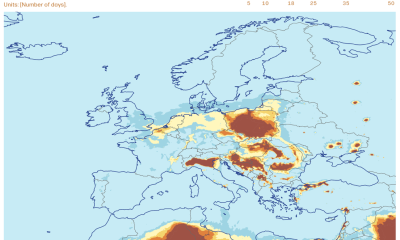
Copernicus: Europe’s air quality improves despite persistent pollution episodes